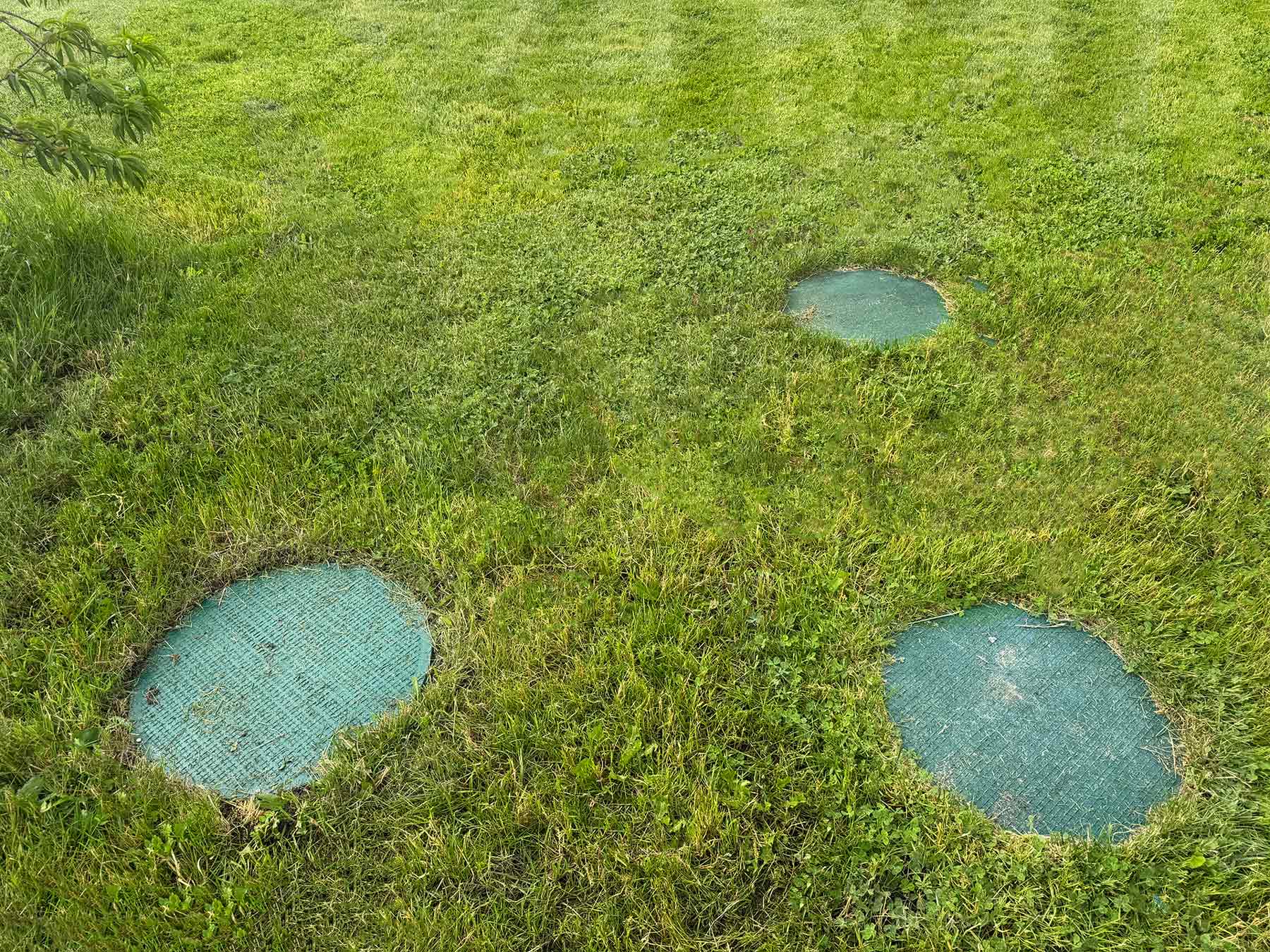
Western Washington Homeowner Guide
The Western Washington Septic System Guide
Roughly 950,000 homes across Washington run on a septic system instead of public sewer — and if you live outside the urban core of the Eastside or Seattle, there’s a good chance yours is one of them. Here’s how these systems work, what they cost, the county-by-county rules, and how to protect what is quietly one of the most expensive components on your property.
Current to 2026 — I review this guide’s figures and links twice a year, each January and again mid-year.
Local tip: find out exactly what’s in your ground first
Before you do anything else, look up your “As-Built” record — the scaled drawing the installer filed showing the exact underground location of your tank, drainfield, and components, plus the system type and install year. Every county I serve keeps these in a public online portal you can pull instantly with your parcel number (find that in the county Assessor or Parcel Viewer). The full link list is in the next section. If you’re buying, selling, adding on, or just bought a home and have no idea where your tank is, this is step one.
1. County records portals — and how each one differs
On-site sewage systems (OSS)
Septic systems are regulated locally by your county health department, all under one umbrella state rule (WAC 246-272A, last revised April 2025). Every county keeps an online records database, but no two are set up the same way. Here’s where to pull your records across my coverage area.
| County (areas) | Where to look up your system | Phone |
|---|---|---|
| King Seattle, Bellevue, Kirkland, Redmond, Woodinville, Bothell |
OSS Records search. King County uses two systems — the OnlineRME database and a 2023 map-based ArcGIS “Septic & Group B” app — so it’s worth checking both, especially if the address has changed. | 206-477-8050 |
| Snohomish Edmonds, Mill Creek, Mukilteo, north Bothell |
As-Built records (OnlineRME). Search by tax account number or address. Largest septic count in the region. | 425-339-5250 |
| Island Camano Island, Whidbey |
Parcel & As-Built portal. As-builts/permits live in the SmartGov portal; pump & inspection reports live in OnlineRME (select Island County first). | 360-678-8261 (Camano) |
| Skagit Anacortes, Mount Vernon, Burlington |
Skagit septic search. Skagit runs its own county portal (not OnlineRME) — search by address, parcel, or owner name. | 360-416-1500 |
| Whatcom Bellingham, Ferndale, Lynden |
Septic & Drinking Water Records. Search by property ID, GeoID, or parcel number. | 360-778-6000 |
How they differ in practice: Skagit and Whatcom run their own county-built search tools; King, Snohomish, and Island use the statewide OnlineRME platform (and Island and King each split records across two systems). All five require a time-of-sale inspection when a home changes hands, but the exact paperwork differs — Whatcom wants a “Report of System Status” (ROSS) filed with a $35 fee; Island has required a transfer inspection by a licensed provider since 2008. If a record is missing, the home was likely built before the early 1970s, the system was installed without a permit, or the drawing is still on microfiche — your county can usually help, or a designer can re-document the system.
2. Septic vs. sewer across Western Washington
Why your neighbor might be on one and you on the other
Whether a property is on sewer or septic comes down to one thing: how built-up the area was when it was developed, and whether a public main was ever extended to the street. As a rule of thumb in our region:
- Dense urban cores are almost entirely on public sewer. Seattle proper, downtown Bellevue, downtown Kirkland, and most platted city neighborhoods were sewered long ago.
- Rural, semi-rural, and island areas are mostly on septic. Think Camano Island, the Snohomish County foothills, unincorporated King County, larger lots in Woodinville and Bothell, and waterfront acreage.
- The transition zones are mixed, often parcel-by-parcel. Two homes on the same street can differ depending on when each one was built and whether the owner ever connected. This is exactly why the As-Built lookup matters.
Even inside King County — our most urban county — there are an estimated 40,000 septic systems in urban areas alone, many of them now past their intended lifespan. So “I live near the city” does not mean “I’m on sewer.” Always verify.
3. Why soil and rain dictate the whole system
The reason designs vary so much from lot to lot
A septic system isn’t really treating your wastewater — the soil is. After solids settle in the tank, the liquid (effluent) trickles into the drainfield and percolates down through several feet of unsaturated soil, where natural microbes finish the job before it reaches groundwater. That means the soil on your specific lot determines what kind of system you’re even allowed to build.
Western Washington’s geology is wildly variable — glacial till, sandy outwash, dense hardpan, peat, and clay can all appear within a few miles. A designer runs a site evaluation (soil logs and, in effect, a perc assessment) to measure soil texture, depth, and the seasonal high water table. Our wet climate is the wrinkle that surprises people: in winter, water tables rise and saturated soil can’t accept effluent. That’s why the state requires vertical separation between the bottom of your drainfield and the water table — and why the April 2025 code update increased the required vertical separation and shoreline setbacks. A lot that perks fine in August may be soggy in January.
Common system types, matched to the site
Simplest
Conventional gravity
Tank → gravity-fed drainfield. Needs good soil and enough depth. The cheapest to install and maintain.
Common upgrade
Pressure distribution
A pump pushes effluent evenly across the drainfield. Used where gravity alone won’t distribute well.
Tough sites
Mound & sand filter
Builds treatment up in engineered sand when natural soil is too shallow, wet, or poor. More moving parts, higher cost.
Sensitive areas
Advanced treatment (ATU)
Aerobic units and proprietary systems pre-treat effluent — often required near shorelines or in nitrogen-sensitive zones.
The takeaway: the more challenging your soil and the closer you are to water, the more engineered (and expensive) your system has to be — both to install and to maintain.
4. Your system is rated by bedrooms — not bathrooms
The single most misunderstood rule in real estate
This trips up buyers, sellers, and even agents constantly, so let me be direct: Washington sizes a septic system by the number of bedrooms, not bathrooms. The logic is occupancy — bedrooms predict how many people could live there long-term, and the code assumes a set water flow per bedroom regardless of how many toilets you have.
- Design flow is calculated at roughly 120 gallons per day, per bedroom.
- A home with four bedrooms or fewer requires a minimum 1,000-gallon tank. Each bedroom above four adds about 250 gallons.
- A “bedroom,” by code, is any room normally used for sleeping and shown as such on the plans — so a finished basement room, bonus room, or “office” with a closet can count.
Where bathrooms do come in: if a home has unusually many bathrooms or high-flow fixtures relative to its bedrooms, some reviewers also run a fixture-count calculation and use whichever number is larger. So extra bathrooms rarely shrink a requirement — they can only raise it.
5. Adding a bedroom, a bathroom, or an ADU
When an addition forces a septic upgrade
Because the system is rated by bedrooms, what you add matters:
- Adding a bathroom only (no new bedroom) usually does not change your design flow — so it often won’t trigger a septic expansion, though a heavy fixture load can.
- Adding a bedroom increases your rated flow and can require a larger tank and/or a bigger drainfield before the permit is approved.
- Adding an ADU (accessory dwelling unit) almost always increases the load. When an ADU is served by the main home’s septic, the system must be sized for 120 gallons per bedroom, or per building connection, whichever is greater. That frequently means expanding the tank or drainfield before the ADU can be occupied. A detached shop or garage with only a toilet and sink is generally exempt.
The ADU-on-septic catch most people miss
Washington’s 2023 housing laws (HB 1337 and HB 1110) pushed cities to allow up to two ADUs per lot in urban growth areas — a big deal for homeowners wanting rental income or multigenerational space. But the laws specifically let jurisdictions require public sewer connection and apply environmental permitting. On septic, an ADU is not automatic: you have to prove the system has adequate capacity, and a failing or undersized system may need to be upgraded first.
Budget accordingly — in the Seattle/King County market, septic (or well) upgrades to support an ADU commonly add $15,000–$30,000 to a project. If you’re weighing an ADU and you’re on septic, pull your As-Built and talk to your county before you pay for design plans.
6. Connecting to sewer — and what it really costs
Why the price keeps climbing
First, the good news: a local sewer agency generally can’t force you to abandon a septic system that’s working properly. Connection is usually only required when a system fails, or in specific mandated areas. So this is often a choice — and a math problem.
People badly underestimate the cost because they only think about the trench. A septic-to-sewer conversion in our region typically stacks up several charges:
- The regional capacity charge. In King County, new connections in 2026 pay $77.99 per month per residential customer equivalent, billed over up to 15 years (or as a discounted lump sum). That’s roughly $14,000 just for the regional charge — separate from everything below.
- Side-sewer construction — trenching from your house to the main, often $150–$200+ per linear foot, more if it crosses pavement or runs uphill (which may require a grinder/STEP pump).
- Local connection / general facilities fees charged by your city or sewer district.
- Permits, decommissioning the old tank, and surface restoration (re-paving a driveway, landscaping).
Nationally, conversions run $5,000–$15,000, but in King and Snohomish counties — with the capacity charge, long runs to the main, and pavement restoration — many real-world jobs land well past $30,000.
From the field — Bothell
An $8,000 window that closed
I worked with a homeowner in Bothell who, back in 2004, had the option to tie into a newly available sewer line for about $8,000. At the time it felt like a lot of money for something that “wasn’t broken,” so — like most people would — they passed and kept the septic system that was working fine.
Years later, when they finally needed to connect, the quote came in around $30,000. Same house, same street, same distance to the main. Between the rising regional capacity charge, higher construction and excavation costs, and added restoration work, the price had nearly quadrupled.
The lesson I share with every client weighing this: if sewer becomes available near you and you can reasonably afford it, the cheapest day to connect is almost always today. These connection windows tend to get more expensive, not less.
Will connection costs keep rising? Yes — here’s why.
I’d expect the trend to continue upward, for a few compounding reasons. King County’s capacity charge is reviewed and raised most years. Construction and labor costs keep climbing. And critically, our region is densifying fast — the state projects a need for roughly 1.1 million new homes by 2044, and the wave of ADUs and middle-housing under the new laws adds more connections to the same infrastructure. The capacity charge exists specifically to fund the expansion that growth demands, so more rooftops generally means a higher per-connection cost over time, not a lower one.
7. Waterfront & shoreline septic systems
Higher stakes, stricter rules
If your system is near Puget Sound, a lake, or a stream, it carries extra responsibility — and extra regulation. A failing shoreline system can send nitrogen, fecal bacteria, and pathogens almost directly into the water, which is why this is taken so seriously here. Untreated nutrients fuel algae blooms and oxygen crashes, and bacterial pollution closes shellfish beds that support a roughly $107 million industry and tribal harvest rights.
The rules that apply on the water
- The Shoreline Management Act governs development generally within 200 feet of marine and major freshwater shorelines, layering shoreline permitting on top of septic permitting.
- Marine Recovery Areas (MRAs) — under a 2006 state law (RCW 70.118A), Puget Sound counties mapped areas where shellfish beds are closed or threatened, or where nitrogen/bacteria harm water quality. King County’s MRA covers parts of Vashon-Maury Island (Quartermaster Harbor and nearby communities).
- Shellfish Protection Districts — on Camano/Whidbey, Island County’s Penn Cove and South Holmes Harbor districts require owners to use a licensed maintenance provider (no self-inspection) and inspect more often.
- The April 2025 code update increased shoreline setbacks, formalized nitrogen-sensitive zones requiring advanced treatment, and deepened the required separation from the water table. An old 1980s system 75 feet from the water that could once be simply replaced may now require a fully redesigned, advanced system.
How to make sure your system isn’t leaching into the water
- Stay current on inspections — sensitive areas often require annual checks, not the standard interval.
- Watch the beach side for warning signs: surfacing effluent, gray water sheen, lush green strips, or odor near the shore.
- Consider periodic effluent sampling if you have an advanced/treatment system.
- Proactively upgrade an aging shoreline system rather than waiting for it to fail — at the water’s edge, a failure isn’t just your problem.
8. Pumping & maintenance
The cheapest insurance you’ll ever buy
How often should you pump?
The common answer is every 3 to 5 years — but the honest answer is “it depends,” and on three things specifically:
- Tank size vs. household size. A small tank serving a full house fills faster than a large tank serving two people.
- How you use it. A garbage disposal, frequent laundry, long showers, or a home business all shorten the interval.
- The health of your drainfield. If the field is aging or marginal, staying ahead on pumping protects it.
The technical rule the pros use: pump when the scum layer is within ~3 inches of the bottom of the outlet baffle, or the sludge is within ~12 inches of the outlet. A monitor or a quick check at inspection tells you where you stand. When in doubt, pump on the shorter end of the range — a $400–$1,000 pump-out is trivial next to a five-figure drainfield.
Maintenance by system type — my honest take
Gravity / conventional
Lowest maintenance. Pump on schedule, keep the drainfield clear, clean the effluent filter. These can run for decades with basic care.
Pressure / pump systems
Add a working pump, floats, and alarm to your watch list. When the alarm sounds, call — don’t ignore it. A monitor is well worth it here.
Mound / sand filter
More components, more to inspect. Protect the mound from traffic and erosion, and budget for the higher service cost it demands.
Advanced treatment (ATU)
These require an ongoing maintenance contract (typically $200–$400/yr) plus power for blowers/UV. Treat it like equipment, not a buried box.
One more option many people don’t know about: several counties (Island, Whatcom, and others) let homeowners get certified to perform their own routine inspections after a short training course — saving service fees for years. Ask your county health department.
9. Drainfields: what they do, and what never to do
The most expensive part to replace
What it does (the short version): the drainfield (or leach field) is the network of perforated pipes in gravel trenches that releases effluent into the soil, where it filters down and is treated naturally before reaching groundwater. It’s the heart of the system — and the costliest component to replace, so protecting it is everything.
Never do these over a drainfield
- Drive or park on it. Cars, RVs, and equipment compact the soil and crush the pipes — the single most common avoidable cause of failure.
- Build, pave, or deck over it. A shed, patio, hot tub, or driveway over the field is a serious mistake.
- Plant trees or shrubs on or near it. Roots seek the moisture and invade the pipes.
- Route water onto it. Downspouts, sump pumps, and irrigation should drain away — extra water saturates the field and stops it from working.
- Overload it. Spread laundry across the week instead of doing eight loads on Saturday.
Keep it as a simple, undisturbed, grassy area, and know where it is (that As-Built again). A healthy drainfield protected for 25+ years is the goal.
10. What never to put down the drain
A septic tank is a living system
Your tank relies on bacteria to break down waste. Anything that doesn’t break down clogs the system; anything that kills the bacteria stops it from treating. The rule of thumb: only the “three P’s” — pee, poop, and (toilet) paper.
Don’t flush or pour down the drain
- “Flushable” wipes (they aren’t), paper towels, tissues, feminine products, diapers, dental floss, cat litter, cigarette butts.
- Fats, oils, and grease (FOG). Cooking grease congeals and coats your pipes and tank — a leading cause of clogs in older homes.
- Paint, solvents, pesticides, and excess bleach or antibacterial cleaners (they kill the bacteria you need).
- Unused medications — these pass through and reach groundwater.
About garbage disposals
I generally steer septic owners away from heavy garbage-disposal use. Disposals push extra solids and grease into the tank, which fills it faster, raises the odds of a clog, and means you’ll pump more often. If you want one, choose a unit specifically rated for septic systems (sometimes called “septic-assist”), use it sparingly, compost food scraps where you can, and shorten your pumping interval to compensate. And skip the “septic additive” products marketed to replace pumping — a normal, healthy tank doesn’t need them; nothing replaces pumping out the solids.
11. Old pipes & tanks: clay, concrete, Orangeburg, PVC
Why an older system deserves a closer look
Western Washington has a lot of mid-century housing stock, and the materials in an older system are very different from a new one — worth knowing before you buy or remodel.
- Modern lines: PVC and ABS. Corrosion- and root-resistant, and they tolerate maintenance like jetting well. This is today’s standard.
- Older lines: clay tile, cast iron, concrete, and “Orangeburg.” Orangeburg — a tar-impregnated fiber pipe common in homes built from roughly the 1940s through the 1970s — is notorious for going brittle, deforming, and collapsing with age. Clay and cast iron crack and invite root intrusion.
- Concrete tanks last a long time but can corrode at the top over decades from the gases inside, and very old tanks may be undersized for today’s standards.
- The really old stuff: some pre-1970s properties still have steel tanks (which rust through) or even cesspools, which are obsolete and won’t meet code.
My advice on an older home: have the line from the house to the tank, and the tank itself, camera-inspected during your due diligence. It’s far cheaper to learn you have failing Orangeburg before closing than to discover it when the line collapses two winters later.
12. Not every problem is a full replacement
Smaller fixes worth ruling out first
A slow or backing-up system doesn’t automatically mean a new drainfield. Before anyone quotes you a full replacement, the cheaper culprits are worth ruling out: a clogged effluent filter, a failed pump, a stuck distribution box, or simply a tank that’s overdue for pumping.
Jetting an older, grease-clogged system
On older homes — especially ones that have sent years of cooking oils down the drain — the lines themselves can be coated with grease and sludge. Hydro-jetting uses high-pressure water to scour the pipes clean (and clear small roots), and it’s often a few hundred dollars rather than a few thousand. A few things to insist on:
- Always do a camera inspection first. On brittle clay, cast iron, or Orangeburg, full pressure can crack the pipe — a pro lowers the PSI to match the material.
- Jetting cleans the lines, not the tank itself (the tank still needs pumping), and it won’t fix a saturated, failed drainfield — that needs repair or replacement.
- Typical cost is roughly $300–$600 for residential lines, depending on length and severity.
13. Smart monitors & emerging technology
Catching problems before they become five-figure ones
The reason septic failures are so expensive is that they’re usually discovered after the backup, the soggy yard, or the closed shellfish bed. A new generation of low-cost monitoring closes that gap by watching the system continuously and texting you before things go wrong.
Tank
Smart tank level monitors
Ultrasonic, pressure, or float sensors track liquid, scum, and sludge levels and alert your phone before an overflow. They also help you pump on actual need instead of guesswork. (Brands like LevelSense, SeptiTech, and Shelly.)
Plumbing & soil
Leak detection sensors
Moisture sensors placed around the tank and field flag wastewater escaping where it shouldn’t — some can tie into an automatic shutoff.
Drainfield
Smart drainfield monitors
Track soil moisture, flow, and pressure to catch clogs, oversaturation, or uneven distribution early — protecting the most expensive component you own.
Why it pays
The payback
Early warning prevents the emergencies that cost thousands; most owners see a return within 2–5 years. Most valuable on pump/advanced systems and on vacation or rental homes you can’t watch daily.
What’s emerging for our region
Beyond monitoring, the bigger shift is in treatment. Aerobic treatment units (ATUs) and nitrogen-reducing advanced systems are increasingly required (and increasingly affordable) for shoreline and nitrogen-sensitive sites around Puget Sound. Counties — Island County among them — are actively studying new and modular/cluster “decentralized” systems to allow more housing on difficult soils. And IoT remote monitoring is steadily moving from a nice-to-have toward a standard feature, particularly on engineered systems. If you’re installing or replacing near the water, ask your designer specifically about nitrogen-reducing options — it’s where the technology and the regulations are both heading.
14. Cost cheat-sheet & financing
Ballpark ranges, 2026 — confirm with a licensed contractor
Every site is different, but these ranges give you a realistic sense of scale for budgeting and for evaluating a quote.
| Item | Typical range | Notes |
|---|---|---|
| Routine pumping | $400 – $1,000+ | Seattle-area averages ~$450–$600; rises with tank size & access. Every 3–5 yrs. |
| Inspection (incl. time-of-sale) | $300 – $600 | More for advanced systems. Required at sale. |
| Clean / replace effluent filter | $200 – $300 | Cheap insurance for the drainfield. |
| Riser installed (easy access) | $300 – $600 | Brings lids to the surface — worth it. |
| Hydro-jetting lines | $300 – $600 | Camera-inspect first on older pipe. |
| Pump replacement | $500 – $1,400 | Up to ~$3,000 with heavy excavation. |
| Distribution box | $500 – $1,500 | Common, fixable failure point. |
| Control panel / alarm | $300 – $500 | For pump/advanced systems. |
| Drainfield replacement | $3,000 – $15,000 | ~$7,000 typical conventional; engineered higher. |
| New conventional gravity system | $10,000 – $20,000 | All-in WA installs commonly run ~$15,000+ with site work & permits. |
| Mound / sand filter / ATU | $15,000 – $30,000+ | Plus a maintenance contract (~$200–$400/yr). |
| Septic-to-sewer conversion | $15,000 – $30,000+ | Capacity charge + side sewer + fees + restoration. |
Help paying for it
Repair and replacement are exactly the kind of large, unplanned expense there’s assistance for. Two worth knowing: Craft3’s Clean Water Loans (septic repair/replacement loans, often with no up-front fees and reduced rates for qualifying lower-income borrowers) and the Washington Department of Ecology’s Regional On-Site Sewage System Loan Program. Your county health department can point you to current local programs, and homes in some sensitive/shellfish areas may qualify for grants covering a large share of a conversion.
15. How many homes are actually on septic?
The data, county by county
This is a question I get a lot, so here’s what the public data actually shows. Statewide, there are roughly 950,000 on-site sewage systems, with about 600,000 in the 12-county Puget Sound region alone. By county across my coverage area:
| County | Septic systems (approx.) | Context |
|---|---|---|
| King | 115,000 – 200,000 | ~40,000 of these are in urban areas; many past their design life. |
| Snohomish | ~80,000 | The region’s largest septic count — and a large inspection backlog. |
| Whatcom | ~30,000 | About 35% of all housing units in the county. |
| Skagit | ~21,000 | Strong record-keeping on its own county portal. |
| Island | ~72% of residents | The vast majority of Camano/Whidbey homes are on septic. |
On city- and neighborhood-level percentages: clean published figures generally don’t exist below the county level — but the answer is still findable. King County’s parcel map color-codes every parcel by its wastewater type (sewer vs. septic), and the other counties’ GIS/parcel viewers let you see the same thing. So if you want to know how septic-heavy a specific neighborhood is, the parcel viewer is the tool — not a published statistic. If you’re researching a particular area, this is something I can help you pull.
16. Buying or selling a home on septic
What I check, and what you should
A septic system shouldn’t scare you off a home — millions of great properties are on septic — but it deserves real due diligence. Here’s my short list.
- Pull the As-Built early to confirm system type, age, location, and capacity.
- Confirm the bedroom count matches the septic permit. A mismatch is a deal-killer if it’s not caught early.
- Get the time-of-sale inspection done (it’s required), and review the pump/service history.
- Camera-inspect older lines and the tank — clay, cast iron, or Orangeburg are red flags worth pricing out.
- Note the system’s age. Tanks run ~15–25 years and drainfields can go longer with care — factor remaining life into your offer.
- Check for sensitive-area or shoreline rules, which add inspection frequency and upgrade requirements.
- If you’re planning an ADU or addition, verify capacity before you fall in love with the plan.
Sellers: getting your inspection, pumping, and As-Built squared away before listing removes the single most common source of friction in a septic-property sale. It’s some of the best-spent money in your whole prep budget.
Questions about a septic system — or need a referral?
Whether you’re buying, selling, adding an ADU, or just trying to figure out what’s in your ground, I’m glad to help you make sense of it — and to connect you with the inspectors, designers, and contractors I trust across Western Washington.
Get in touch17. Quick FAQ & glossary
The questions I hear most
How do I find out if a home is on septic or sewer?
Look up the parcel in your county’s online records portal or parcel viewer — it will show the wastewater type, and if it’s septic, the As-Built records for the system. Don’t assume based on how close the home is to the city; even urban King County has tens of thousands of septic systems. Always verify before you rely on it.
Is a septic system sized by bedrooms or bathrooms?
Bedrooms. Washington sizes a system on a design flow of roughly 120 gallons per day per bedroom, regardless of how many bathrooms the home has. A home with four bedrooms or fewer needs at least a 1,000-gallon tank, with about 250 gallons added per bedroom above four. Extra bathrooms can only raise the requirement, never lower it — and you can’t legally market more bedrooms than the septic permit supports.
How often should I pump my septic tank?
The common guideline is every 3 to 5 years, but the real interval depends on tank size, household size, and how heavily the system is used. Pump on the shorter end if you have a garbage disposal, a large household, or an aging drainfield. A $400–$1,000 pump-out is trivial next to a five-figure drainfield replacement.
How long does a septic system last?
A tank typically lasts 15–25 years, and a well-protected drainfield can last longer. Material, soil, and maintenance all matter — a system that’s pumped on schedule and kept clear of vehicle traffic and tree roots lasts far longer than one that isn’t.
What are the warning signs my septic system is failing?
Slow drains, gurgling, sewage odors, backups, and soggy spots or unusually lush green grass over the tank or drainfield. If you’re near water, also watch the shoreline for surfacing effluent or a sheen. If you notice these signs, call a professional promptly — early action is far cheaper than an emergency repair.
What should I never flush or pour down the drain on septic?
Stick to the “three P’s”: pee, poop, and toilet paper. Keep out “flushable” wipes, paper towels, feminine products, grease and cooking oils, paint and solvents, excess bleach, and unused medications. Anything that doesn’t break down clogs the system, and anything that kills the bacteria stops it from treating waste.
Can I build an ADU if I’m on septic?
Often yes, but it’s not automatic. You’ll need to show the system has adequate capacity, and a jurisdiction can require a public-sewer connection instead. If the system is undersized, expect a possible $15,000–$30,000 upgrade. Pull your As-Built and check with your county before paying for design plans.
Can the county or sewer district force me to connect to sewer?
Generally not while your septic system is working properly — connection is usually only required when a system fails or in specific mandated areas, so it’s often your choice. But if sewer becomes available and you can reasonably afford it, the cheapest day to connect is almost always today, because capacity charges and construction costs tend to keep rising.
What does it cost to replace a septic system or connect to sewer?
As a 2026 ballpark, a new conventional gravity system commonly runs about $15,000 or more installed, while mound, sand-filter, or advanced (ATU) systems run $15,000–$30,000+. A septic-to-sewer conversion in King or Snohomish County often lands well past $30,000 once the regional capacity charge, side-sewer construction, fees, and surface restoration are added up. Every site is different, so get a licensed contractor’s quote.
Why are waterfront and shoreline septic systems regulated more strictly?
A failing shoreline system can send nitrogen and bacteria almost directly into the water, fueling algae blooms and closing shellfish beds. Systems near marine or major freshwater shorelines face shoreline permitting, possible Marine Recovery Area or Shellfish Protection District rules, and — under the April 2025 code update — larger setbacks and nitrogen-reducing treatment. These systems often require annual inspections rather than the standard interval.
Do I need a septic inspection when buying or selling a home?
Yes. Every county in this region requires a time-of-sale inspection when a home changes hands, though the exact paperwork varies by county. If you’re selling, getting the inspection, pumping, and As-Built squared away before listing removes the single most common source of friction in a septic-property sale.
Do I need septic additives?
No. A healthy tank maintains its own bacteria, and additives don’t replace pumping out the accumulated solids — some can even do more harm than good. Skip the products marketed to replace pumping; nothing replaces removing the solids.
Glossary
- OSS (On-Site Sewage System)
- The official term for a septic system in state and county code.
- As-Built
- The scaled drawing filed after installation showing the exact layout, type, and components of your system.
- Drainfield / leach field
- The buried network of pipes that disperses effluent into the soil for final treatment.
- Effluent
- The liquid wastewater that leaves the tank for the drainfield.
- ATU (Aerobic Treatment Unit)
- An advanced system that adds oxygen to treat wastewater more thoroughly, often required in sensitive areas.
- MRA (Marine Recovery Area)
- A mapped area where septic systems get extra oversight to protect shellfish and water quality.
- RCE (Residential Customer Equivalent)
- The unit King County uses to bill the regional sewer capacity charge.
- ROSS (Report of System Status)
- The inspection report filed with the county (e.g., Whatcom) documenting a system’s condition.
18. Resources for Western Washington homeowners
Official references — no sales pitch
Every link below is an official government or nonprofit resource. No septic company is listed, so you’re getting neutral information you can trust. Bookmark whichever ones fit your situation.
Find & understand your system
- Your county records portal — pull your As-Built and service history. Direct links for King, Snohomish, Island, Skagit, and Whatcom are in Section 1 above.
- WA State Dept of Health — On-Site Sewage Systems. How systems work and what you’re responsible for as an owner. doh.wa.gov
- EPA SepticSmart. A plain-English homeowner guide to caring for a septic system. epa.gov/septic
- WAC 246-272A. The actual Washington rule governing septic design and maintenance, if you want the source. app.leg.wa.gov
Help paying for repairs or replacement
- WA Dept of Health — Septic Systems. Homeowner care plus links to loan and assistance programs. doh.wa.gov
- Craft3 Clean Water Loans. A nonprofit lender (referenced by WA DOH) offering septic repair and replacement loans, with reduced rates for qualifying income levels. craft3.org
Sewer, ADUs & water quality
- King County sewer capacity charge. The regional cost of connecting to sewer, updated each year. kingcounty.gov
- MRSC — Washington’s ADU & middle-housing laws (HB 1337 / HB 1110). What the new rules allow on your lot. mrsc.org
- WA Dept of Ecology — Puget Sound. Shoreline and water-quality rules that affect waterfront systems. ecology.wa.gov
- PugetSoundInfo. Regional septic inventory and compliance data, if you want to dig into the numbers. pugetsoundinfo.wa.gov
A note on this guide: This is general educational information for Western Washington homeowners and is current to 2026 — I review the figures and links each January and again mid-year. It is not legal, engineering, or financial advice. I’m a licensed real estate broker, not a septic designer, contractor, or engineer — but I’m always glad to connect you with a trusted inspector, designer, or pumper in your area. Codes, fees, and programs change and vary by jurisdiction, so confirm specifics with your county health department and a licensed professional before making decisions. Cost figures are general estimates; your site determines your actual cost.