Local Living · The Eastside
Bellevue City GuideNeighborhoods · Schools · Lifestyle
Your insider’s guide to life in Bellevue — the neighborhoods, schools, dining, parks, and day-to-day rhythm of the Eastside’s biggest city — from a third-generation broker who tours the region every week.
Bellevue — A Western Washington City Guide
Bellevue sits directly across Lake Washington from Seattle, connected by the I-90 and SR-520 bridges and — as of March 28, 2026 — by Sound Transit’s 2 Line light rail, which crosses Lake Washington via the I-90 floating bridge with a roughly 25–28 minute ride from Bellevue Downtown Station to Westlake. That single change has reshaped how buyers think about commute calculus on the Eastside.
The city is the Eastside’s economic anchor. Microsoft, Amazon, Snowflake, OpenAI, T-Mobile, Meta, and a deep bench of AI and cloud companies operate here, and Bellevue has added millions of square feet of new office space over the past several years — much of it concentrated in Downtown, the Spring District, and BelRed. Bellevue is also the seat of the Bellevue School District, which has consistently ranked among Washington’s strongest.
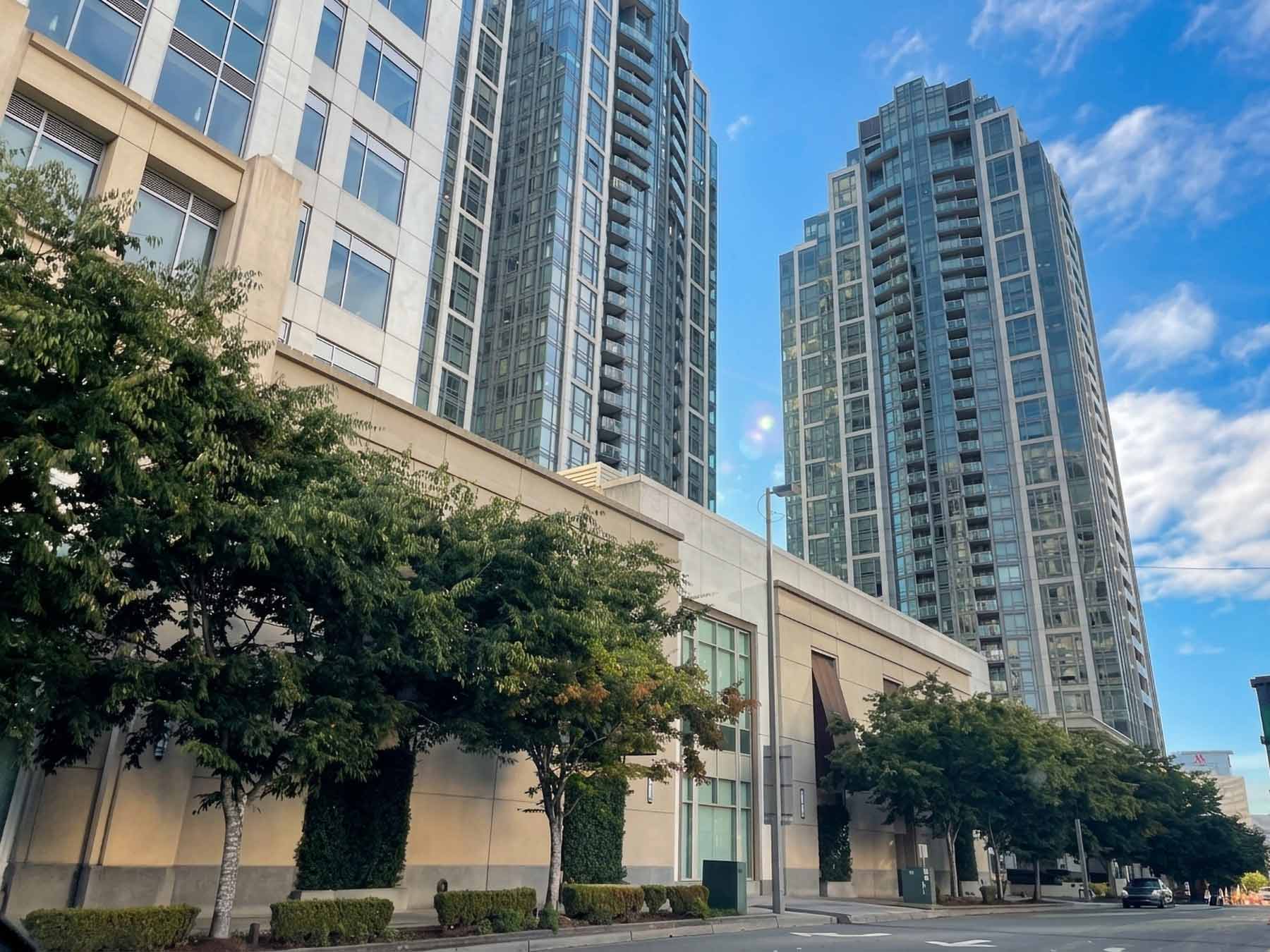
What people miss when they think of Bellevue as “one place”: the city is functionally 16 neighborhood areas, ranging from high-rise Downtown towers and the transit-oriented Spring District to the equestrian-zoned five-acre lots of Bridle Trails, the mid-century street grid of Lake Hills, the hillside view tiers of Somerset and Vuecrest, and the waterfront pockets of West Bellevue. Price, housing stock, lot size, school assignment, and commute character vary dramatically block to block.
Living guide · Bellevue, WA
Pros & Cons of Living in Bellevue, WA
Commute, real estate, and lifestyle in the Eastside’s urban center
Commute
Pros
- 2 Line light rail — stations through downtown, Wilburton, and the Spring District connect Bellevue to Redmond and across Lake Washington to Seattle
- Live near the jobs — with major employers downtown, many residents commute minutes, not miles
- I-405 and I-90 junction — two interstates plus SR-520 nearby give route options in every direction
Cons
- I-405 through Bellevue ranks among the region’s worst corridors at peak
- Construction is constant — downtown tower and infrastructure projects mean lane closures and detours
- Surface arterials clog — Bellevue Way and NE 8th back up well beyond the freeway
Real Estate
Pros
- Deep demand base — a major employment center supports values through market cycles
- High-rise to acreage range — downtown condos, mid-century neighborhoods, and larger lots toward Bridle Trails and Somerset
- New construction pipeline — towers and townhomes keep adding modern inventory near light rail
Cons
- Top-of-market pricing — among the highest costs per square foot in the state
- Competitive offers — well-located listings frequently draw multiple bids
- High absolute carrying costs — property taxes and HOA dues scale with the price point
Lifestyle
Pros
- Premier shopping and dining — Bellevue Square, Main Street, and a fast-growing international food scene
- Parks woven into downtown — Downtown Park, Meydenbauer Bay, and the Bellevue Botanical Garden minutes from the towers
- Quick escapes — I-90 puts Lake Washington, Cougar Mountain trails, and Snoqualmie Pass within easy reach
Cons
- Polished over personality — the downtown core reads corporate compared to older, organically grown districts
- Premium prices on everything — dining, parking, and services run high
- Busy at all hours — density brings traffic, noise, and crowded weekends to the core
How Bellevue compares to neighboring cities
Kirkland trades Bellevue’s high-rises and light rail for lakefront parks and a small-block downtown at slightly lower intensity.
Redmond shares the 2 Line and tech employment but keeps a lower skyline, with trail access and newer master-planned neighborhoods.
Seattle offers historic neighborhoods and deeper culture; Bellevue counters with newer construction and a compact, modern core.
Bothell sits 20 minutes north with notably more home per dollar; Bellevue answers with light rail, employment, and big-city amenities.
Information reflects general market and infrastructure conditions in Bellevue, WA as of 2026 and is intended for educational use; conditions vary by neighborhood and change over time. Equal Housing Opportunity. This content describes property, geography, infrastructure, and amenities only, consistent with the Fair Housing Act. Verify current data with WSDOT, the King County Assessor, and a licensed real estate professional.
Bellevue Real Estate Overview
Housing stock by era and type:
- 1940s–1950s early development — modest postwar ramblers and Cape Cods in older pockets near Downtown and Meydenbauer, often on generous flat lots with redevelopment value at or above the structure value
- 1950s–1970s mid-century expansion — the bulk of Lake Hills, Crossroads, Eastgate, Newport Hills, Somerset’s lower elevations, Woodridge, and Wilburton; ramblers, split-levels, and tri-levels on 7,500–12,000 sq ft lots
- 1970s–1990s view-tier and hillside homes — Somerset’s upper benches, Vuecrest, Lakemont, and Cougar Mountain; larger footprints, view-driven pricing, often on graded lots
- 1990s–2010s planned communities — Cougar Mountain, Lakemont, and the Summit; newer construction with HOAs, consistent architectural review, and larger square footage
- 2010s–present infill and tower development — Downtown high-rise condos, Spring District mid-rise, BelRed redevelopment, and selective teardown-and-rebuild across West Bellevue, Bridle Trails, and Clyde Hill–adjacent pockets
- Equestrian and large-lot residential — Bridle Trails’ five-acre minimum zoning and the few remaining acreage parcels in Lakemont and the city’s eastern edges
- Waterfront — Lake Washington frontage in West Bellevue, Meydenbauer, Enatai, Newport Shores, and Beaux Arts Village; Lake Sammamish frontage in the city’s eastern edge
Bellevue Home Prices
Bellevue is one of the most price-stratified cities in Washington. Entry-level condos in Crossroads and Factoria can start in the high $500Ks, while waterfront estates in West Bellevue routinely transact above $8M. Median single-family pricing across the city runs well above $1.5M, with significant variation by neighborhood. Downtown condos range broadly from the $700Ks into the multi-millions for penthouses. Days on market and inventory shift quickly — for current Bellevue-specific data including median price, days on market, and inventory trends, see my Western Washington Market Pulse.
How Bellevue Compares to Nearby Markets (Data through June 2026)
Median sales price, price per square foot, and median days on market across Bellevue and its 5 closest NWMLS markets. Open any city for its full Market Pulse.
| City | Median Sales Price | Price / SqFt | Median Days on Market |
|---|---|---|---|
| Bellevue Home market | $1,750,000 baseline | $680 baseline | 11 days baseline |
| Medina 1.4 mi away · View Market Pulse | $3,727,500 ▲ +113% vs Bellevue | $1,102 ▲ +62% vs Bellevue | 9 days ▼ −2 days vs Bellevue |
| Clyde Hill 1.7 mi away · View Market Pulse | $4,000,000 ▲ +129% vs Bellevue | $847 ▲ +25% vs Bellevue | 3 days ▼ −8 days vs Bellevue |
| Beaux Arts Village 1.7 mi away · View Market Pulse | $2,277,300 ▲ +30% vs Bellevue | $897 ▲ +32% vs Bellevue | 4 days ▼ −7 days vs Bellevue |
| Yarrow Point 2.5 mi away · View Market Pulse | $7,500,000 ▲ +329% vs Bellevue | $1,316 ▲ +94% vs Bellevue | 5 days ▼ −6 days vs Bellevue |
| Hunts Point 2.6 mi away · View Market Pulse | $17,370,000 ▲ +893% vs Bellevue | $3,135 ▲ +361% vs Bellevue | 79 days ▲ +68 days vs Bellevue |
The Best Month to List in Bellevue (4-year NWMLS seasonality)
Every calendar month scored 0–100 on the four things sellers care about: percent of asking achieved, speed to pending, buyer demand, and price premium vs. the Bellevue monthly average.
Across 4 years of NWMLS history, Bellevue homes sold in April averaged 100.8% of original asking price and a median 5 days on market, with roughly 91 homes going pending in a typical April — the strongest combination of pricing, speed, and buyer demand of any month. Median prices in April have run 5.8% above the city’s monthly average. Demand builds through the window, so plan photos and prep to launch early in April.
Schools in Bellevue
Most of Bellevue is served by the Bellevue School District, which has consistently performed at or near the top of Washington state rankings. Pockets of southeastern Bellevue (parts of Lakemont, Cougar Mountain, and Newport-area edges) fall into the Issaquah School District or Renton School District. Northern edges near the Kirkland and Redmond lines may fall into the Lake Washington School District.
School assignment in Bellevue is address-specific and boundaries are periodically adjusted. Always verify the assigned elementary, middle, and high school for any specific property using the district’s address-lookup tool before relying on school as a buying factor. Private school options include Bellevue Christian, Forest Ridge, Eastside Catholic (Sammamish), Overlake School (Redmond), and several Montessori and parochial programs.
The Anchors: What Defines Bellevue
- Downtown Bellevue — Bellevue Square, Lincoln Square, The Bellevue Collection, Downtown Park with Inspiration Playground, Meydenbauer Bay Park, Bellevue Arts Museum, KidsQuest Children’s Museum, and the Bellevue Downtown Station on the 2 Line
- The Spring District — REI’s headquarters, Meta’s offices, a growing residential and retail core, and the Spring District Station on the 2 Line
- BelRed — Overlake Medical Center, Kaiser Permanente, the Global Innovation Exchange (UW/Tsinghua), and the redevelopment corridor between Downtown and Redmond
- Crossroads — Crossroads Shopping Center with its international food court and community programming, Crossroads Park, and the Mini City Hall multilingual services office
- Factoria — Factoria Mall, T-Mobile’s regional headquarters, and the I-90/I-405 interchange access
- Bellevue College — the state’s third-largest higher-education institution, anchoring Eastgate
Outdoor Recreation in Bellevue
- Mercer Slough Nature Park — 320 acres of wetland trails, blueberry farm, and the Environmental Education Center
- Cougar Mountain Regional Wildland Park — 3,100+ acres of forested trail network spanning Bellevue, Newcastle, and Issaquah
- Lewis Creek Park and Coal Creek Natural Area — connected trail systems on the city’s southeast side
- Bellevue Botanical Garden — 53 acres of cultivated gardens and forest in Wilburton
- Bridle Trails State Park — 489 acres of equestrian and hiking trails on the Kirkland/Bellevue line
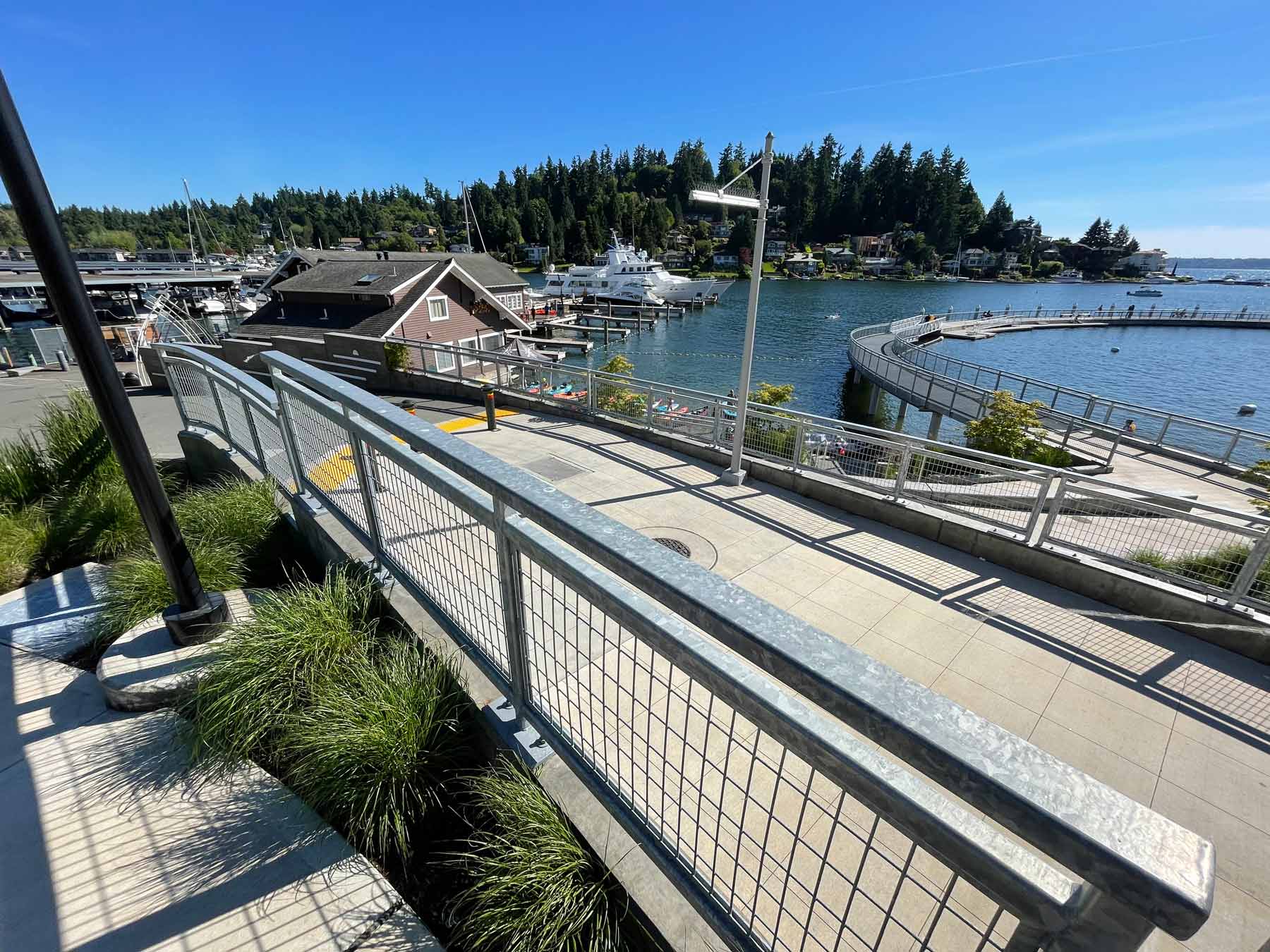
- Downtown Park, Meydenbauer Bay Park, Chism Beach Park, Newcastle Beach Park, Enatai Beach Park — Lake Washington access points
- The Eastrail and Lake-to-Lake Trail — connecting Bellevue’s park system to regional corridors
Bellevue Neighborhoods
A directory of Bellevue’s distinct neighborhoods, with quick orientation on what defines each. Where a full guide exists, the neighborhood name links to it.
Downtown Bellevue — The city’s high-rise core, with luxury condos, office towers, Bellevue Square, Downtown Park, Meydenbauer Bay Park, and the Bellevue Downtown Station on the 2 Line. The most walkable neighborhood in Bellevue and the fastest-growing residential area in the city.
West Bellevue — The general designation for the prestigious lakeside enclaves west of I-405, including Bridle Trails-adjacent pockets and the approach to Clyde Hill and Medina. Large lots, mature landscaping, and the highest median prices in the city.
Meydenbauer — Just south of Downtown along Lake Washington, with a mix of established mid-century homes and newer construction. Walkable to Downtown amenities and Meydenbauer Bay Park, with ferry access historically tied to the Mosquito Fleet era.
Enatai — A small lakeside neighborhood at the south edge of Downtown, with Lake Washington frontage and direct access to the I-90 lid and Mercer Slough.
Bridle Trails — Five-acre minimum equestrian zoning along the Kirkland border, anchored by Bridle Trails State Park. The largest-lot single-family neighborhood in Bellevue.
Crossroads — Densely populated, internationally oriented, and anchored by Crossroads Shopping Center’s food court and community programming. One of the most demographically and economically varied neighborhoods on the Eastside.
Eastgate — Residential mid-century neighborhood at the foot of Cougar Mountain and adjacent to Bellevue College. I-90 access defines the commute character.
Factoria — Commercial and residential mix at the I-90/I-405 interchange, anchored by Factoria Mall and T-Mobile’s regional headquarters. Mid-century ramblers and newer infill condos.
Lake Hills — The largest mid-century residential grid in Bellevue, developed primarily in the 1950s–1960s on 7,500–10,000 sq ft lots. Anchored by Lake Hills Greenbelt and Lake Hills Village. Documented WWII-era Japanese American farming history shaped the early character of this area.
Wilburton — Just east of Downtown, home to the Bellevue Botanical Garden and the Wilburton Station on the 2 Line. A mix of established residential and ongoing redevelopment under the Wilburton Vision area plan.
Woodridge — Hillside neighborhood south of Downtown with views toward Lake Washington and the Seattle skyline. Predominantly 1950s–1970s mid-century construction.
Somerset — Hillside neighborhood rising above Factoria and Eastgate, known for its tiered view homes built primarily from the 1960s through 1980s. Elevation gain creates significant view-tier pricing variation block to block.
Vuecrest — Smaller hillside neighborhood between Somerset and Newport Hills, with view-oriented homes on graded lots.
Newport Hills — Established mid-century residential community on the city’s southwest side, with a neighborhood shopping center, Newport Hills Park, and proximity to Coal Creek Natural Area and The Golf Club at Newcastle.
Newport Shores — A canal-front community at the south end of Lake Washington with private boat moorage on most lots.
Lakemont — Cougar Mountain hillside neighborhood with newer planned communities (1990s–2010s), wooded character, and access to Lewis Creek Park.
Cougar Mountain — Upper-elevation planned developments on the north face of Cougar Mountain, including The Summit and Forest Ridge. Mixed school district assignment (Bellevue, Issaquah, or Renton depending on address).
Tam O’Shanter — Small Lake Sammamish-adjacent neighborhood on the city’s east side, anchored by the Tam O’Shanter Golf and Country Club.
West Lake Sammamish — Lake Sammamish frontage along the city’s eastern edge, with Vasa Park access and a mix of original cabins-turned-residences and newer construction.
Phantom Lake — Small residential pocket around Phantom Lake on the east side of Lake Hills.
Robinswood — Residential neighborhood anchored by Robinswood Park and Robinswood House, between Lake Hills and Eastgate.
Spring District — Bellevue’s newest mixed-use neighborhood, transit-oriented around the Spring District Station on the 2 Line. REI’s headquarters, Meta offices, and a growing residential and retail core.
BelRed — The redevelopment corridor between Downtown and Redmond’s Overlake area, undergoing major transformation with new residential, office, and the BelRed Station on the 2 Line.
Interlake — Northeast Bellevue neighborhood adjacent to the Microsoft campus border and the city of Redmond.
Hidden Valley — Small residential pocket on the city’s north edge near the Kirkland line.
Bridle Trails-adjacent North Bellevue — The general designation for northern Bellevue between Bridle Trails and the Kirkland border, including pockets that fall into the Lake Washington School District.
Beaux Arts Village — A separately incorporated village of roughly 300 residents on Lake Washington, surrounded by Bellevue but technically its own town. Notable for its arts-colony founding history (1908) and private community-maintained beach.
My Bellevue Pro Tips: Local Insights for Living, Buying & Selling
1. The 2 Line changed the Eastside commute math — but selectively. Light rail crossed Lake Washington in March 2026, and Bellevue now has six stations: South Bellevue, East Main, Bellevue Downtown, Wilburton, Spring District, and BelRed. If your priority is a one-seat ride to downtown Seattle without driving, the value proposition for properties within a 10–15 minute walk of any of those stations is meaningfully different than it was two years ago.
Outside the walkshed, light rail is a “drive-and-park” benefit at South Bellevue Station, which has the largest parking structure on the Eastside but fills early on weekdays. Pro move: When evaluating a Bellevue property, map the walking time to the nearest station — not the driving time. Walkshed value is concentrated within a quarter to half mile.
2. School assignment is address-specific and worth verifying before you write an offer. Bellevue is mostly served by the Bellevue School District, but Lakemont, Cougar Mountain, and the southeastern edges can fall into Issaquah or Renton. The northern edges can fall into Lake Washington. Boundaries get adjusted periodically. Pro move: Use the district’s address-lookup tool for the specific property — not the neighborhood average — and confirm with the district directly. School-driven pricing premiums can shift if boundaries change.
3.
Mid-century inspection items are real, and I look for them specifically. Most of Lake Hills, Crossroads, Eastgate, Newport Hills, Somerset’s lower benches, Woodridge, and Wilburton was built between 1955 and 1975.
From a residential construction standpoint, the recurring inspection items in that era are galvanized water supply lines (corrosion, $8K–$15K for a full repipe), cast iron drain lines (joint failures), Federal Pacific (FPE) and Zinsco electrical panels (an insurance flag, $2K–$4K to replace), single-pane windows, asbestos in popcorn ceilings and vermiculite insulation, original oil tanks requiring decommissioning, and cedar shake or composition roofs at end of life.
Pro move: Get a sewer scope, pull permit history early, and ask the listing agent for any insurance claim history. My residential construction background is genuinely helpful here — happy to walk through inspection findings together.
4. Bellevue’s view tiers are pricing tiers. Somerset, Vuecrest, Lakemont, Cougar Mountain, and Woodridge all have meaningful view variation block to block. A house with a clear Lake Washington and Olympic Mountains view can transact at a substantial premium to the same floor plan one street up with the view partially blocked by mature trees or neighboring rooflines.
Pro move: View tier is a real factor in resale, not just initial pricing. When evaluating a view property, consider the maturity of neighboring vegetation, the city’s tree retention regulations, and any potential future development that could affect sightlines.
5. Downtown condo HOA financial health matters more than amenities. Bellevue’s Downtown condo market spans buildings from the 1980s through current construction. The variability in HOA financial health, reserve study results, and special assessment history is significant. Pro move: Always request HOA financial statements, reserve studies, recent meeting minutes, and special assessment history. A building with a strong reserve fund and recent envelope work is a different financial proposition than one with deferred maintenance and pending assessments — even if the units look identical on the listing.
6. Bellevue zoning is in active transition. Bellevue adopted ordinances in June 2025 implementing Washington’s HB 1110 and HB 1337, expanding the number and type of housing units permitted in residential areas — including duplexes, triplexes, fourplexes, and ADUs/DADUs in many single-family zones. The Crossroads and Newport neighborhood area plans were adopted in October 2025, and Eastgate and Factoria are in active planning cycles.
Pro move: If you’re buying a single-family lot anywhere in Bellevue, the question of “what can be built here in five years” is now a different question than it was two years ago. Lot value and redevelopment potential have shifted in many neighborhoods.
7. Lot value can exceed structure value in older Bellevue. In Downtown-adjacent neighborhoods, West Bellevue, Bridle Trails, Clyde Hill–adjacent pockets, and select areas of Lake Hills and Wilburton, an original 1950s rambler on a generous flat lot may sell primarily for the dirt. Pro move: If you’re selling an older Bellevue home, understand whether you’re marketing to an end user or to a builder. The two buyer pools have different value frameworks and different walkthrough priorities. Pricing and staging strategy should reflect which pool you’re actually targeting.
8. The Bellevue School District boundary commands real dollars — but verify which side you’re on. A property within BSD boundaries typically commands a premium versus the same property in an adjacent district. That premium can be meaningful, particularly for elementary boundaries that feed into specific middle and high schools.
Pro move: If school district is a primary factor, the boundary line is more important than the city line. Some Bellevue addresses are in Issaquah, Renton, or Lake Washington districts. Some Newcastle, Sammamish, and Issaquah addresses are in BSD. Verify before assuming.
9. Bellevue’s microclimates matter more than buyers expect. Cougar Mountain and Somerset’s upper benches see real snow accumulation several days a year, while Downtown and Crossroads stay clear. Elevation gain across the city is significant — Somerset summits at nearly 1,000 feet. Pro move: Drive the route to your property in January conditions before deciding on a hillside home. AWD/4WD, generator backup for winter outages, and tree-fall risk during windstorms are real factors above 500 feet of elevation.
10. Long-term positioning: Bellevue’s employer base is still expanding. Amazon, Microsoft, Meta, T-Mobile, Snowflake, OpenAI, Uber, and Databricks have all expanded their Bellevue footprints over the past several years. The 2 Line opening, the Wilburton and Spring District redevelopment cycles, and the BelRed corridor’s continued buildout all point to sustained demand drivers.
Pro move: For long-hold buyers, the question is less “is this neighborhood hot now” and more “what will the walkshed, employer base, and zoning look like in 10 years.” Several Bellevue neighborhoods are still mid-transformation.
Is Bellevue Right for You
Bellevue tends to fit if:
- You want strong school district options, with the caveat that boundaries vary
- You want a one-seat light rail ride to Seattle without driving
- You’re prioritizing access to Eastside employers (Microsoft, Amazon Bellevue, Meta, T-Mobile)
- You want a mix of urban density (Downtown, Spring District) or established residential (Lake Hills, Somerset, Bridle Trails)
- You want a city with substantial parks, trail systems, and lake access
- You’re comfortable with pricing that runs above the regional median
Bellevue may not fit if:
- You want walkable urban character outside of Downtown and the Spring District — most of Bellevue is car-dependent
- Your budget caps below the $500K–$600K entry point for the city’s most affordable condos
- You’re looking for the small-town or rural character that Western Washington offers in other areas
- You want a single coherent neighborhood identity rather than a city of distinct sub-markets
Surrounding Areas
- Kirkland — to the north, with downtown waterfront character and the Lake Washington School District
- Redmond — to the northeast, anchored by the Microsoft campus and Marymoor Park
- Mercer Island — to the west across I-90, with its own school district and island character
- Newcastle — to the south, bordering Cougar Mountain
- Issaquah — to the southeast, with Issaquah School District and Cougar/Squak/Tiger mountain trail access
Commuting and Transportation
Drive Times from Bellevue (typical estimates)
| Destination | Off-Peak | Rush Hour |
|---|---|---|
| Downtown Seattle (via I-90) | 15 min | 35–45 min |
| Redmond / Microsoft | 10 min | 20–30 min |
| Kirkland | 8 min | 15–20 min |
| Renton | 15 min | 25–35 min |
| SeaTac Airport | 25 min | 45–60 min |
| Woodinville | 20 min | 30–40 min |
Drive times reflect typical WSDOT corridor patterns. Rush hour assumes weekday morning inbound (7–9 a.m.) or evening outbound (4–6 p.m.).
The 2 Line: A Genuine Game-Changer
Sound Transit’s East Link — the 2 Line — opened in 2024, with the cross-lake extension to Seattle following. High-speed light rail now connects downtown Bellevue to Microsoft’s Redmond campus and across Lake Washington to Seattle, with trains roughly every 8–10 minutes during peak hours.
Bellevue stations include:
- South Bellevue Station
- East Main Station
- Bellevue Downtown Station
- Wilburton Station
- Spring District Station
- BelRed / 130th Station
The downtown-to-Seattle ride runs roughly 25–28 minutes — and unlike I-90, it isn’t affected by traffic. This is the most significant infrastructure shift Bellevue has seen in a generation, and it’s already reshaping where buyers want to live.
Highway Access
Bellevue sits at the intersection of I-405 (north–south) and I-90 / SR-520 (east–west across Lake Washington), making Seattle, Renton, Woodinville, and the Eastside tech corridor straightforward commutes. Real-time conditions are available through WSDOT.
Things to Do in Bellevue
Shopping
Bellevue offers some of the best shopping in the Pacific Northwest:
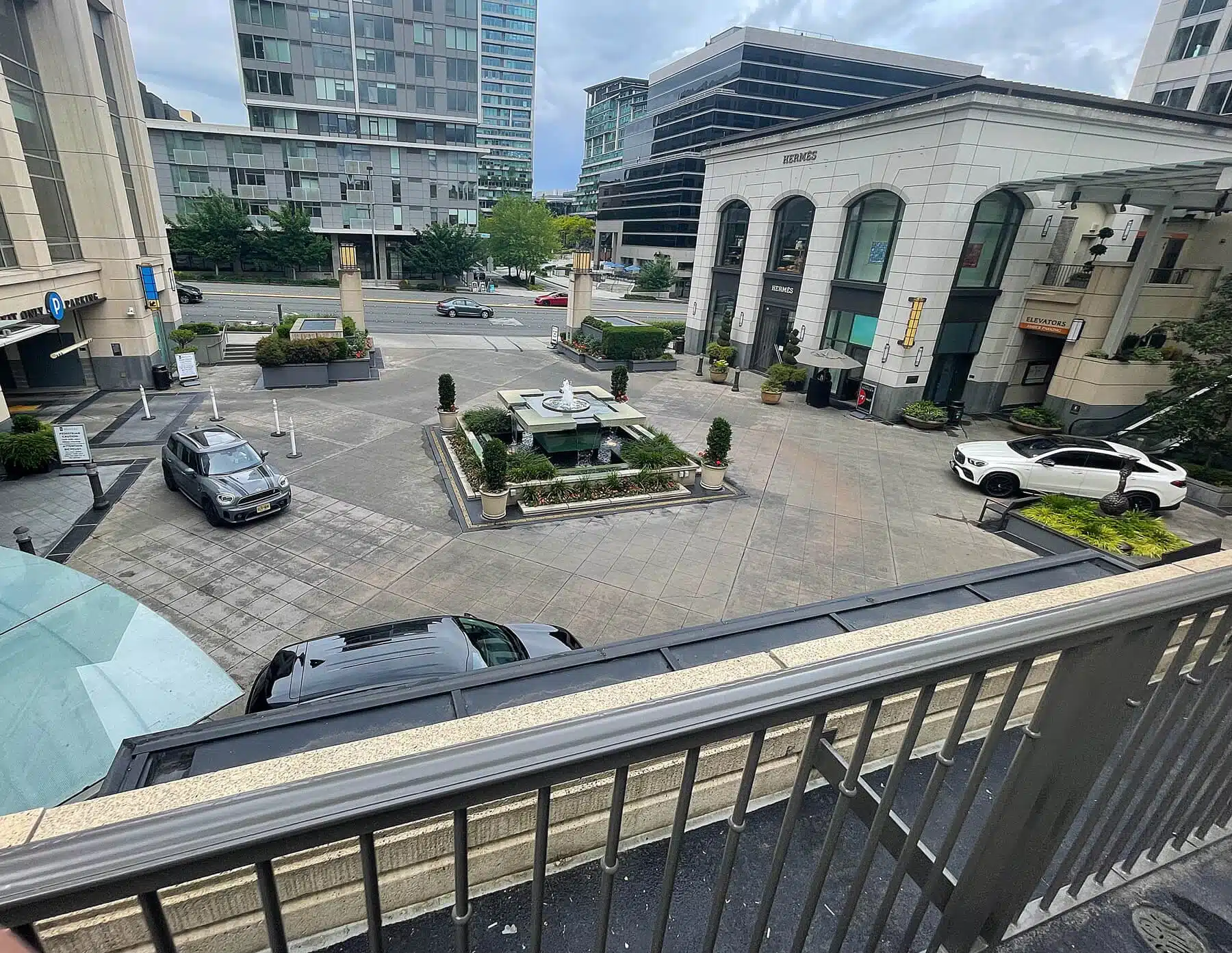
- The Bellevue Collection (Bellevue Square + Lincoln Square + Bellevue Place) — over 200 stores, anchored by Nordstrom
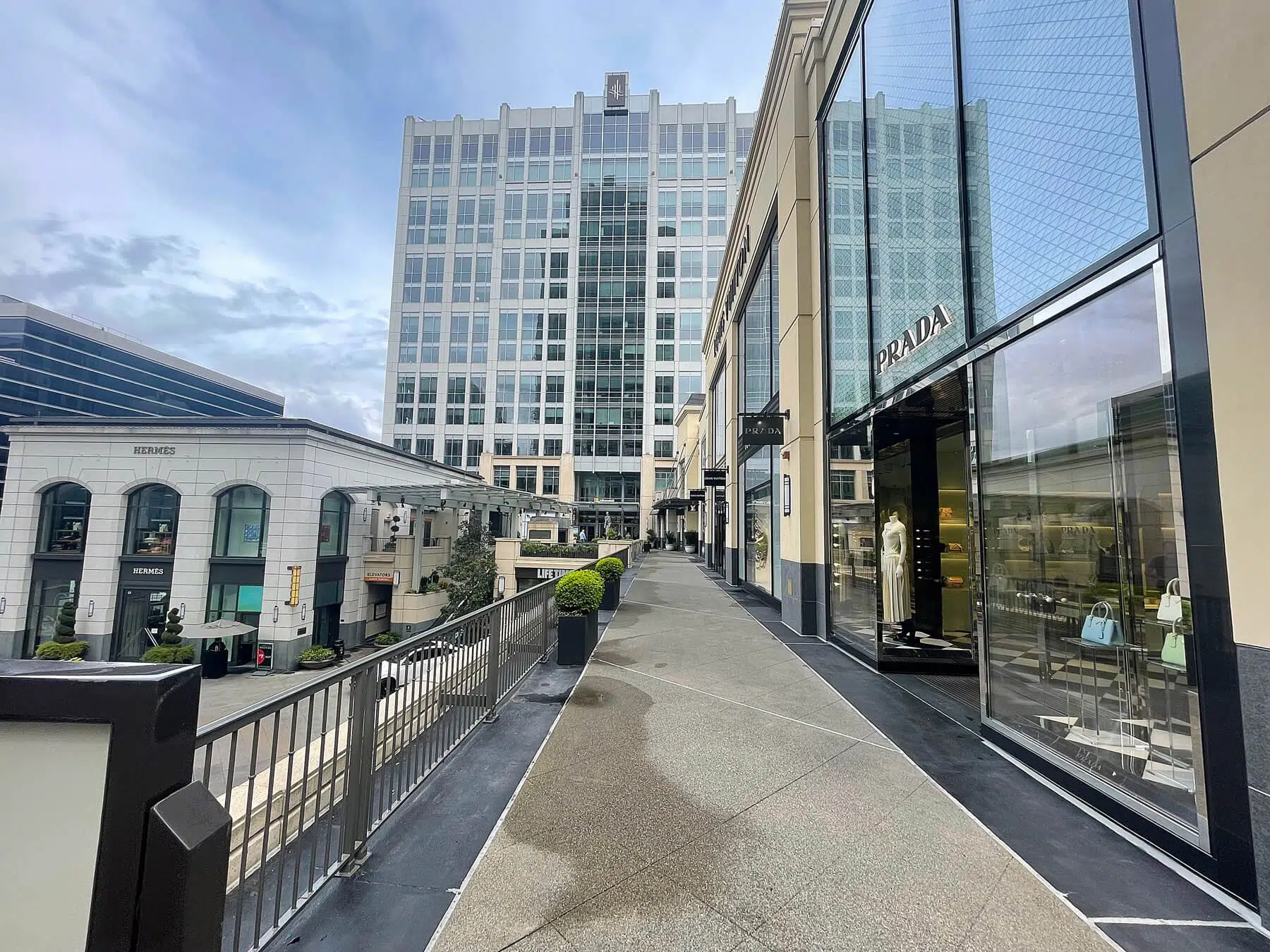
- The Shops at The Bravern — luxury fashion (Prada, Gucci, Louis Vuitton), fine dining
- Crossroads Bellevue — multicultural shopping, international markets, year-round community events
- Factoria Mall and Marketplace at Factoria — practical, accessible, family-friendly
Best Restaurants in Bellevue
A dining scene that punches well above its suburban weight:
- Din Tai Fung (Lincoln Square) — Taiwanese xiao long bao, internationally known
- Dough Zone Dumpling House (Crossroads) — strong local alternative with a devoted following
- Hokkaido Ramen Santouka — rich Northern Japanese-style broth
- Seastar Restaurant & Raw Bar — fresh seafood, polished setting
- John Howie Steak — special-occasion dining, serious wine program
- El Gaucho — classic upscale steakhouse
- The Lakehouse (W Bellevue) — Chef Jason Wilson’s farm-to-table menu
- Wild Ginger — Pan-Asian institution
- Cantinetta — wood-fired pizza and housemade pasta
- Moksha Indian Cuisine — South Indian specialties
- Mediterranean Kitchen — hearty traditional fare
- Maggiano’s Little Italy — reliable Italian-American
- Andiamo Ristorante — homey Italian with friendly service
Parks and Outdoor Spaces
Bellevue holds over 2,500 acres of parks and 80+ miles of trails, including:
- Bellevue Downtown Park — 20-acre urban centerpiece with a 240-foot circular waterfall
- Bellevue Botanical Garden — 53 acres, 12 distinct gardens, free admission
- Mercer Slough Nature Park — 320-acre wetland with kayaking, hiking, and birdwatching
- Kelsey Creek Farm Park — working farm with animals, hayrides, and trails
- Meydenbauer Bay Park — swimming, sunbathing, and views off Old Main Street
- Enatai Beach Park — Lake Washington swimming, fishing, and picnic areas
- Crossroads Park — 34 acres, sports courts, water-spray playground
- Lake Hills Greenbelt — connected nature trails and reserves
Bellevue Neighborhoods
Explore communities across Bellevue, WA
Somerset
Bellevue Neighborhood
Vuecrest
Bellevue Neighborhood
Cougar Mountain / Lakemont
Bellevue Neighborhood
Woodridge
Bellevue Neighborhood
Wilburton
Bellevue Neighborhood
Eastgate
Bellevue Neighborhood
Factoria
Bellevue Neighborhood
Crossroads
Bellevue Neighborhood
Newport Hills
Bellevue Neighborhood
Lake Hills
Bellevue Neighborhood
Explore Communities Near Bellevue
Just north of Downtown Bellevue, Clyde Hill offers remarkable access to neighboring cities while maintaining its own distinct, quiet character.
Explore Clyde Hill →West of Bellevue, Medina is defined by its multi-million dollar estates and an unmatched standard of luxury living.
Explore Medina →A small, exclusive city north of Bellevue sitting right on Lake Washington, where high-end luxury real estate meets serene waterfront living.
Explore Yarrow Point →Nestled on the eastern shore of Lake Washington, northwest of Bellevue — a premier destination for waterfront estates and luxury living.
Explore Hunts Point →A charming town on the eastern shore of Lake Washington, tucked right next to Bellevue with a unique historic identity all its own.
Explore Beaux Arts Village →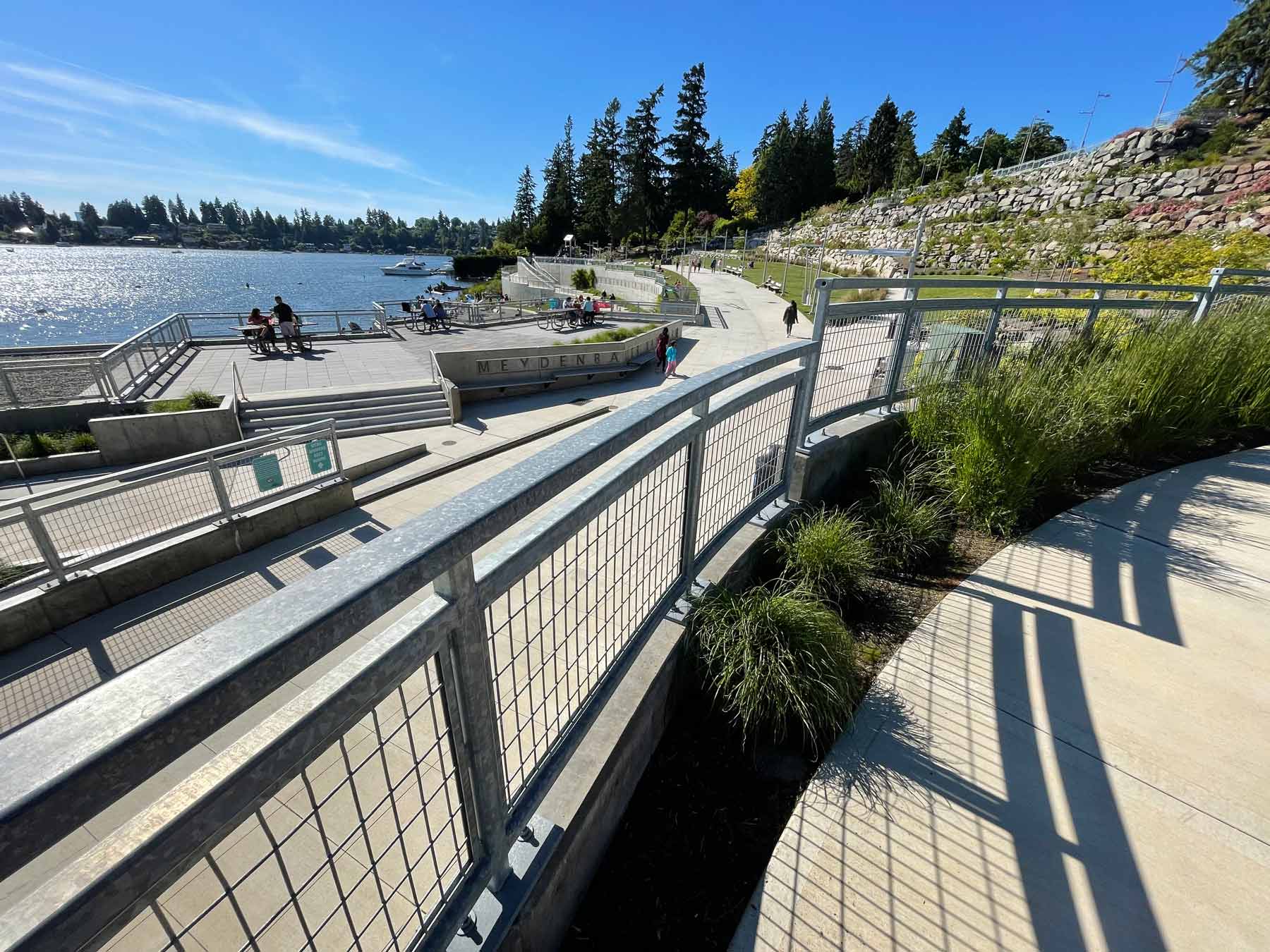
Commute guide · Bellevue, WA
Drive Times from Bellevue, WA
Off-peak and rush hour estimates to Eastside and Greater Seattle destinations
Drive times are typical estimates based on WSDOT corridor data. Rush hour reflects weekday morning inbound (7–9 AM) or evening outbound (4–6 PM). Actual times vary by origin, incidents, and season. The East Link 2 Line light rail connects Bellevue Downtown Station to Seattle Westlake in approximately 25–28 minutes — unaffected by traffic — running every 8–10 minutes during peak hours.
Local guide · Bellevue, WA
Things to Do in Bellevue, WA
Shopping, dining, parks, arts, trails, and family life on the Eastside
Bellevue’s recorded history begins long before European-American settlement. The Duwamish people maintained villages in the area, including Satskal along Mercer Slough and a settlement near present-day Factoria. In 1869, William Meydenbauer, a Seattle baker, and Aaron Mercer, a farmer, became the first European-American homesteaders in what is now Bellevue, claiming tracts along the bay and slough that still bear their names.
Both moved on within a few years, and permanent settlement didn’t take hold until 1879. By 1882, a small community of logging and farming homesteaders had established itself, and by 1900 the area had roughly 400 residents.
For its first several decades, Bellevue was a rural community known for berry farms, orchards, and timber, with ferry service across Lake Washington connecting it to Seattle. Everything changed with the opening of the Lake Washington Floating Bridge (later renamed the Lacey V. Murrow Memorial Bridge) in 1940, which connected the Eastside to Seattle by car for the first time and set the stage for postwar suburban growth.
After World War II, returning veterans and a regional housing boom transformed Bellevue from farmland into a fast-growing suburb. Kemper Freeman Sr. opened Bellevue Square shopping center in 1946, anchoring a new commercial core. The city was incorporated in 1953 with a population of around 5,900, and following the 1963 opening of the Evergreen Point Floating Bridge — a second crossing of Lake Washington — Bellevue’s growth accelerated sharply. By the 1970 census, it had become the fourth most populous city in Washington state.
While Boeing’s aerospace boom drove the broader Puget Sound economy through the 1950s and 1960s, Bellevue’s role in that era was primarily as a residential and retail center for the regional workforce, not as a manufacturing hub. Bellevue’s emergence as a major business and technology center came later — beginning in the 1980s and accelerating in the 1990s alongside the rise of Microsoft in neighboring Redmond — and continues today, with Bellevue home to the headquarters of T-Mobile US, PACCAR, and Valve, among many others.
How to Use
- Tap a season tab (Winter, Spring, Summer, Fall) to view averages.
- Each card shows a key climate metric — temps, rainfall, and seasonal highlights.
- Scroll down for a city comparison table and detailed FAQs.
- All figures are long-term averages — individual years vary.
Bellevue, WA — Weather by Season
King County · Eastside Hub · Lake Washington to Lake Sammamish · Climate Averages
Bellevue, Washington Climate Overview
Bellevue sits at roughly 47.61°N latitude on the Eastside of Lake Washington, spanning a range of elevations from lakefront at sea level up to 500+ feet on Somerset and Cougar Mountain ridges. This elevation diversity creates surprisingly different microclimates within a single city. Bellevue falls into the Köppen warm-summer Mediterranean classification (Csb), the same broad category that defines Seattle, Redmond, and Kirkland — but Bellevue's inland-from-Sound position and varied topography produce a distinctive blend of climate behaviors.
Total annual precipitation runs around 41 inches — slightly higher than Seattle's 37" because Bellevue sits east of the Olympics' rain shadow and begins to register early Cascade orographic effects. Annual snowfall averages 5–7 inches, with hill neighborhoods (Somerset, Cougar Mountain, Eastgate ridges) regularly seeing 2–3" more than lakefront and downtown areas. Bellevue spans USDA Hardiness Zones 8a–8b, with the warmer 8b zone along Lake Washington and slightly cooler 8a in higher elevations and more inland areas like Bridle Trails.
How Bellevue Weather Compares to Nearby Cities
Bellevue is warmer in summer than Seattle by 2–3°F because it sits inland from Puget Sound's cooling marine influence. This summer warmth advantage is most pronounced in inland Bellevue neighborhoods like Bridle Trails or Lake Hills. Bellevue is cooler in summer than Issaquah, which sits in the Sammamish Valley with stronger inland heating. Winter overnights in Bellevue are slightly cooler than Seattle (less marine moderation) but warmer than foothill cities like North Bend or Issaquah Highlands. Hill neighborhoods see noticeably more snow events than downtown Bellevue — sometimes 3–5°F colder during arctic outbreaks.
| City | Summer High | Winter Low | Annual Rain |
|---|---|---|---|
| Bellevue | ~76°F | ~36°F | ~41" |
| Seattle | ~73°F | ~38°F | ~37" |
| Kirkland | ~75°F | ~37°F | ~40" |
| Redmond | ~77°F | ~36°F | ~42" |
| Issaquah | ~78°F | ~35°F | ~46" |
| Mercer Island | ~75°F | ~38°F | ~40" |
Best Times of Year in Bellevue
For outdoor activities along the Lake-to-Lake Trail, Mercer Slough Nature Park, or the Bellevue Downtown Park, the sweet spot runs mid-June through late September, with consecutive dry days and afternoons reliably reaching the mid-70s. Late April through May showcases the Bellevue Botanical Garden's azalea, rhododendron, and dogwood displays. October delivers vivid fall foliage along Bellevue's hillsides and tree-lined streets, with cooler crisp mornings ideal for Cougar Mountain hikes before November's heavy rains arrive. Late November through December brings the popular Garden d'Lights light display at the Botanical Garden.
What Bellevue's Climate Means for Homeowners
Bellevue's climate variability across elevations shapes housing decisions in important ways. The wet winter half of the year makes covered porches, well-graded site drainage, and disciplined gutter maintenance highly desirable in all neighborhoods, but particularly on hillside lots in Somerset, West Bellevue, and Cougar Mountain where soil saturation matters. Summer's low humidity and cool nights mean central air conditioning is increasingly desirable but not essential in most homes — though heat pumps are now standard in most new construction. Hill neighborhoods occasionally lose power during winter windstorms, making generators a common feature in higher-end Eastside homes. Lakefront properties enjoy the strongest temperature moderation but warrant attention to wind exposure on the Lake Washington shoreline.
Frequently Asked Questions: Bellevue Weather
Does it snow in Bellevue, Washington?
How hot does Bellevue get in summer?
When is the rainy season in Bellevue?
Is Bellevue weather different from Seattle?
What climate zone is Bellevue, WA in?
Does Bellevue get severe weather?
Do I need air conditioning in a Bellevue home?
When is the best time to move to Bellevue?
SOURCESClimate figures represent long-term averages compiled from NOAA National Centers for Environmental Information data for the Bellevue area, supplemented by Western Regional Climate Center records. Individual years naturally vary. Last reviewed April 2026. Compiled by matthewkonsmo.com — your Eastside & Western Washington real estate resource powered by Coldwell Banker Danforth.

Western Washington
Matthew Konsmo
Associate Real Estate Broker
Serving buyers and sellers with integrity and expertise. Matthew is an Associate Real Estate Broker with Coldwell Banker Danforth, helping clients navigate the Pacific Northwest market with confidence.
Thinking About Buying or Selling in Bellevue?
I'm a third-generation Western Washington real estate broker with a Fortune 500 advertising background and over a decade of residential construction experience. I work the full Eastside under the NWMLS framework with Coldwell Banker Danforth, and I bring inspection-level fluency to every transaction — particularly useful in Bellevue's mid-century housing stock and view-tier hillside neighborhoods.
Matthew Konsmo | Coldwell Banker Danforth Direct: (425) 463-8243 Email: MatthewKonsmo@gmail.com Contact me | About Matthew
How to read this
- Click a season on the left rail to see its averages.
- The large number is the typical daytime high for that season.
- Scroll down for the city comparison and climate notes.
- All figures are long-term averages — individual years vary.
Western Washington · Almanac № 8
Bellevue, by season.
Fourteen miles of waterfront between two lakes, a skyline that climbs from Lake Washington's shore to the flanks of Cougar Mountain — and the widest elevation range of any major Eastside city.
Winter
Dec — FebCold and wet at every elevation — but Somerset and Cougar Mountain neighborhoods see meaningfully more snow than the waterfront districts just a few hundred feet below.
Spring
Mar — MayThe Bellevue Botanical Garden opens its rhododendron season, the Downtown Park lawn fills back up, and kayaks return to the Meydenbauer Bay pier by mid-April.
Summer
Jun — AugWarm and reliably dry. Chism Beach on Lake Washington and Newcastle Beach on Lake Sammamish both peak in August — the city's two-lake geography means a waterfront is never far, regardless of which side of town you're on.
Autumn
Sep — NovA long warm September gives way to Japanese maple color across the Botanical Garden by mid-October, then the first serious frontal rains arrive in November — arriving earlier and harder on the Cougar Mountain ridge than near the lake.
Two lakes, one city — fourteen miles of waterfront.
Bellevue occupies a broad, hilly peninsula between Lake Washington to the west and Lake Sammamish to the east, giving it more than 14 miles of combined lakefront — a dual-water geography shared by no other major Eastside city. Downtown sits near lake level, roughly 80 to 100 feet above sea level, while the city's terrain climbs steadily eastward through neighborhoods like Crossroads, Somerset, Eastgate, and the Lakemont foothills before reaching the flanks of Cougar Mountain at nearly 1,500 feet of elevation. That elevation range is the climate story: a house near Chism Beach on the western lakeshore and a house in Somerset on the southeastern ridge occupy meaningfully different microclimates, with the upland neighborhoods running cooler in summer, wetter in fall, and more prone to snow accumulation in winter.
The overall classification is Köppen Csb (warm-summer Mediterranean): cool wet winters, warm dry summers, with the majority of the annual 41–44 inches of precipitation falling between October and March. Annual snowfall averages about 3–4 inches at lower elevations, with noticeably more on the city's upper ridges. The USDA hardiness zone across most of Bellevue is 8b, supporting Japanese maples, rhododendrons, camellias, hydrangeas, and the massive Pacific Northwest Douglas fir canopy that defines the city's identity as a "City in a Park."
How Bellevue differs from its neighbors.
Bellevue's closest climate analog on the Eastside is Kirkland — both cities border Lake Washington, both register similar summer highs and annual totals. The difference is geography: Kirkland is a narrow waterfront strip with modest interior relief, while Bellevue spans a much wider east-west range that includes Cougar Mountain foothills. That means Bellevue's upland southeastern neighborhoods run slightly cooler and snowier than anything in Kirkland. Compared to Redmond and Issaquah to the east, Bellevue's western lakeshore neighborhoods are lake-moderated — fewer freeze nights, lighter snow accumulation — while the city's eastern ridge neighborhoods behave more similarly to those inland cities. Mercer Island, directly across Lake Washington to the south, is the most lake-moderated of all nearby cities; Bellevue's waterfront neighborhoods come close, but the inland ridge neighborhoods diverge sharply.
| City | Summer High | Winter Low | Annual Rain |
|---|---|---|---|
| Bellevue | 75°F | 37°F | 41″ |
| Seattle | 73°F | 38°F | 37″ |
| Kirkland | 75°F | 37°F | 41″ |
| Mercer Island | 74°F | 38°F | 40″ |
| Redmond | 76°F | 36°F | 43″ |
| Issaquah | 75°F | 35°F | 46″ |
| Newcastle | 75°F | 36°F | 43″ |
When both lakes are at their best.
For kayaking from Meydenbauer Bay Park, swimming at Chism Beach or Newcastle Beach, and evenings on the Downtown Park lawn, the climate sweet spot runs mid-June through late September — afternoons consistently in the low-to-mid 70s, lake water reaching the high 60s by August, and Cascade views that come into sharp relief after the marine layer burns off by midday. Late April through early May is when the Bellevue Botanical Garden begins its rhododendron peak, and the Kelsey Creek Farm trails are at their muddiest, most atmospheric best. Mid-October delivers exceptional Japanese maple color across the Botanical Garden's grounds and the mature canopy neighborhoods of West Bellevue — before the first serious frontal rains of November close out the outdoor season.
What Bellevue's climate means for the homes here.
Bellevue's elevation spread sets up a two-tier maintenance reality. Waterfront and near-lake properties — Meydenbauer Bay, Enatai, Chism, the west-facing slopes dropping toward Lake Washington — face the standard lake-adjacent concerns: higher humidity persistence through winter, dock and bulkhead maintenance, and the importance of proper drainage on any steeper lakeward-facing lot. Snow is rarely a problem here; the lakeshore typically sees just a dusting on the occasional winter event.
Upland ridge neighborhoods — Somerset, Lakemont, Eastgate, Newport Hills — tell a different story. At 600 to 900 feet, these areas see meaningfully more snow accumulation on the two or three events that reach the Eastside each winter, and steep driveways on those ridges can ice over in ways that flat lakefront properties simply don't. Gutter capacity and moss treatment are standard PNW maintenance items across both tiers, but upland homes warrant more attention to drainage away from foundations on clay-heavy soils. Across the entire city, the mild shoulder seasons have historically meant older homes were built without central air conditioning — but heat pumps have become the new-construction standard across all Bellevue price points, handling both winter heating and the occasional 90°F+ stretch that the upland neighborhoods tend to feel a few degrees more intensely than the waterfront.

Matthew Konsmo
Associate Real Estate Broker
Coldwell Banker Danforth
Western Washington
Serving buyers and sellers with integrity and expertise. Matthew is an Associate Real Estate Broker with Coldwell Banker Danforth, helping clients navigate the Pacific Northwest market with confidence.