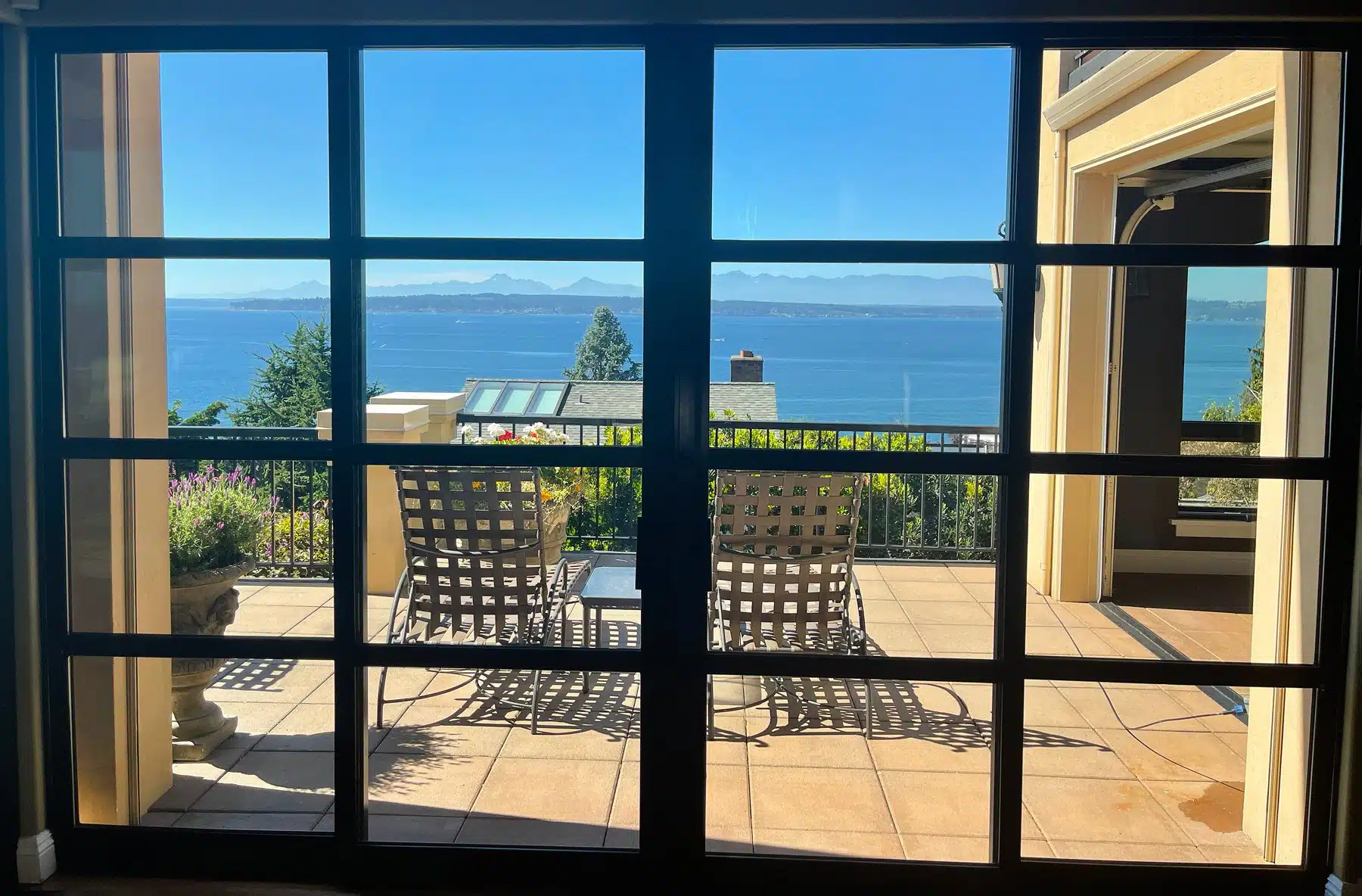
Shoreline
Shoreline — A Western Washington City Guide
By Matthew Konsmo | Coldwell Banker Danforth / Updated May 2026
Living in Shoreline, Washington
Shoreline sits directly north of Seattle along the I-5 corridor, bounded by Puget Sound to the west, Lake Forest Park and Lake Washington to the east, and the King–Snohomish county line (Edmonds and Mountlake Terrace) to the north. The city covers roughly 12 square miles and is home to about 66,000 residents across 14 recognized neighborhood associations.
The defining shift in Shoreline real estate over the last two years has been Lynnwood Link light rail, which opened August 30, 2024. Two new stations — Shoreline South/148th and Shoreline North/185th — put downtown Seattle, UW, the Eastside (via the 2 Line transfer), and SeaTac within direct rail reach. Travel time from Shoreline South to UW is approximately 11 minutes, and to downtown Seattle around 14 minutes. That has reshaped buyer interest in walkable station-area neighborhoods and triggered station-area subarea rezoning that’s now playing out in the development pipeline.
Shoreline’s housing stock leans mid-century — a high concentration of 1950s–1970s ramblers, splits, and tri-levels built on generous lots, with a layer of 1990s–2000s infill, growing townhome density near transit, and pockets of waterfront luxury along the Sound bluff. Compared to the Seattle neighborhoods immediately south, Shoreline offers larger lots and an established residential character at a noticeably different price point.
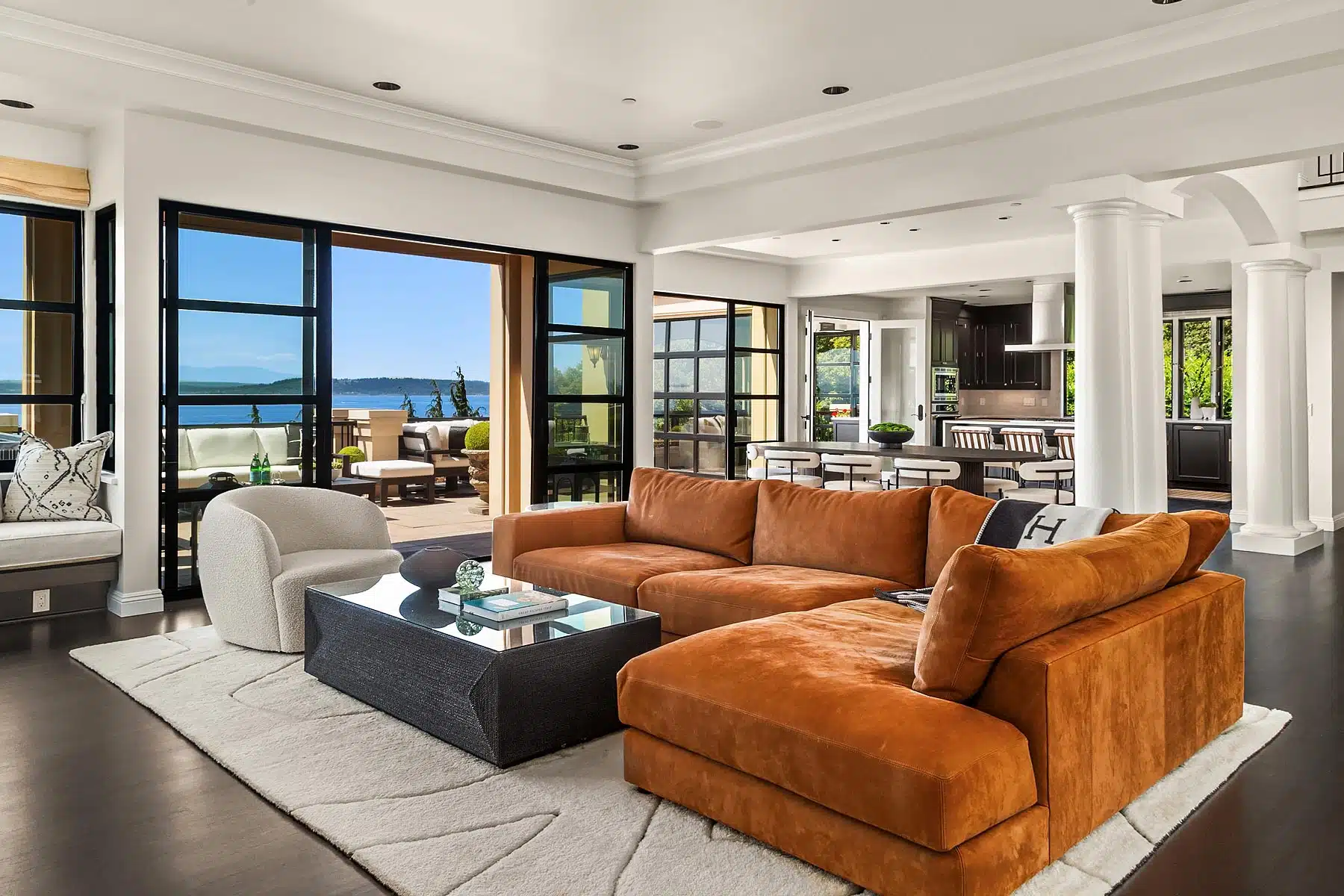
Shoreline Real Estate Overview
Housing stock breaks down across distinct eras and types:
- 1940s–1950s post-war ramblers — original Shoreline development era. One-story, 1,000–1,800 sq ft, on lots often 7,000–10,000+ sq ft. Concentrated in Richmond Highlands, Hillwood, Meridian Park, Parkwood.
- 1960s–1970s splits, tri-levels, and daylight basements — defining era of the housing stock. Common across Ridgecrest, North City, Briarcrest, Ballinger, Meridian Park.
- Mid-century view homes — Innis Arden (platted 1940 on former Boeing-owned land), Richmond Beach bluff lots, The Highlands. Many original-era homes have been remodeled or torn down for newer construction taking advantage of Sound and Olympic views.
- 1990s–2000s infill — pockets across the city where older ramblers were replaced by larger single-family construction.
- Townhomes and condos — concentrated along Aurora Avenue North (SR 99), in Richmond Highlands, North City, and increasingly within walking distance of the two light rail stations. Significant new multifamily under construction in the station areas.
- The Highlands — a separate category. 400-acre gated community platted in 1907 by the Olmsted Brothers, with the Seattle Golf Club at its center. Estate properties on large parcels with private beach, trails, and amenities.
Shoreline Home Prices
The Shoreline market in spring 2026 is active but more balanced than the peak-frenzy years. Recent data points:
- Median sale price (March 2026): approximately $760K (Redfin), trending in the $760K–$830K range across reporting sources depending on month and methodology.
- Median price per square foot: approximately $480–$490.
- Days on market: 11–34 days depending on month and price tier, with well-prepared homes still moving quickly.
- Sale-to-list ratio: roughly 95%–101%, varying by segment.
By housing type and segment (general ranges, not appraisals):
- Entry condos and townhomes (Aurora corridor, station-area infill): $400K–$650K
- Single-family ramblers and splits (interior neighborhoods, original condition): $700K–$900K
- Updated single-family (mid-century with full remodels): $900K–$1.3M
- Richmond Beach, Innis Arden view homes: $1.2M–$3M+ depending on view tier and lot
- The Highlands: $2M–$5M+
For current month-over-month data, see the Western Washington Market Pulse.
Schools in Shoreline
The Shoreline School District (SSD #412) serves Shoreline and Lake Forest Park. The district is divided cleanly by Interstate 5:
West of I-5 (Shorewood feeder pattern):
- Shorewood High School
- Einstein Middle School
- Elementaries: Echo Lake, Highland Terrace, Meridian Park, Parkwood, Syre
East of I-5 (Shorecrest feeder pattern):
- Shorecrest High School
- Kellogg Middle School
- Elementaries: Briarcrest, Brookside, Lake Forest Park, Ridgecrest
District-wide options:
- Cascade K-8 Community School (application-based)
- Home Education Exchange (K-8)
- Edwin Pratt Early Learning Center (Head Start, special education, tuition preschool)
Both Shorewood and Shorecrest are consistently high-performing comprehensive high schools with AP offerings. Always verify your specific address with the Shoreline School District boundary lookup tool — I-5 is the dividing line, but a small move across a block can change your assignment.
Private and parochial options nearby include St. Mark School (Catholic, North City area), Shoreline Christian School, and Seattle-area independent schools accessible via I-5 or light rail.
The Anchors: Light Rail, Aurora, and the Beach
Three features define modern Shoreline:
The two light rail stations. Shoreline South/148th and Shoreline North/185th are the two new Lynnwood Link stations that opened in August 2024. Both have parking garages (approximately 500 stalls at South/148th, 360 stalls at North/185th), bus connections including the Swift Blue Line BRT terminus at North/185th, and surrounding subarea plans that allow significantly higher density than the rest of the city.
Aurora Avenue North (SR 99). Shoreline’s primary commercial corridor — a continuous strip of restaurants, retail, services, and increasingly mixed-use development. Aurora Square at the south end (former Sears site) is undergoing long-range redevelopment.
Richmond Beach and the Sound. The city’s one major saltwater access point, anchored by Richmond Beach Saltwater Park — beaches, off-leash dog area, picnic shelters, and the pedestrian bridge over the BNSF tracks to the water.
Other commercial nodes include North City (15th Avenue NE), Ridgecrest, and Echo Lake.
Outdoor Recreation in Shoreline
For a city its size, Shoreline has unusually deep park acreage:
- Richmond Beach Saltwater Park — Puget Sound beach access, off-leash area, picnic shelters, trails
- Boeing Creek Park and Shoreview Park — connected forested park system with the daylit Boeing Creek and former Hidden Lake site; tennis courts, sports fields, trails
- Hamlin Park — 80-acre forested park (currently under capital improvement project, parking and Ballfield 6 closures into winter 2026)
- Twin Ponds Park — forested trails near Parkwood
- Paramount Park — skate area, playground
- Kruckeberg Botanic Garden — 4-acre native plant collection (former MsK Nursery)
- Ronald Bog Park — wetland park with walking path
- Innis Arden Reserve — wooded ravine open space
- Ballinger Park — east-side open space adjacent to Lake Ballinger
- Burke-Gilman Trail access — via Lake Forest Park, connecting to the broader regional trail network
Surrounding Cities
Shoreline neighbors several other Western Washington markets I cover in depth:
- Seattle — immediately south, sharing the 145th Street border
- Edmonds — directly north along the Sound
- Kirkland — across Lake Washington via SR 522 or I-405
- Kenmore — northeast along Lake Washington
My Shoreline Pro Tips: Local Insights for Living, Buying & Selling
1. The light rail premium is real, but it’s geographically narrow.
Walking-distance proximity to either station now meaningfully affects pricing — buyers (especially commuters and downsizers) are paying for the 10-minute reach to UW or downtown. But “walking distance” in Shoreline means within roughly a half-mile of the station, and the topography matters. The station-area subareas have been rezoned for significantly higher density, which means a single-family home walking distance to the station is also likely sitting next to (or near) future multifamily development.
Pro move: If you’re buying near the stations, pull the City of Shoreline subarea plan and zoning map for that block before writing. Some lots are now zoned for 4–6 stories; that’s value upside if you’re a long-term hold, but a livability tradeoff if you want a quiet single-family setting permanently.
2. Shoreline housing stock is mid-century — inspect accordingly.
A huge share of Shoreline’s single-family inventory was built between 1950 and 1975. That era has predictable issues that my residential construction background flags before every offer:
- Galvanized water supply lines — corrosion, low pressure, eventual repipe in the $8K–$15K range for a typical home
- Cast iron drain lines — joint failures and root intrusion; scope before closing
- Federal Pacific (FPE) and Zinsco electrical panels — insurance flag, $2K–$4K to replace
- Single-pane windows — original aluminum or wood frames, energy and comfort upgrade
- Cedar shake or older composition roofs — many are at or past end of life
- Older oil tanks — both in-service and decommissioned (require documentation)
- Asbestos in popcorn ceilings, vermiculite insulation, original floor tile — testing and disclosure
Pro move: Always get a sewer scope on Shoreline mid-century homes. Cast iron and concrete laterals from this era are at the high end of failure probability, and a side sewer repair can run $8K–$25K+ depending on length and access.
3. I-5 is the school boundary — not the neighborhood line.
Shoreline School District is split cleanly by Interstate 5: west goes Shorewood, east goes Shorecrest. The dividing line cuts through several neighborhoods (especially Meridian Park, North City, and the Echo Lake area). Both high schools perform well, but families with a preference for one or the other need to verify the specific address before assuming the neighborhood determines the school.
Pro move: Use the SSD #412 boundary lookup with the exact street address, not just the neighborhood. I’ve seen buyers assume an east-side neighborhood feeds Shorecrest only to discover their specific block sits west of the I-5 alignment.
4. Richmond Beach, Innis Arden, and The Highlands are three different markets.
These three west-side, view-oriented areas often get lumped together. They aren’t comparable:
- Richmond Beach — bluff-top single-family with Sound and Olympic views; mix of mid-century and newer rebuilds; access to Richmond Beach Saltwater Park
- Innis Arden — hillside neighborhood platted in 1940 on former Boeing property; HOA with private reserve and community amenities; covenant-restricted
- The Highlands — 400-acre fully gated private community from 1907 with Olmsted-designed grounds, Seattle Golf Club, private beach, and estate-scale parcels
Pricing, restrictions, and resale dynamics differ substantially. Don’t assume comparables cross these boundaries cleanly.
Pro move: For Innis Arden and The Highlands buyers, request the CC&Rs and HOA financials early — both communities have stricter architectural and use controls than the rest of Shoreline.
5. The station-area construction wave is going to keep moving.
Roughly 3,000+ housing units are in the planning or construction pipeline near Shoreline South/148th, with significant additional development around North/185th. That has two implications for current homeowners and buyers: short-term construction impact (traffic, noise, dust) and longer-term character change in the half-mile rings around each station.
Pro move: If construction impact matters to you, pull active permits from City of Shoreline planning for the parcels within a quarter-mile of the home you’re considering. The pipeline data is public.
6. Aurora Avenue is a feature and a variable.
SR 99 / Aurora Avenue North runs the full north-south length of Shoreline. It’s the city’s commercial spine — restaurants, retail, services, increasingly transit-oriented development — and a high-volume arterial. Proximity to Aurora is convenient for daily errands and connects directly to bus service, but homes immediately backing or fronting Aurora trade noise and visibility for that access.
Pro move: Walk the property at evening rush hour, not just during a weekend open house. Aurora’s character at 5:30 PM Tuesday is meaningfully different from 11 AM Sunday.
7. The condo and townhome segment is the segment that’s changed most.
Most Shoreline neighborhoods are dominated by single-family inventory. The exceptions — and the segments that have grown most over the last five years — are the Aurora corridor and the two station areas. Townhome and condo buyers have meaningfully more inventory now than even three years ago, with new construction continuing.
Pro move: For any Shoreline condo or attached purchase, request the HOA reserve study, two years of financial statements, and any special assessment history. The Washington State condo and attached-home market has seen building-envelope and reserve issues that show up most often in 1990s–2000s construction.
Is Shoreline Right for You?
Likely a fit if:
- You want light rail access to Seattle, UW, the Eastside, and SeaTac without paying Seattle prices
- You prefer larger lots and an established residential character over urban density
- Mid-century housing stock with renovation potential appeals to you
- Access to Puget Sound beaches and significant park acreage matters
- You’re commuting to UW, downtown Seattle, or the Eastside (2 Line transfer)
Maybe not a fit if:
- You want walkable urban retail and restaurant density at the level of central Seattle neighborhoods
- You’re avoiding any near-term construction or density change (station areas are actively redeveloping)
- You need flat topography throughout — significant parts of west Shoreline are hillside
- Mid-century inspection items and renovation budgets aren’t ones you want to take on
Thinking About Buying or Selling in Shoreline?
I’m a 3rd-generation Western Washington real estate broker with Coldwell Banker Danforth, with a Fortune 500 advertising background and over a decade of residential construction experience — which is genuinely useful for evaluating Shoreline’s mid-century housing stock. I work across Shoreline, Seattle, Edmonds, Kirkland, and the broader Eastside.
- Direct: (425) 463-8243
- Email: MatthewKonsmo@gmail.com
- Contact: /contact/
How to read this
- Click a season on the left rail to see its averages.
- The large number is the typical daytime high for that season.
- Scroll down for the city comparison and climate notes.
- All figures are long-term averages — individual years vary.
Western Washington · Almanac № 6
Shoreline, by season.
A Sound-side city of bluffs and ridges between Seattle and Edmonds — marine-moderated, breezier than the inland suburbs, and one of the milder microclimates north of the Ship Canal.
Winter
Dec — FebMild and damp, with the Sound holding overnight lows up. Pacific frontal winds hit the western bluffs harder than they hit inland Seattle.
Spring
Mar — MayThe Boeing Creek ravines green up first, then the cherry-lined streets of North City and Ridgecrest. Sunset views from Richmond Beach lengthen by the week.
Summer
Jun — AugCool for the region. The marine breeze off Puget Sound trims a few degrees off the inland suburbs — Bothell may be 78°F when Richmond Beach holds at 72°F.
Autumn
Sep — NovThe classic Shoreline mood. Bluff-top sunsets, big-leaf maple color along the Interurban Trail, and the first real Pacific frontal storms by mid-November.
A Sound-side city of bluffs and ridges.
Shoreline sits at the very north edge of King County, fronting Puget Sound along about three miles of bluff-top shoreline and running east across a series of ridges that crest near 470 feet of elevation. The city's geography is more varied than newcomers realize: Richmond Beach and Innis Arden face the Sound directly and feel that marine influence almost daily, while neighborhoods further east — Echo Lake, Ridgecrest, Briarcrest — sit on the elevated ridge with a microclimate closer to Lake Forest Park than to the waterfront. The overall climate is classic Köppen warm-summer Mediterranean (Csb), but Shoreline catches that maritime air more directly than its inland neighbors do.
Total annual precipitation averages around 38–40 inches, modestly higher than Seattle's 37" — Shoreline sits a few miles further north and slightly higher, both of which nudge totals up. Annual snowfall is light at about 4–6 inches, though the elevated eastern ridge consistently catches more accumulation than the waterfront west side during cold marine snow events. The USDA hardiness zone is 8b, supporting the rhododendrons, camellias, and Pacific madrones that thrive on the city's bluffs and ravines.
How Shoreline differs from its neighbors.
Shoreline's direct Sound exposure is the defining contrast with its eastern neighbors. It runs 2 to 4 degrees cooler in summer than Bothell or Woodinville because the marine breeze off Puget Sound trims peak afternoon heat — Richmond Beach often holds in the low 70s when inland suburbs reach the upper 70s. Winters are slightly milder at night than Lake Forest Park or Mountlake Terrace because the Sound holds overnight lows up. Compared to Seattle proper just to the south, Shoreline is marginally cooler and slightly wetter, with a touch more snow on the eastern ridge.
| City | Summer High | Winter Low | Annual Rain |
|---|---|---|---|
| Shoreline | 73°F | 37°F | 39″ |
| Seattle | 73°F | 38°F | 37″ |
| Edmonds | 72°F | 37°F | 37″ |
| Lake Forest Park | 74°F | 37°F | 39″ |
| Mountlake Terrace | 74°F | 36°F | 40″ |
| Bothell | 76°F | 36°F | 42″ |
| Kenmore | 75°F | 36°F | 40″ |
When the bluffs are at their best.
For Sound-side strolls at Richmond Beach Saltwater Park, sunset photography from the Innis Arden bluffs, and the long ride or walk along the Interurban Trail, the climate sweet spot runs mid-June through late September — cool-warm afternoons in the low 70s and reliably long evening light. Late April through early June brings out the cherry-lined streets through North City and Ridgecrest, and the trillium understory in Boeing Creek and Hamlin Park ravines. Mid-October is the visual peak of the year on the city's tree-lined arterials before the first big Pacific frontal storms typically arrive mid-November.
What Shoreline's climate means for the homes here.
Shoreline's geography splits homeowner concerns in two. Waterfront and bluff properties in Richmond Beach and Innis Arden contend with stronger Pacific frontal winds, salt-air weathering on exterior finishes, and the long-term importance of bluff stability and drainage — slope monitoring matters here. Ridge and inland neighborhoods face more standard PNW maintenance: gutter capacity, moss treatment, and ice-prone driveways for the few snow days each winter. Across the city, summer cool nights mean older homes were largely built without central AC, but multi-day heat waves have made heat pumps the new-construction standard — handling both winter heating and the occasional 90°F+ stretch efficiently.
Shoreline, WA Zip Codes
All postal zones for Shoreline — a north King County city bordered by Seattle, Edmonds, Lake Forest Park, and Puget Sound.