Kirkland, Washington · City Guide
Living in Kirkland, WAYour 2026 Neighborhood & Real Estate Guide
Neighborhoods, schools, waterfront parks, dining, and commute times — everything you need to know about life on the east shore of Lake Washington, paired with current Kirkland home and condo market data.
Living in Kirkland — Homes, Neighborhoods & Market Guide
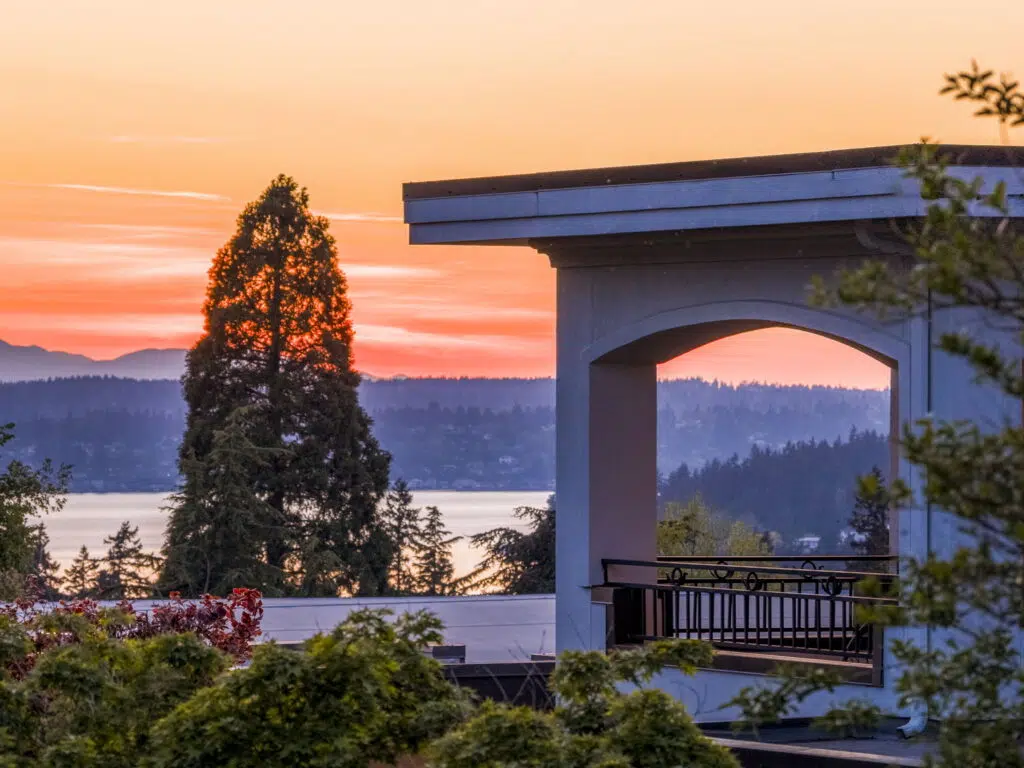
For anyone exploring Kirkland real estate, Kirkland sits on the eastern shore of Lake Washington with the kind of setting that doesn’t need much explanation — the views, the walkability, and the neighborhood quality speak for themselves. What’s worth understanding is why the market holds up the way it does.
Kirkland real estate stands out for top-rated schools, genuine walkability, consistent appreciation, and a Pacific Northwest lifestyle that’s hard to replicate anywhere else on the Eastside all converge here. That’s why well-priced listings move quickly and why buyers who hesitate typically pay more the second time around.
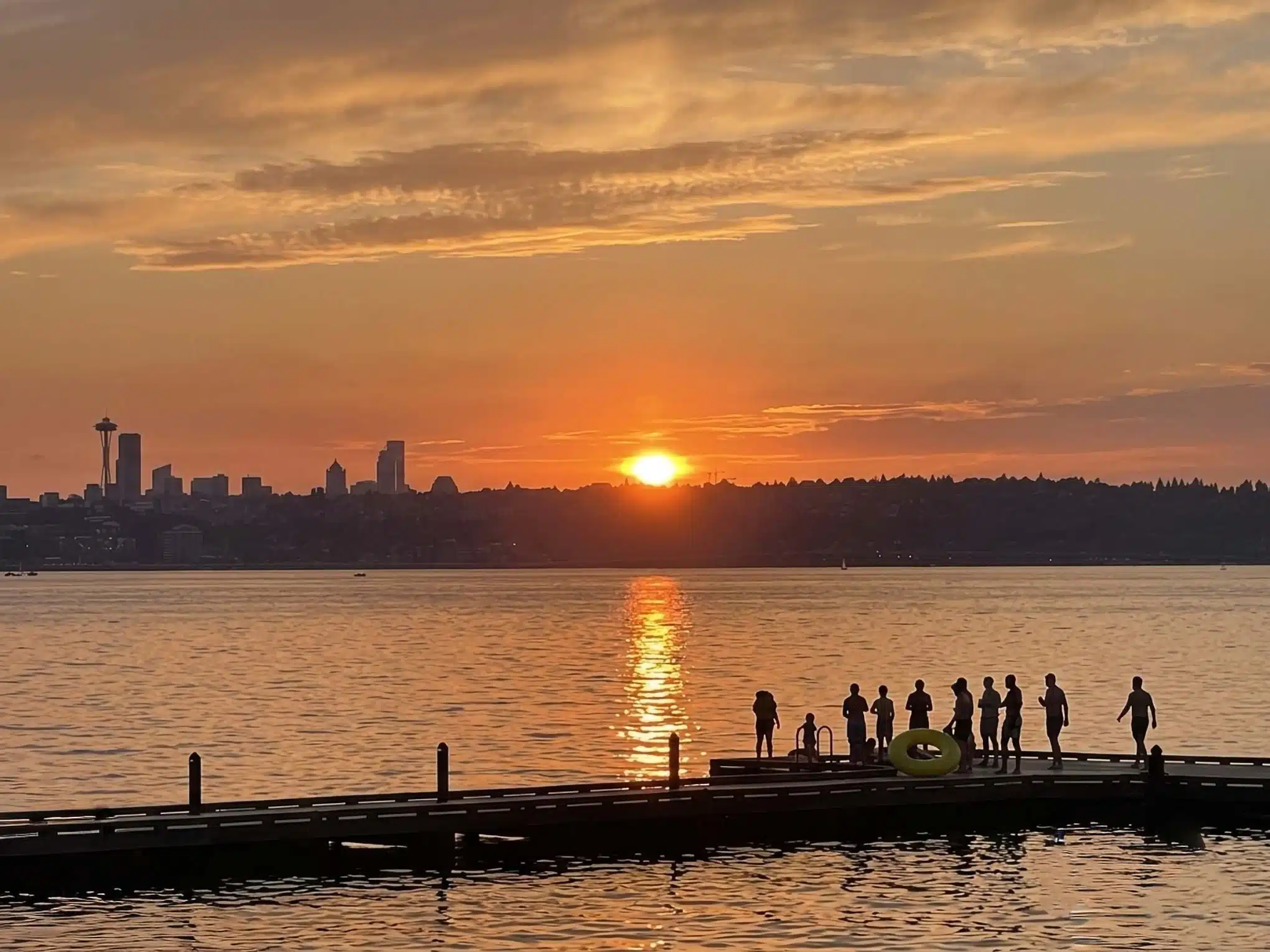
The Kirkland real estate housing stock covers the full range: luxury waterfront properties with direct Lake Washington access, craftsman homes on established tree-lined streets, and modern condos steps from downtown dining and the Saturday Market. Each segment has its own price dynamics and its own set of things worth knowing before you make an offer.
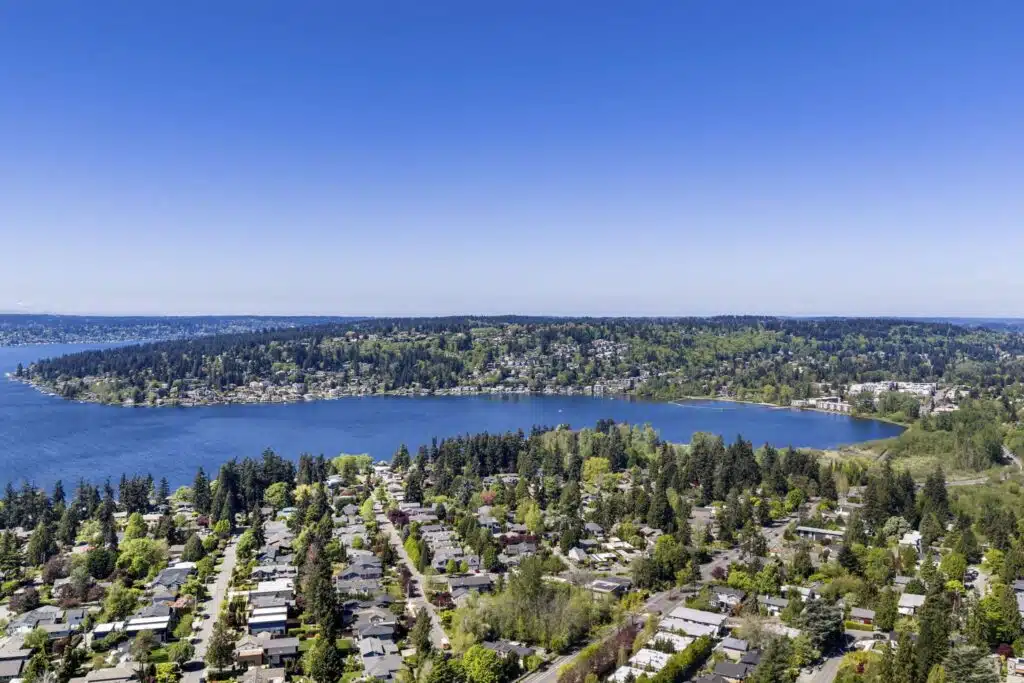
I’ve worked Kirkland real estate long enough to know where the value is, where the boundaries matter, and when to move fast versus when to take your time. That’s the difference between a good outcome and a great one.
Locals and visitors alike flock to its vibrant farmers markets, where stalls brim with fresh produce, artisan crafts, and handmade goods. Sidewalk cafés buzz where people enjoy their meals outside, savoring the long summer days of Washington. And of course, the lake beckons: from sunbathing on Kirkland’s beaches to sailing or kayaking on the sparkling waters of Lake Washington, there’s no shortage of ways to enjoy the season.
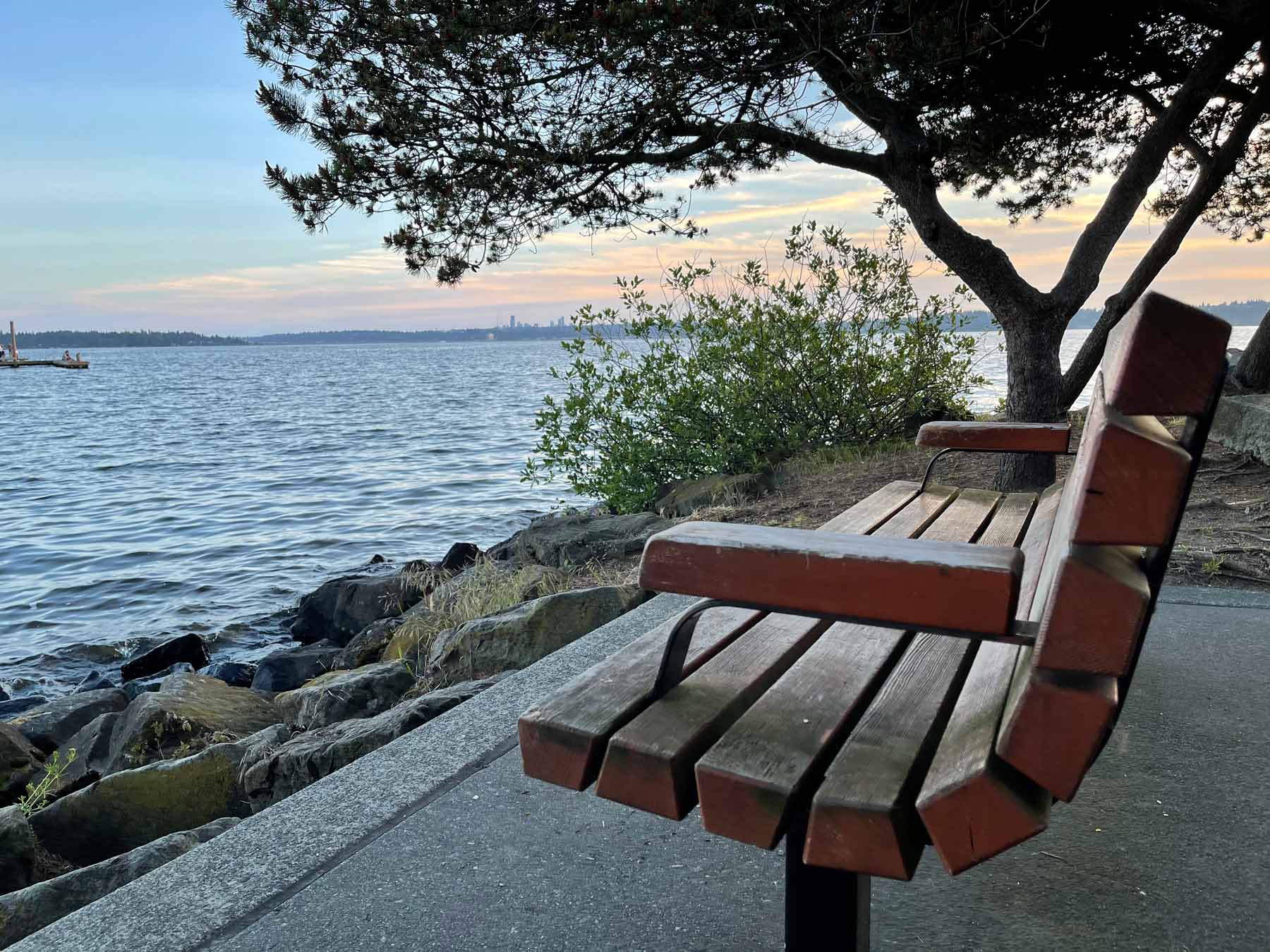
Kirkland’s neighborhoods offer a vibrant blend of residential, commercial, and recreational spaces, catering to a wide range of lifestyles. Whether you’re a nature lover drawn to expansive green parks and lakeside trails, or a foodie eager to explore the city’s thriving culinary scene—Kirkland has something special for you. The process of buying a home here should be exciting, not stressful.
And if you’re thinking of selling, it should be seamless. In short, you’re in the right place to take the next step toward finding your dream home in Kirkland. Yes, you can do this—and I am here to help every step of the way.
Matthew’s Kirkland Pro Tips: Local Insights for Living, Buying & Selling
Kirkland has always had the waterfront-meets-tech identity locked in. What’s changed in 2026 is the intentionality behind it — the city is actively building toward a “10-minute neighborhood” model, where most of what you need is reachable without a car. For buyers, sellers, and anyone trying to decode the Eastside’s most livable city, here’s what locals actually know.
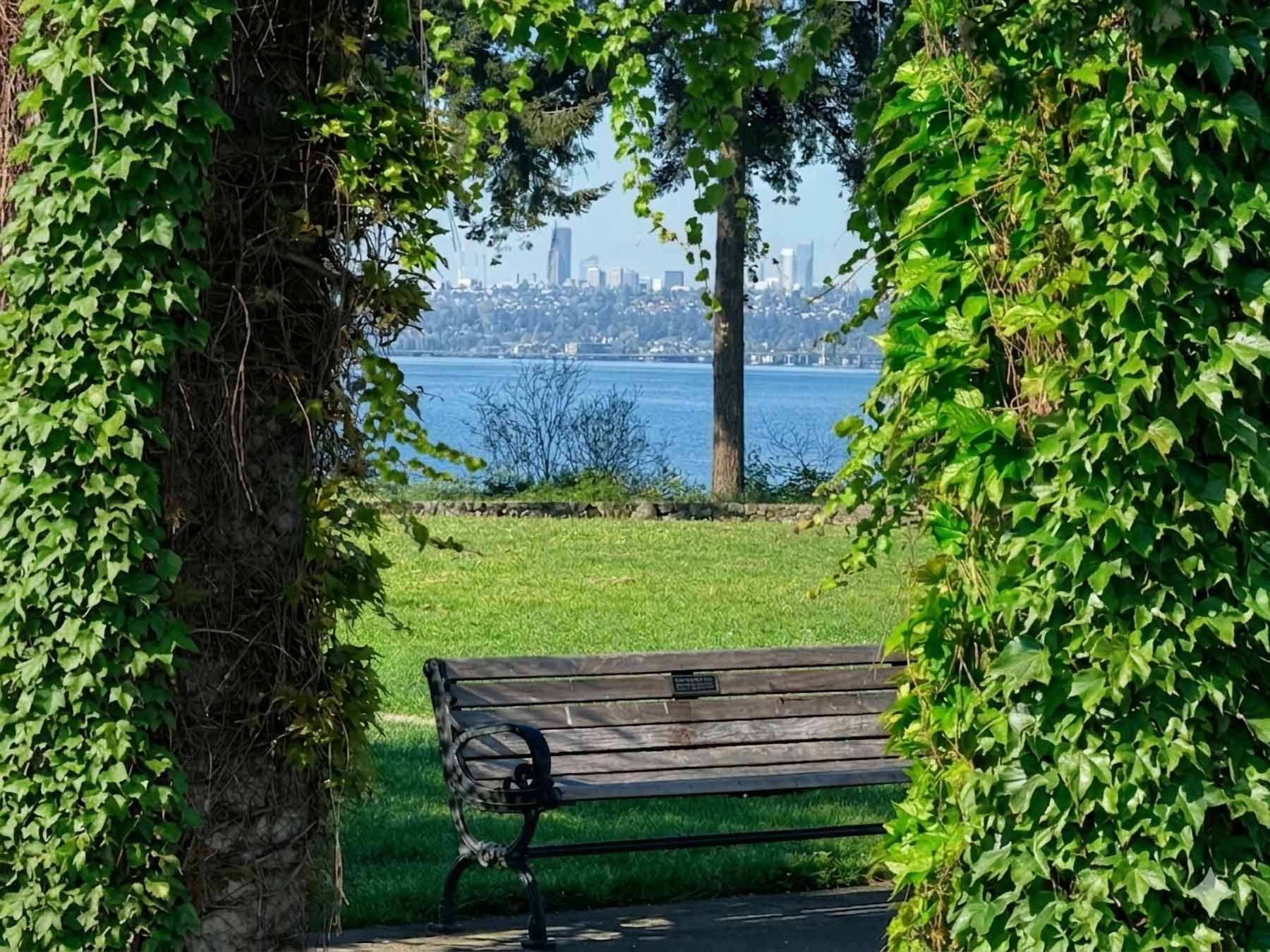
1. The Cross Kirkland Corridor: Better Than It Looks on a Map
The Cross Kirkland Corridor (CKC) has outgrown its reputation as a fitness trail. At 5.75 miles, it’s now the city’s primary non-motorized artery — and during peak hours, it’s genuinely faster than driving between downtown and the Google campus or Totem Lake Village.
The trail bypasses nearly all of the 405/85th Street congestion that can turn a two-mile drive into a 25-minute ordeal. As of 2026, improved lighting and better wayfinding signage along additional segments have made evening commuter walks and bike rides a real option, not just a weekend activity.
2. Downtown Parking: What Locals Actually Do
Parking in downtown Kirkland has a reputation. Here’s how to navigate it without circling.
The Library Garage: The Peter Kirk Municipal Garage beneath the library offers four hours of free parking — the most generous free window in the downtown core. For an afternoon of waterfront walking, coffee, and lunch, it’s all you need.
Pre-payment strategy: The paid lots near Lakeshore Plaza allow pre-payment before 9 AM. If you’re arriving early for a lake walk, pay for your afternoon hours on arrival and skip the mid-day return trip to the app or meter.
Sunday parking: Most public street parking and city lots are free on Sundays and holidays — unusual for a waterfront district with this much foot traffic. Worth knowing if you’re scheduling weekend showings or client tours.
3. The 10-Minute Neighborhood: Which Area Is Right for You
Kirkland’s planning focus on walkability and density has created meaningfully distinct micro-neighborhoods. The zip code tells you less than the specific area.
Houghton is the stealth commuter’s pick — strong SR-520 access puts both Bellevue and Seattle within striking distance without the full 405 commitment. Quieter than downtown, with older tree canopy and larger lots.
Finn Hill delivers the best forest-adjacent living in Kirkland’s footprint — good trail access and a neighborhood feel that’s genuinely removed from the tech campus energy. Pay attention to terrain before you buy: drainage and slope vary significantly from block to block, which affects everything from basements to landscaping costs.
Totem Lake Village has become a city-within-a-city. Whole Foods, Cinemark, walkable retail, and continued mixed-use development have made it the most urban corner of Kirkland — and the one most in flux. With the South Mixed Use additions coming online in late 2026, the center of gravity in this corridor is shifting east, creating new retail and dining pockets that haven’t yet hit tourist-level pricing or crowds.
4. Waterfront, Wellness & Dining: Beyond the Obvious
Juanita Beach over Marina Park: Marina Park gets the foot traffic and the Instagram posts. Juanita Beach Park typically has more breathing room, better shallow-water access for paddleboarding and wading, and a more neighborhood-scale feel. Worth mentioning to buyers who want the lake lifestyle without the weekend crowds.
Boutique wellness over the Pro Club: The Pro Club is the default answer for tech workers relocating from out of state. For buyers who want something with more of an “old Kirkland” community feel, the Kirkland Performance Center and the surrounding boutique yoga studios offer a different experience — smaller, more local, less campus-like.
Dining timing: Skip the 6 PM waterfront rush. The better move is a mid-afternoon patio seat at Le Grand Bistro Américain — Olympic Mountain views, a fraction of the noise, and the best light of the day.
5. Real Estate: What the Data Doesn’t Tell You
For Buyers
- Waterfront comes at a steep premium. Lake Washington frontage in Kirkland runs $2M–$8M+. If the view matters but the number doesn’t work, look at homes with partial or filtered lake views in Highlands or Moss Bay — the aesthetic at a meaningfully lower entry point.
- There are two Kirklands, divided by 405. Totem Lake, Kingsgate, and Lakeview feel distinctly different from the waterfront neighborhoods and downtown core. Both have real merit — but buyers sometimes conflate them. Know which Kirkland fits the lifestyle before narrowing the search.
- Juanita is the Eastside’s quiet overachiever. Lake Washington School District, walkable to a beach, and still priced below comparable Kirkland proper addresses. One of the better value plays on the Eastside right now.
- The Google campus effect is structural. Kirkland Urban has kept sustained upward pressure on the $1M–$1.6M condo and townhome segment. That demand doesn’t evaporate between hiring cycles.
- Pull HOA financials, not just the monthly fee. Many newer attached homes carry HOAs with reserve shortfalls that don’t show up in the surface-level numbers. The reserves tell the real story.
- School district boundaries cut through unexpectedly. Lake Washington SD is the draw, but the lines move in ways that surprise buyers. Verify the actual assignment before a client falls in love with a house.
For Sellers
- Invest in lifestyle photography. Kirkland’s walkability and waterfront access are the story — and standard listing photos rarely capture it. Drone footage showing the lake context, shots of the Saturday Market, and images that convey neighborhood scale add genuine conversion value.
- Fall is more active than sellers expect. Amazon, Google, and Microsoft drive year-round relocation demand. A September or October list date, priced right, will find serious buyers.
- Stage the home. Kirkland buyers skew design-conscious. Vacant homes leave money on the table here more consistently than in most Eastside markets.
The Bigger Picture
The I-405 express toll lanes have improved the Kirkland-to-Bellevue commute — but they’re not free, and buyers relocating from Seattle frequently underestimate the real cost and time. Build honest commute conversations into the buyer process early.
Kirkland’s development trajectory is pointed in a clear direction: more density near transit, more walkable retail, and continued tech employment anchoring demand at the upper-middle price tier. For buyers willing to look east of 405 while that infrastructure investment matures, there’s still pricing that hasn’t caught up to what’s coming.
Curious about a specific neighborhood, what’s actually available right now, or what your Kirkland home is worth in this market?
Let’s connect >
Living guide · Kirkland, WA
Pros & Cons of Living in Kirkland, WA
Commute, real estate, and lifestyle on the Lake Washington waterfront
Commute
Pros
- Central Eastside position — Bellevue, Redmond, and Bothell are all roughly 15 minutes off-peak
- Jobs in town — the Google Kirkland campus and a growing downtown office base shorten many commutes to zero freeway miles
- Stride S2 BRT station at NE 85th & I-405 will tie Kirkland directly into the regional rapid transit network
Cons
- I-405 is the only freeway — when it jams, so does every route through town
- No light rail station — reaching Link means Bellevue or a bus connection
- Downtown parking is tight — waterfront and Park Lane stalls fill fast, especially in summer
Real Estate
Pros
- Waterfront and view inventory — one of the few Eastside cities with true lakefront homes and walk-to-water condos
- Consistently strong demand — downtown and waterfront properties hold value through market cycles
- Range of scales — downtown condos, Houghton and Juanita single-family, and larger lots toward Finn Hill
Cons
- Among the priciest Eastside markets — the waterfront premium radiates well inland
- Limited new construction in the core — most inventory is resale, often dated at its price point
- Competition is intense for walkable-downtown and west-of-market locations
Lifestyle
Pros
- Lake Washington at your doorstep — Marina Park, Juanita Beach, and a string of waterfront parks and docks
- Genuinely walkable downtown — restaurants, galleries, and the lakefront within a few blocks
- Cross Kirkland Corridor — a 5.75-mile rail-trail spine for walking and cycling across the city
Cons
- Summer waterfront crowds — beaches, boat launches, and downtown fill on warm weekends
- Premium-priced dining and retail — everyday errands often cost more than in neighboring cities
- Early evenings — nightlife is modest; late-night options mean Seattle or Bellevue
How Kirkland compares to neighboring cities
Bellevue is the high-rise hub with light rail and big retail; Kirkland keeps a lower profile with lakefront character and small-block walkability.
Bothell typically offers more square footage per dollar and newer construction; Kirkland answers with the waterfront and a denser downtown.
Redmond pairs tech employment with new light rail; Kirkland is the lakeside neighbor with older trees and established neighborhoods.
Woodinville offers acreage and wine country at a slower pace; Kirkland concentrates amenity and walkability along the lake.
Information reflects general market and infrastructure conditions in Kirkland, WA as of 2026 and is intended for educational use; conditions vary by neighborhood and change over time. Equal Housing Opportunity. This content describes property, geography, infrastructure, and amenities only, consistent with the Fair Housing Act. Verify current data with WSDOT, the King County Assessor, and a licensed real estate professional.
Homes For Sale in Kirkland WA
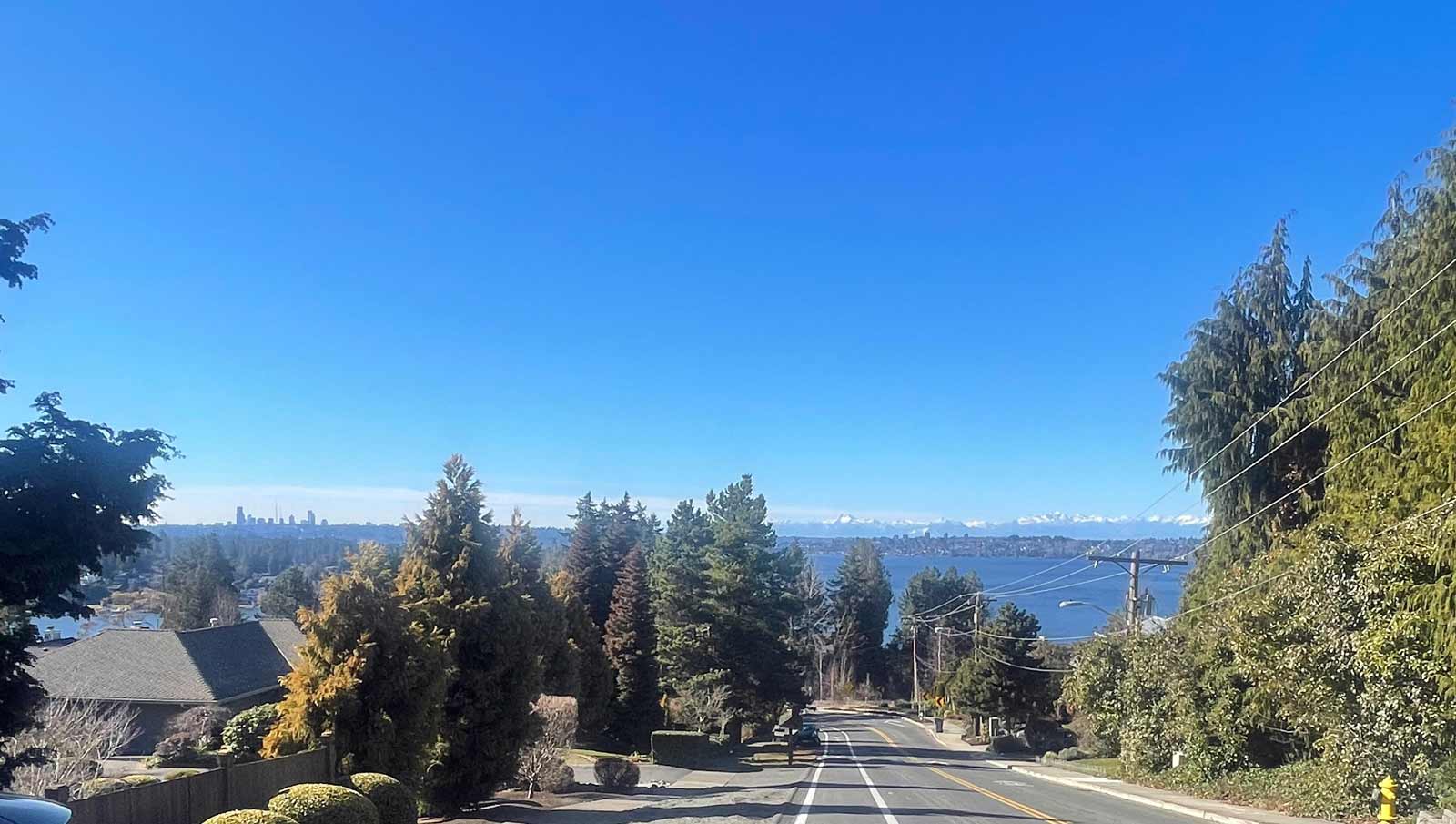
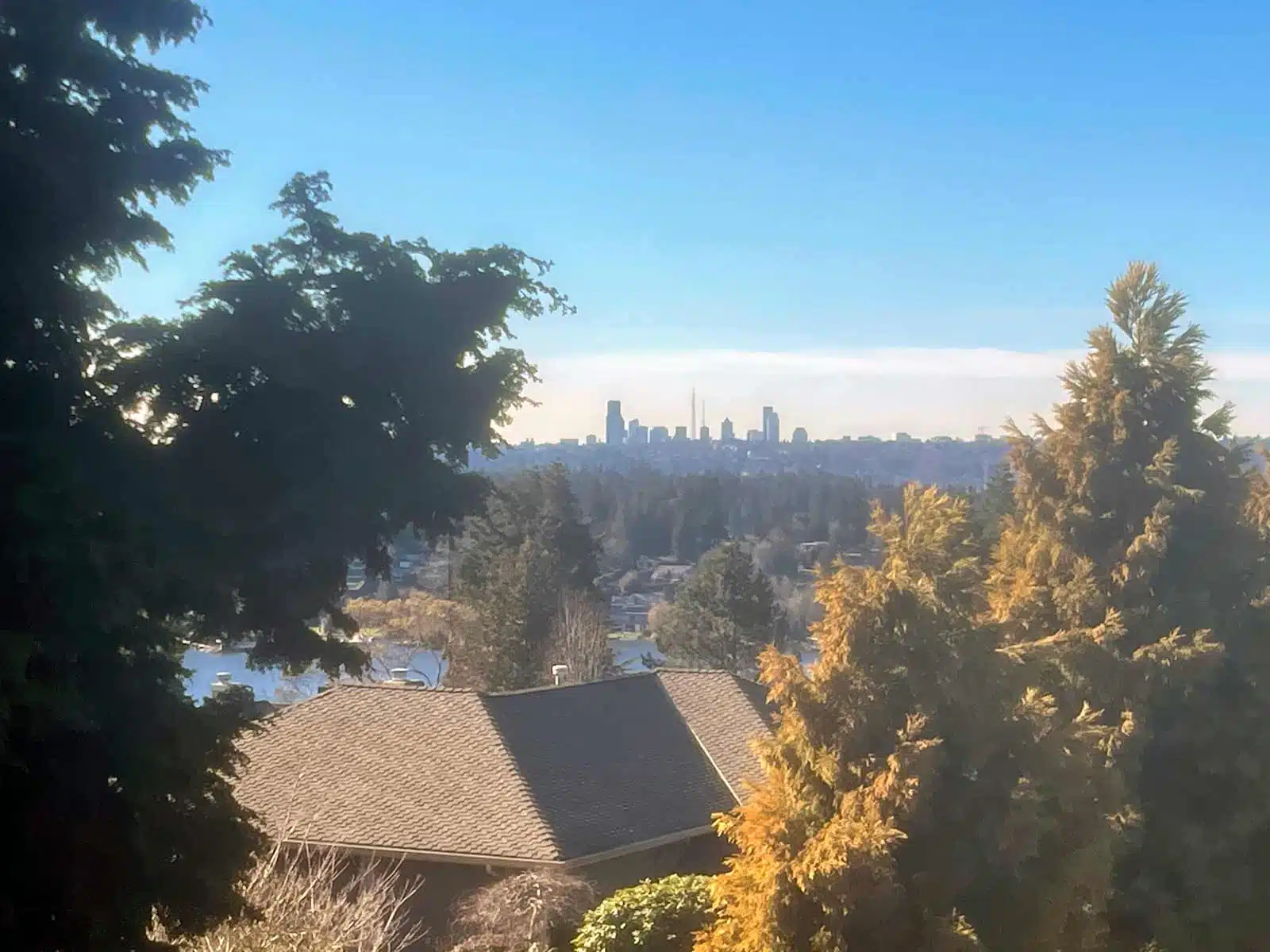
Let’s start by picturing Kirkland, WA—a vibrant small city on the Eastside, nestled along the beautiful waterfront of Lake Washington. Known for its lush green spaces, sprawling parks, and an abundance of top-tier restaurants, Kirkland offers the best of both nature and city life. It’s conveniently close to neighboring cities like Bellevue, Redmond, Woodinville, and Bothell, while just a quick ten-minute drive across the bridge (520) takes you straight to downtown Seattle.
One of the many perks of living here is that many homes come with gardens, patios, and even stunning water views. For families, the city provides a variety of excellent schooling options, while the medical facilities are top-notch, giving peace of mind to all residents. But what really stands out is the fun factor.
Kirkland’s downtown boasts fantastic shopping and a lively dining scene. Stroll through Bridle Trails or take a relaxing walk along the waterfront. For kids, the city has great youth sports fields and countless opportunities to play outside.
And don’t forget the weather—during summer, Kirkland comes alive with sunshine, perfect for beach days and outdoor adventures. In short, living in Kirkland isn’t just good—it’s a great place to call home.
Master the Kirkland Market (Market Pulse)
Whether you’re looking to buy your dream home or sell for the best value, stay ahead with our latest Kirkland Real Estate Insights. Our monthly data tracks price trends, inventory shifts, and days on market to help you move with confidence. Market Data (Updated monthly).
How Kirkland Compares to Nearby Markets (Data through June 2026)
Median sales price, price per square foot, and median days on market across Kirkland and its 5 closest NWMLS markets. Open any city for its full Market Pulse.
| City | Median Sales Price | Price / SqFt | Median Days on Market |
|---|---|---|---|
| Kirkland Home market | $1,800,000 baseline | $710 baseline | 12 days baseline |
| Yarrow Point 2.6 mi away · View Market Pulse | $7,500,000 ▲ +317% vs Kirkland | $1,316 ▲ +85% vs Kirkland | 5 days ▼ −7 days vs Kirkland |
| Hunts Point 2.8 mi away · View Market Pulse | $17,370,000 ▲ +865% vs Kirkland | $3,135 ▲ +342% vs Kirkland | 79 days ▲ +67 days vs Kirkland |
| Clyde Hill 3.5 mi away · View Market Pulse | $4,000,000 ▲ +122% vs Kirkland | $847 ▲ +19% vs Kirkland | 3 days ▼ −9 days vs Kirkland |
| Redmond 4.1 mi away · View Market Pulse | $1,590,000 ▼ −12% vs Kirkland | $669 ▼ −5.8% vs Kirkland | 12 days same pace vs Kirkland |
| Medina 4.3 mi away · View Market Pulse | $3,727,500 ▲ +107% vs Kirkland | $1,102 ▲ +55% vs Kirkland | 9 days ▼ −3 days vs Kirkland |
The Best Month to List in Kirkland (4-year NWMLS seasonality)
Every calendar month scored 0–100 on the four things sellers care about: percent of asking achieved, speed to pending, buyer demand, and price premium vs. the Kirkland monthly average.
Across 4 years of NWMLS history, Kirkland homes sold in April averaged 100.2% of original asking price and a median 6 days on market, with roughly 76 homes going pending in a typical April — the strongest combination of pricing, speed, and buyer demand of any month. Median prices in April have run 2.9% above the city’s monthly average. Demand builds through the window, so plan photos and prep to launch early in April.

The Predominant Residential Homes for Sale & Rent in Kirkland
- Low-rise Condominiums
- Townhomes
- Single Family Homes
- Rental Apartments
- Cottage homes, which are basically building “2 and 3 homes on one lot”. This is part of the city’s urban development policy, which is essentially creating multiple dwellings on a single piece of land, often with smaller footprints compared to traditional single-family homes.
When Were Kirkland’s Homes Built? A Decade-by-Decade Breakdown
Neighborhoods & Areas in Kirkland, WA
Kirkland is made up of distinct neighborhoods, each with its own character, price point, and reason buyers gravitate toward it. The list below covers the main ones — the sections that follow walk through what to expect in each.
Explore Every Kirkland Neighborhood
From Lake Washington waterfront to the woods of Finn Hill — a local broker’s guide to all 13 of Kirkland’s distinct neighborhoods.
Moss Bay
The heart of downtown Kirkland — walkable Lake Street, Marina Park, restaurants, and condos with lake views. The most urban address in the city.
Explore Moss BayMarket
Tree-lined streets just north of downtown with classic craftsman homes, Marina Park access, and a tight-knit feel along Market Street.
Explore MarketNorkirk
Sought-after single-family neighborhood north of downtown — home to Peter Kirk Elementary, Heritage Park, and Waverly Beach.
Explore NorkirkHighlands
Mid-century homes on quiet curving streets between Norkirk and Rose Hill. Forbes Lake, parks, and a strong neighborhood association.
Explore HighlandsEverest
Tucked between downtown and Rose Hill — Everest Park, the Cross Kirkland Corridor trail, and well-priced single-family homes near everything.
Explore EverestLakeview
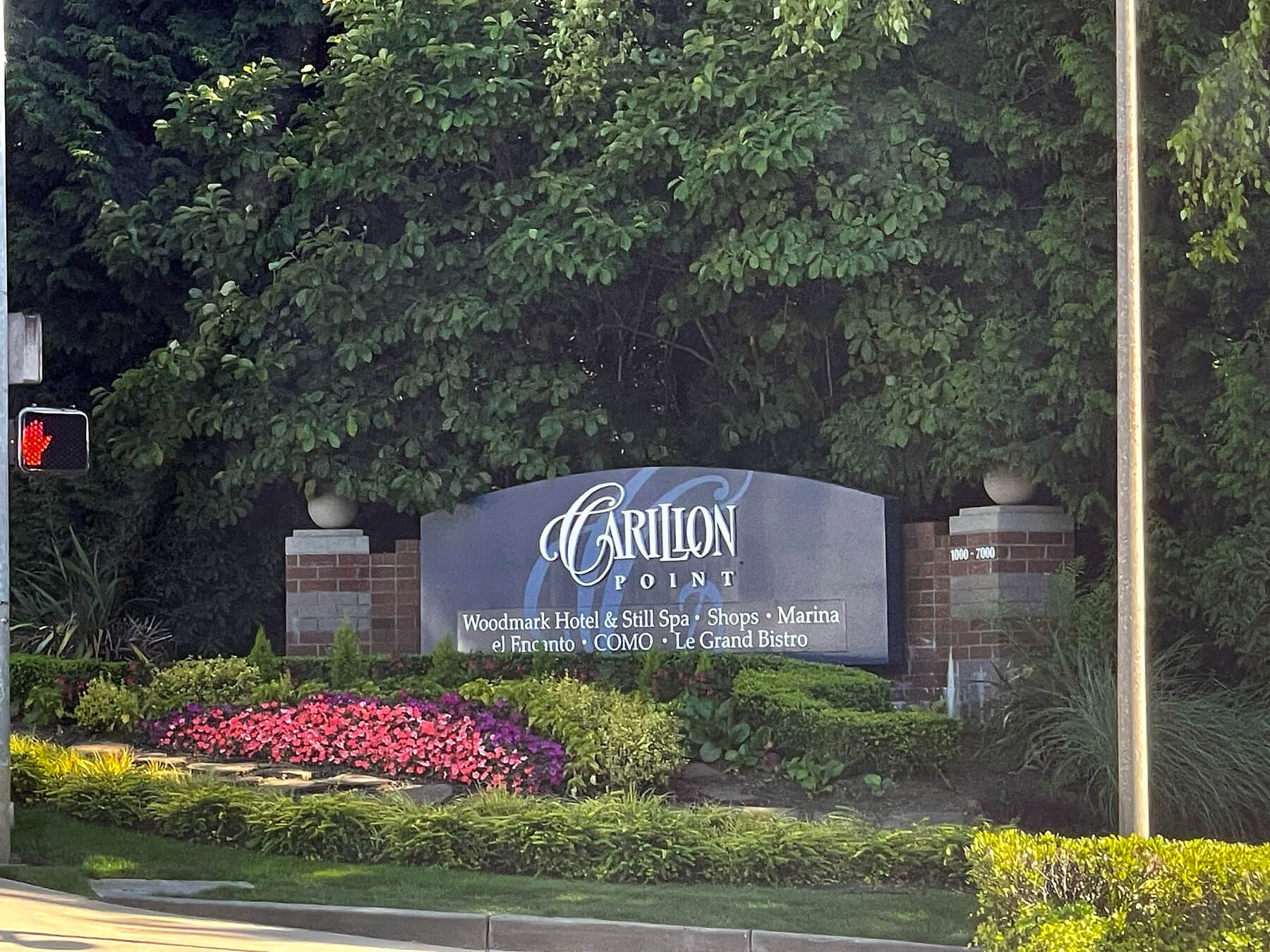
South of downtown along Lake Washington Boulevard — premium lake-view homes, Carillon Point, and some of Kirkland’s highest price points.
Explore LakeviewCentral Houghton
Established neighborhood around Northwest University with Lakeview Elementary, mature lots, and easy access to the waterfront and 405.
Explore HoughtonSouth Rose Hill
Borders Bridle Trails State Park with horse-friendly streets, larger lots, and quick access to both Kirkland and Bellevue tech corridors.
Explore South Rose HillNorth Rose Hill
Family-friendly streets between NE 85th and Totem Lake — strong Lake Washington School District options and easy I-405 access.
Explore North Rose HillTotem Lake
Kirkland’s fastest-growing area — The Village at Totem Lake, Evergreen Hospital, new townhomes and condos, and a true live-work-play vibe.
Explore Totem LakeSouth Juanita
Home to Juanita Beach Park, Juanita Village, and the summer farmers market — lakeside lifestyle with strong neighborhood schools.
Explore South JuanitaNorth Juanita
Quieter, leafier streets north of Juanita Bay — Edith Moulton Park, well-rated schools, and a steady mix of mid-century and updated homes.
Explore North JuanitaFinn Hill
Hilltop neighborhood with mature trees, Saint Edward and O.O. Denny parks, and serious Lake Washington views from the right lots.
Explore Finn HillKingsgate
Northeast Kirkland near I-405 — relative value for the Eastside, Kingsgate Park, the ice arena, and strong commuter access to Bothell and Redmond.
Explore KingsgateYour New Home in a Kirkland Neighborhood
The short version: Kirkland sits on the eastern shore of Lake Washington, with around 100,000 residents and reasonable commutes to Bellevue (~10 minutes), Redmond (~10 minutes), and Seattle (~15–25 minutes via SR-520). Beaches, parks, ballfields, and the Cross Kirkland Corridor (a 5.75-mile multi-use trail running through the city’s center) connect most of the neighborhoods.
What buyers usually want to know first: the waterfront pockets feel very different from Totem Lake, which feels different from Bridle Trails, which feels different from Houghton — and price points reflect that. The guide below should help you narrow it down.
Juanita
Juanita sits on the northern edge of Kirkland along Juanita Bay. The anchor of the neighborhood is Juanita Beach Park — a long sandy beach on Lake Washington with a designated swimming area, sand volleyball courts, picnic shelters, and a playground. The Juanita Friday Market runs June through September with produce, crafts, and food from local vendors.
Housing here mixes mid-century single-family homes, newer townhomes, and a small commercial core along NE 116th. Café Juanita — Holly Smith’s Northern Italian restaurant — is a Kirkland landmark and a destination dinner spot.
Houghton
Houghton is a historic neighborhood on the eastern shore of Lake Washington, between downtown Kirkland and Yarrow Bay. It’s known for mature tree canopy, larger lots, and a higher concentration of waterfront and view homes than most of the city. Houghton Beach Park is the local swim spot, and the small commercial pocket along 108th Ave NE includes Metropolitan Market, restaurants, and neighborhood retail.
Houghton tends to attract buyers who want walkable lake access without the activity level of downtown.
Moss Bay
Moss Bay wraps around downtown Kirkland — Lake Street, Marina Park, the Kirkland Performance Center, and the marina boardwalk all sit within it. Marina Park hosts the Wednesday farmers market, summer concerts, and the city’s 4th of July fireworks. Peter Kirk Park has ball fields, a skate park, and the Kirkland Totem Pole. Heritage Park offers grassy slopes, a playground, and views back toward downtown.
For water access, the Moss Bay Rowing, Kayaking, and Sailing Center offers classes and rentals on the lake itself. Housing here is mostly condos, townhomes, and a smaller stock of historic single-family — this is the neighborhood for buyers who want to walk to dinner, the waterfront, and a coffee shop without driving.
Highlands
The Highlands sits on the eastern edge of Kirkland, bordering Bellevue. It’s quieter and more residential than the waterfront pockets, with larger lots and views toward Lake Washington and the Cascades. Bridle Trails State Park is just to the south, and Big Finn Hill Park sits to the north — together, miles of hiking, mountain biking, and equestrian trails.
Highlands buyers typically prioritize space and access to nature over walkability.
Norkirk
Norkirk runs north from downtown Kirkland — close enough to walk to Lake Street and Park Lane, but with a more settled residential feel. The Kirkland Arts Center is here, along with Heathman Kirkland Hotel and its restaurant, Trellis. The housing stock is a mix of older single-family homes (some early-20th-century), 1990s–2000s infill, and newer townhomes — one of the broader stylistic ranges in the city.
Totem Lake
Totem Lake is in northeastern Kirkland, with quick access to Redmond, Woodinville, and Bothell via I-405. The Village at Totem Lake (formerly Totem Lake Mall) is the area’s open-air shopping center, anchored by Whole Foods, Trader Joe’s, Nordstrom Rack, and a Cinemark theater, with a long list of restaurants and fitness studios. EvergreenHealth Medical Center — the city’s largest employer — is also here.
Housing has shifted significantly over the past decade. Newer townhomes and apartments dominate the immediate area, while surrounding streets still hold older single-family stock at relatively more accessible price points than the waterfront neighborhoods.
Bridle Trails
Bridle Trails sits in the southeastern corner of Kirkland and is best known for Bridle Trails State Park — a forested park with ~28 miles of equestrian and hiking trails. Many homes in the neighborhood have horse-friendly zoning and acreage, which is unusual this close to the Eastside tech corridor. It’s a wooded, quiet pocket that feels considerably more rural than its 10-minute commute to Bellevue or Redmond would suggest.
Read the full Bridle Trails neighborhood guide →
Inglewood-Finn Hill
Inglewood-Finn Hill is in the northern part of Kirkland, between Juanita Bay and the Sammamish River corridor. It blends residential streets with stretches of preserved natural area — Juanita Bay Park and O.O. Denny Park sit on its edges, both with shoreline access and walking trails.
The housing stock is varied: mid-century homes on larger lots, 1980s–90s subdivisions, occasional waterfront properties along the bay, and newer infill construction. Buyers come here for more space and a quieter setting than what’s available closer to downtown, while still inside Kirkland city limits.
Read the full Finn Hill neighborhood guide →
Architectural Styles You’ll See in Kirkland
Kirkland’s housing stock is layered. Over a century of building cycles means you’ll encounter a wider range of architectural styles here than in most of its Eastside neighbors.
Historic styles. Downtown Kirkland and the surrounding older neighborhoods preserve a mix of Craftsman, Victorian, Colonial Revival, and Bungalow homes — many dating from the early 1900s through the 1930s. These tend to sit on smaller, older-platted lots in Norkirk, Market, and pockets of Moss Bay.
Mid-century modern. Heavy construction during the 1950s and 60s left Kirkland with a deep stock of mid-century homes, especially in Houghton, Bridle Trails, and the Highlands. Many have been thoughtfully updated; others trade on lot value alone. For buyers chasing mid-century, Kirkland sits alongside Bellevue and Mercer Island as one of the strongest hunting grounds on the Eastside. In Seattle, the equivalent search areas are Laurelhurst, Magnolia, and Queen Anne.
Waterfront and lakefront homes. Kirkland’s Lake Washington shoreline includes historic estates, mid-century rebuilds, and contemporary new construction. Many properties have private docks and direct lake access, making them some of the most tightly held real estate in Western Washington.
Modern and contemporary. Newer construction across Kirkland tends toward clean lines, large windows, and open floor plans. Common in infill builds in Houghton, Rose Hill, and Juanita.
Mixed-use developments. Recent zoning has produced more mixed-use buildings — particularly downtown, in Totem Lake, and along NE 85th Street. Ground-floor retail with residential above is now a familiar pattern.
Townhomes and condominiums. As density rises, attached housing has become a much larger share of the market — especially around downtown, Totem Lake, and the Cross Kirkland Corridor. Architectural styles range from traditional to contemporary.
Green and sustainable architecture. Kirkland has been an active early adopter of LEED and green-building standards. Newer construction commonly incorporates high-efficiency systems, sustainable materials, and energy-conscious design — consistent with the broader Pacific Northwest pattern.
If you’re trying to figure out which Kirkland neighborhood actually fits you, that’s a conversation worth having before you start touring. Reach out and we can walk through it together.

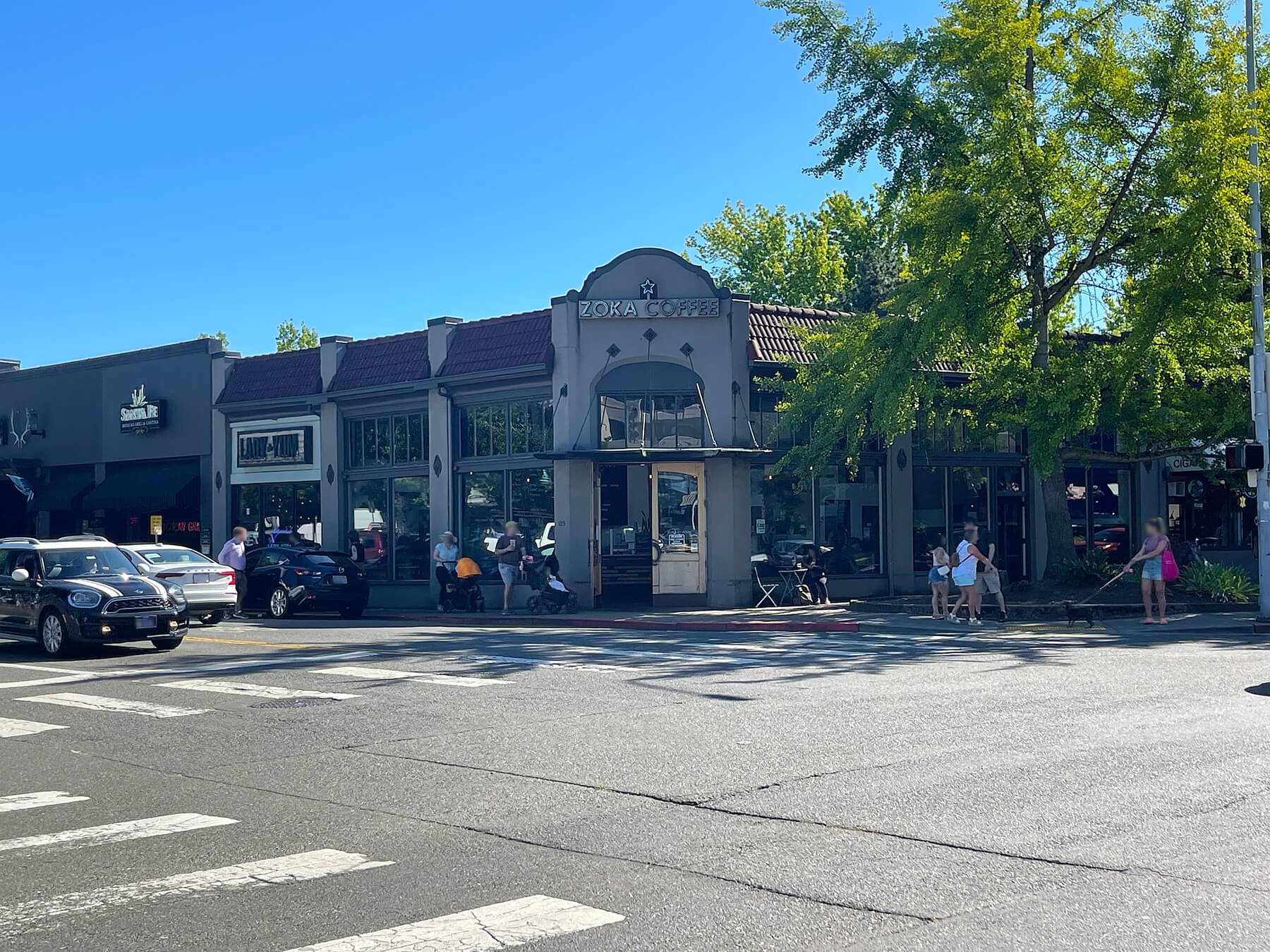
Kirkland Waterfront
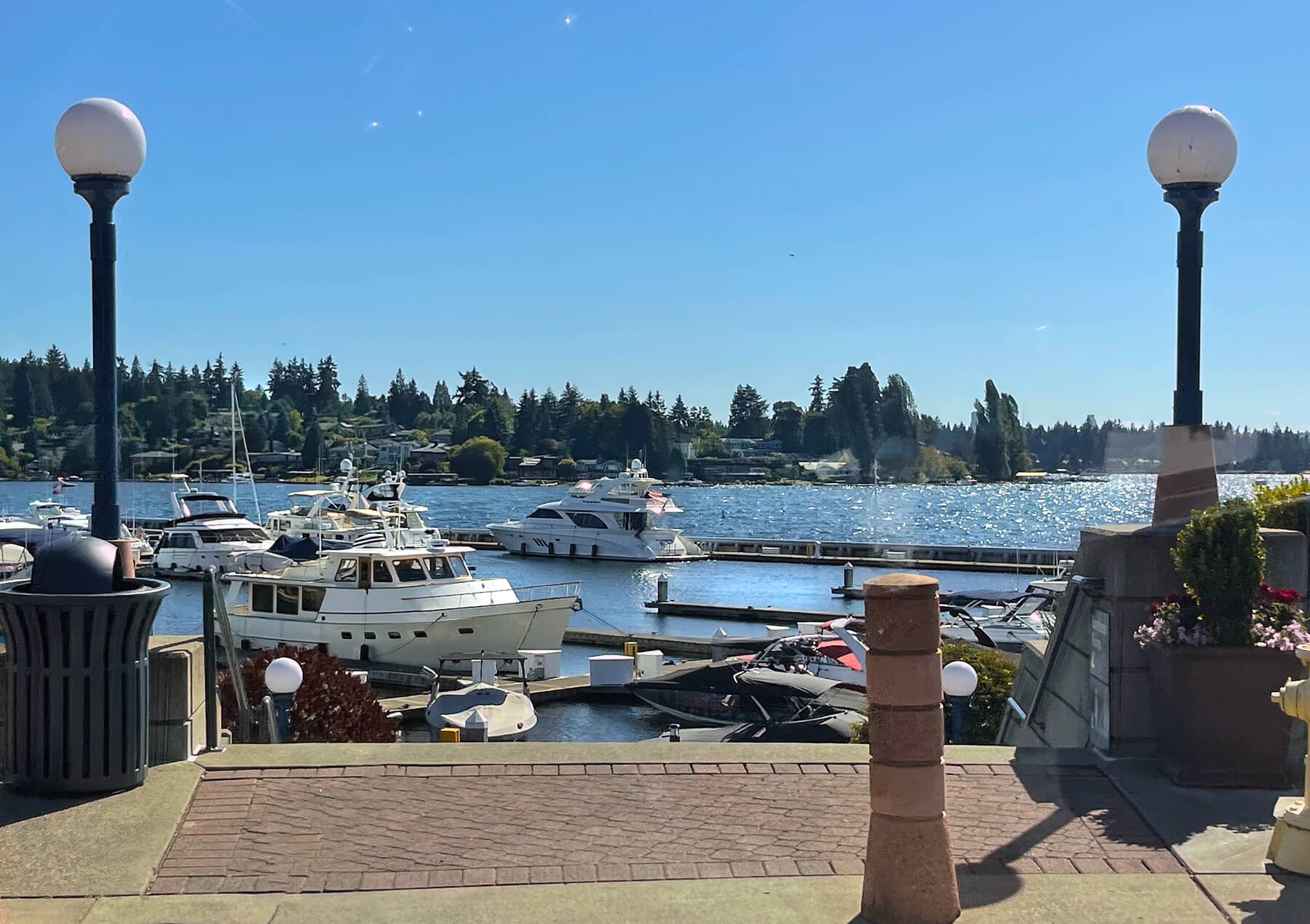
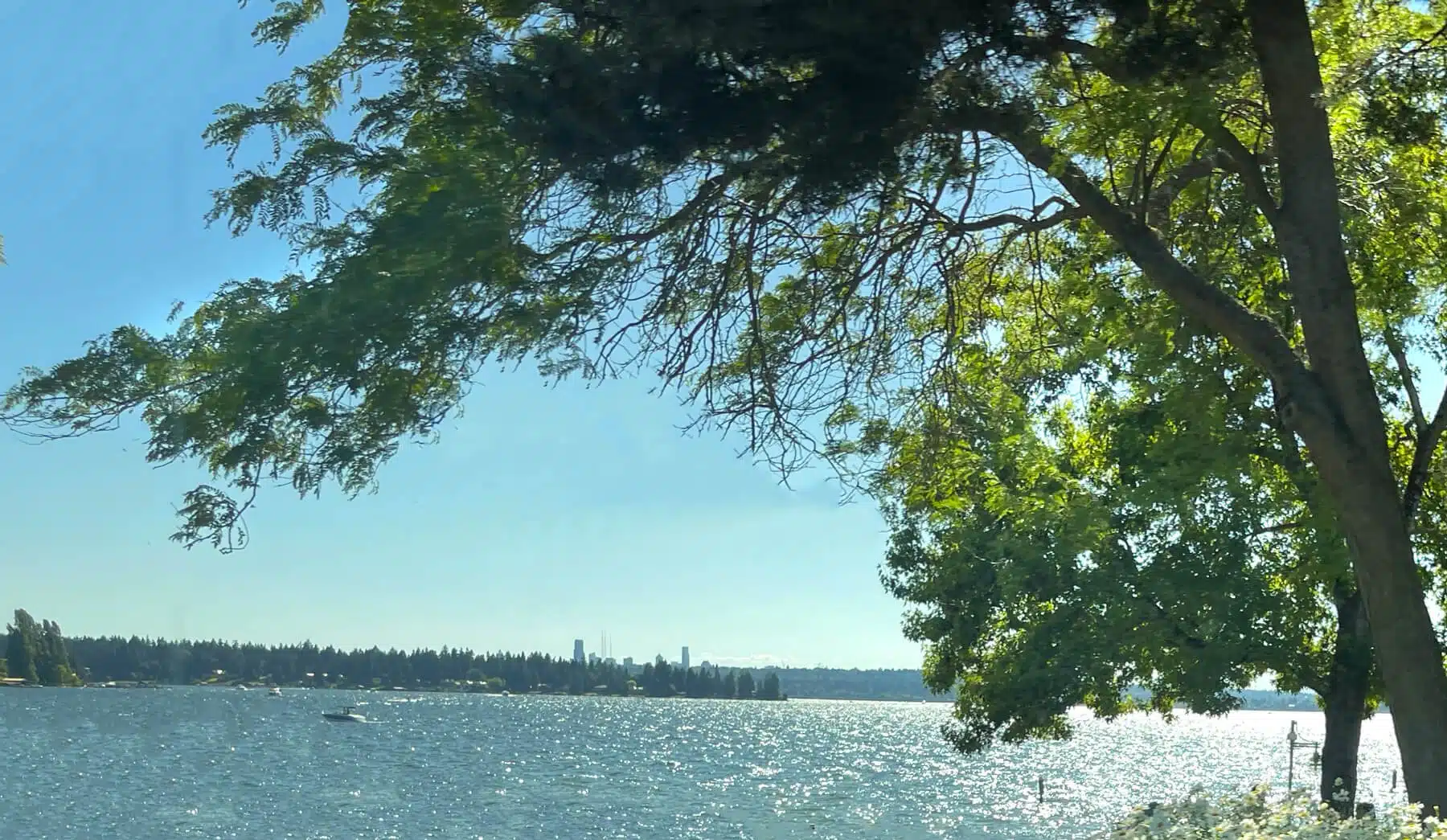
The best thing about Kirkland is that it is next to Lake Washington. Also, it has beaches and waterfront. For fun, you can go to Juanita Beach. Or, you can walk along Lake Washington on Lake Street. And, near the downtown area, you can go Marina Park. On Wednesdays, there is a farmers market in Marina Park, where you can find blueberries, raspberries, and blackberries all summer.
Here’s a full rewrite of the document. I’ve cut the AI-tinged filler (“So, what are you waiting for?”, “indulge in delicious cuisine”), made everything HUD-compliant, removed restaurants that have closed, consolidated the redundant restaurant sections, and added current local detail.
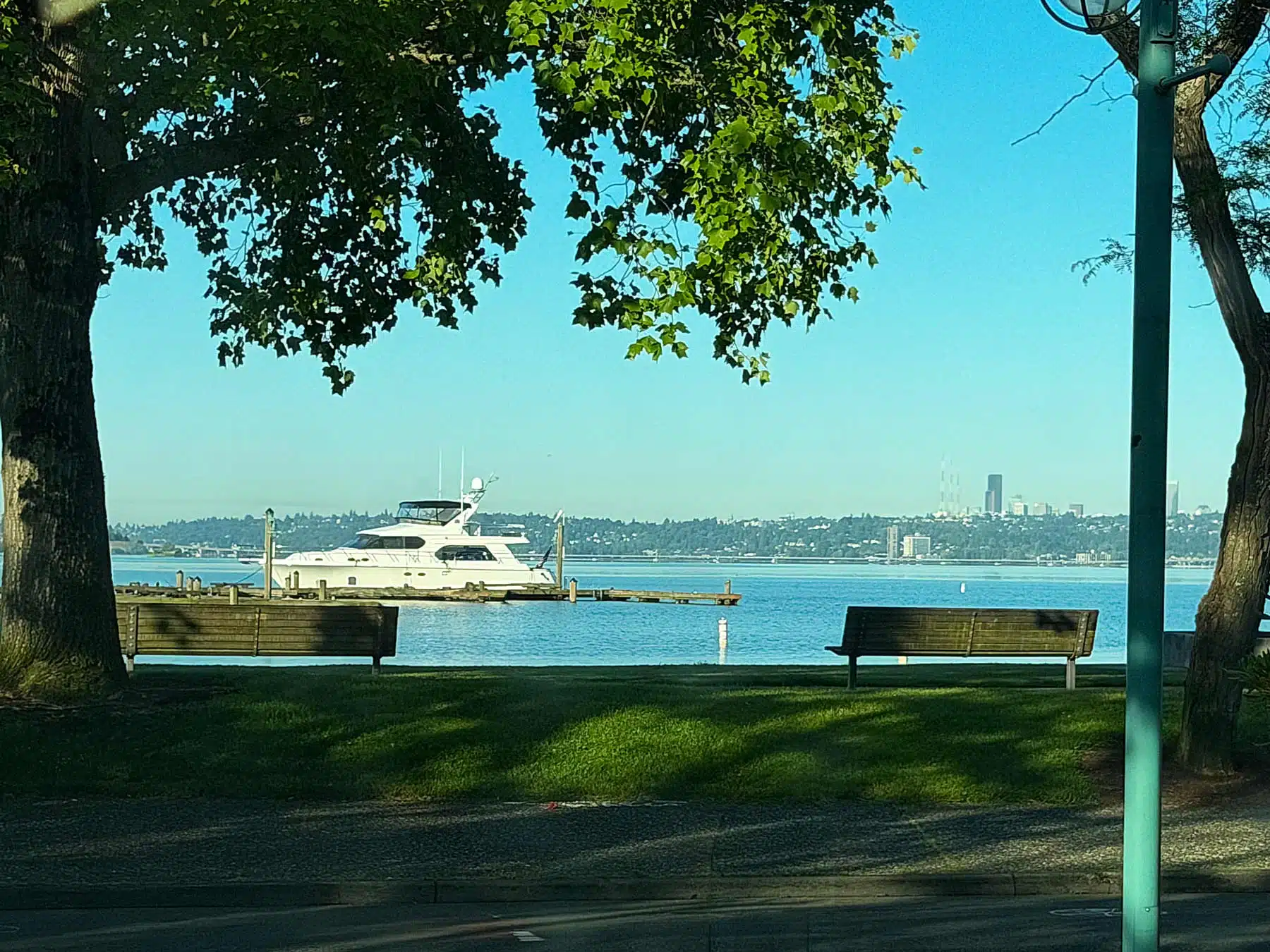
Shopping in Kirkland
Kirkland’s retail districts each have a distinct character, and most are walkable from one to the next inside downtown.
Kirkland Urban
Opened in phases between 2017 and 2019, Kirkland Urban is the mixed-use development just east of the downtown core. The complex includes ground-floor retail, restaurants, residential units, and Google’s Kirkland Urban office campus — one of Google’s largest offices outside California. Tenants include QFC, Shake Shack, Sur La Table, Big Fish Grill, and Wood Shop BBQ, alongside a rotating mix of local boutiques and service businesses. The Cinemark Reserve theater and a covered central plaza host outdoor events through the warmer months.
Park Lane
A two-block pedestrian-only stretch in the heart of downtown, Park Lane is Kirkland’s historic shopping district — closed to vehicle traffic and lined with independent boutiques, jewelers, galleries, and sidewalk cafés. The street hosts the Kirkland Wednesday Market during summer and serves as the route for several community events including the Kirkland Uncorked wine and food festival each July.
The Village at Totem Lake
Reopened in 2018 after a complete redevelopment of the former Totem Lake Mall, The Village at Totem Lake is Kirkland’s largest shopping destination — anchored by Whole Foods, Trader Joe’s, Nordstrom Rack, Lululemon, Ulta Beauty, Cinemark, and a long list of restaurants and fitness studios. It’s the most active mixed-use commercial node in north Kirkland and the center of significant ongoing residential construction.
Juanita Village
A smaller neighborhood retail center in north Kirkland, Juanita Village hosts the popular Juanita Friday Market from June through September and includes locally-owned restaurants, cafés, and services within walking distance of Juanita Beach Park.
Regional Shopping Nearby
Bellevue Square and Lincoln Square are roughly 10–15 minutes south on I-405 — the Eastside’s largest luxury shopping destination, anchored by Nordstrom, the Apple Store, and dozens of upscale national retailers. Redmond Town Center is about 10 minutes east, and Costco’s flagship Kirkland warehouse remains in the Totem Lake area despite the company’s headquarters now being in Issaquah.
Restaurants and Dining in Kirkland
Kirkland’s dining scene is one of the strongest on the Eastside — anchored by a James Beard Award-winning restaurant, a deep bench of independent operators, and a Lake Washington waterfront that supports some of the region’s best outdoor dining.
Café Juanita
Café Juanita is the city’s culinary landmark. Chef and owner Holly Smith earned the James Beard Award for Best Chef Northwest in 2008, and the restaurant has been a regional destination ever since. The menu rotates around Northern Italian cuisine with Pacific Northwest ingredients — handmade pastas, house-cured charcuterie, and a heavily Italian wine list. Reservations book out weeks ahead, particularly in summer.
Downtown Kirkland
The downtown waterfront has the city’s highest concentration of restaurants, most within walking distance of Marina Park.
- Bin on the Lake at the Woodmark Hotel — upscale Pacific Northwest cuisine with full Lake Washington views.
- Anthony’s HomePort Kirkland — fresh Northwest seafood with one of the best outdoor patios on the lake.
- Cactus (121 Park Lane) — Southwestern and Mexican cuisine, a longtime Park Lane favorite with covered outdoor seating.
- Hector’s — a Kirkland institution since 1969, classic American on Lake Street.
- The Slip at Carillon Point — casual American with marina-side dining.
- Lynn’s Bistro — French and Pacific Northwest cuisine.
- The Trellis at the Heathman Hotel — Pacific Northwest with a strong farm-to-table program.
Juanita Village
- BeachHouse Bar & Grill — fresh seafood and Northwest cuisine on the Juanita Bay waterfront.
- Beach Café at Pulay’s at Carillon Point — casual lakeside dining.
- Spud Fish & Chips — a Northwest landmark serving fish and chips since 1955.
Houghton
- Bin on the Lake and Beach Café (above) sit within the broader Houghton waterfront.
- Ivar’s Seafood Bar — classic Pacific Northwest fish and chips across from Houghton Beach Park.
Totem Lake and North Kirkland
- Café Veloce — a Totem Lake-area Italian institution dating to the original mall era, still operating in the redeveloped Village.
- Zeeks Pizza — Seattle-based pizza chain with a Kirkland location.
- Smokin’ Pete’s BBQ — slow-cooked Texas-style barbecue.
- The Wingdome — sports bar with wings and a deep TV lineup.
- Chainline Brewing Company — Kirkland’s first independent craft brewery, opened 2014.
Brunch and Coffee
Deru Market in Norkirk is one of Kirkland’s most popular brunch spots — a compact bakery-café known for breakfast sandwiches, salads, layer cakes, and seasonal pastries. The dining room fills quickly on weekend mornings; curbside pickup is available year-round.
Brown Bag Café serves French toast, waffles, and classic American breakfast in a relaxed neighborhood setting.
For coffee, Zoka Coffee Roasters at 129 Central Way is the city’s signature roaster — a high-ceilinged corner café at the busy intersection of Lake Street and Central Way that’s been a Kirkland fixture since 2002. Other strong options include Caffé Ladro on Lake Street, Bluebird Microcreamery & Coffee in downtown Kirkland, and Top Pot Doughnuts at the Village at Totem Lake.
Waterfront Dining
Kirkland has one of the most concentrated waterfront restaurant scenes on the Eastside. Bin on the Lake, Anthony’s HomePort, The Slip, Beach Café, and BeachHouse Bar & Grill all offer direct Lake Washington views, and Bin on the Lake and Beach Café sit at the highly photographed Carillon Point marina complex.
For summer sunsets, the west-facing patios at Anthony’s HomePort and Bin on the Lake catch the Olympic Mountains across the water — late dinners in July run past 9 PM with full daylight.
Nightlife and Entertainment
Bake’s Place in Bellevue (a short drive south) is the closest jazz club and live-music venue. In Kirkland itself, The Heathman Restaurant and Bar, Café Veloce, and Cactus host occasional live music. The Kirkland Performance Center on Park Lane is the city’s primary theater and concert venue, hosting touring productions, music, and community performances year-round.
Chainline Brewing Company is the local craft beer anchor, and several wine-tasting venues and wine bars rotate through downtown — Kirkland sits at the edge of Woodinville’s wine country (15 minutes northeast), giving it strong access to Washington wine programs.
Seasonal Events and Festivals
Kirkland’s event calendar runs heavily in summer.
- Kirkland Wednesday Market (June–September) — fresh produce, prepared food, and artisan vendors at Marina Park.
- Kirkland Friday Market at Juanita (June–September) — same format on Friday afternoons at Juanita Beach Park.
- Kirkland Uncorked (July) — three-day food, wine, and art festival on Park Lane and the waterfront.
- Kirkland Summerfest (July) — live music, food vendors, beer and wine garden.
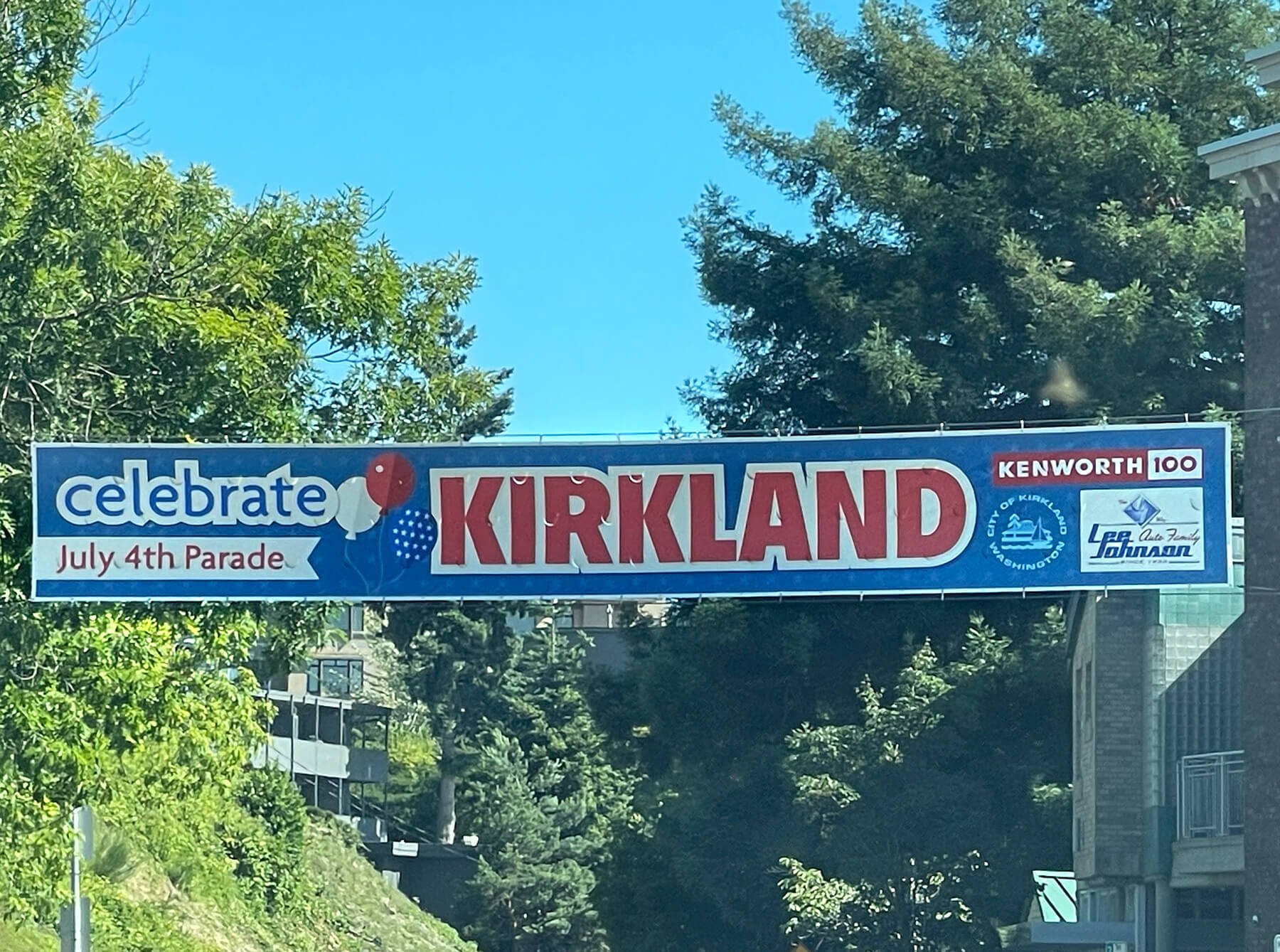
- Kirkland 4th of July Parade and Fireworks — one of the largest Independence Day celebrations on the Eastside, dating to the 1970s.
- Concerts in the Park at Marina Park (July–August) — free Thursday evening summer concerts.
- Movies at Marina Park (August) — free Friday outdoor movie series.
- Kirkland Oktoberfest (October) at the Village at Totem Lake.
- Holiday Tree Lighting (November) — annual ceremony in downtown Kirkland.
Grocery Stores in Kirkland
Kirkland is well-served by grocery options, distributed across the city so that most addresses are within a 5–10 minute drive of multiple stores:
- PCC Natural Markets — Kirkland (downtown) and Houghton locations.
- Metropolitan Market — Houghton (108th Ave NE).
- Whole Foods Market — The Village at Totem Lake.
- Trader Joe’s — The Village at Totem Lake.
- QFC — Kirkland Urban (downtown), Houghton, Kingsgate, and Juanita locations.
- Safeway — Juanita Village.
- Costco — Totem Lake (the company’s flagship warehouse).
- Central Market in nearby Bothell — 10 minutes north for specialty international groceries.
Kirkland Economy and Major Employers
Kirkland’s economy is anchored by technology, healthcare, and professional services. The city’s employer base reflects broader Eastside trends while including several headquartered or significantly-presenced companies.
Major Employers Within Kirkland
- Google — Kirkland Urban campus, one of Google’s largest offices outside California, housing engineering, cloud, and research teams.
- EvergreenHealth Medical Center — the city’s largest single employer, a 318-bed nonprofit hospital and regional medical system headquartered in the Totem Lake neighborhood.
- Kenworth Truck Company — heavy-truck manufacturer headquartered in Kirkland; a division of PACCAR (PACCAR’s corporate headquarters is in Bellevue).
- INRIX — connected-car data and traffic intelligence company headquartered in Kirkland.
- Astronics — aerospace electronics manufacturer.
- City of Kirkland — municipal government, schools, parks, and public services.
- Lake Washington School District — major employer across multiple Kirkland school sites.
Companies with Kirkland Presence
- Tableau (now part of Salesforce) — data visualization platform with continuing Kirkland-area operations.
- Wave Broadband (now part of Astound Broadband) — regional internet and telecom provider.
- Microsoft — main campus in Redmond (10 minutes east), with some satellite offices and employee residences concentrated in Kirkland.
Regional Eastside Employers Within Easy Commute
- Microsoft (Redmond) — roughly 10 minutes east.
- Amazon (Bellevue and Seattle) — significant Bellevue presence at the Bellevue 600 and Re:Invent campuses.
- Meta (Bellevue and Seattle).
- Expedia Group (Seattle, Interbay).
- T-Mobile US (Bellevue, headquartered in nearby Bellevue/Factoria).
- Boeing (Renton and Everett).
- PACCAR (Bellevue corporate headquarters).
This concentration of employers within a 10–20 minute radius is one of the structural reasons Kirkland’s housing demand has held up through multiple market cycles — buyers can change jobs across the Eastside without moving.
Green Spaces & Parks in Kirkland
Kirkland has one of the deepest park networks of any city its size on the Eastside. The City of Kirkland manages more than 50 parks and open spaces — covering roughly 600 acres — plus over two miles of public Lake Washington shoreline. For buyers relocating from denser markets, that ratio of green space to population is one of the city’s most distinctive features.
The park system breaks into a few clear categories: waterfront parks along Lake Washington, neighborhood parks scattered through residential pockets, regional natural areas like Bridle Trails State Park and Big Finn Hill, and the Cross Kirkland Corridor that ties much of it together. Most addresses in Kirkland sit within a 10-minute walk of at least one park.
Juanita Beach Park
On the northern shore of Juanita Bay, Juanita Beach Park is one of Lake Washington’s most popular swimming spots. The park features a long sandy beach with a designated swim area and floating dock, sand volleyball courts, picnic shelters, a large playground, and walking paths along the bay. The Juanita Friday Market runs June through September with produce, food vendors, and live music, and the park hosts outdoor concerts and seasonal events throughout the summer.
A practical note: King County publishes a weekly BEACH program water quality report during swim season for Juanita and other public beaches. It’s worth checking before any swim — quality varies with rainfall runoff and lake conditions.
For food nearby, Spud Fish & Chips is a Northwest landmark that’s been operating on Juanita Drive since 1955.
Marina Park
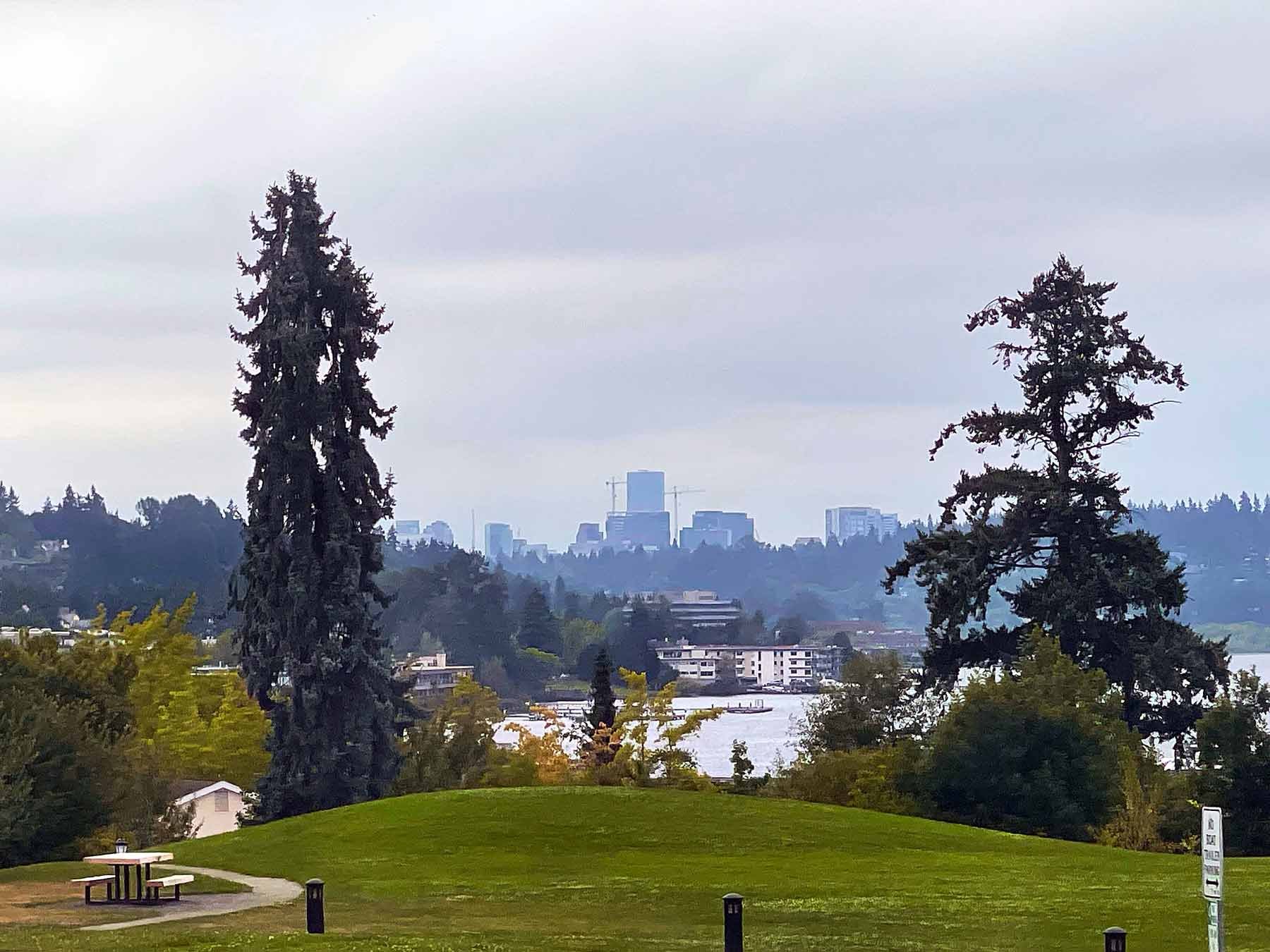
Marina Park is the centerpiece of downtown Kirkland — a waterfront park with sweeping views of Lake Washington, the Olympic Mountains, and the Seattle skyline. It includes a public dock, swimming beach, large grassy event lawn, a playground, and the boardwalk that connects to Lake Street’s restaurants and shops.
Marina Park hosts the Wednesday Market (June through September), summer concerts in the Concerts in the Park series, the city’s 4th of July fireworks, and the popular outdoor movies series. It’s also the launching point for the Argosy Cruises Kirkland departures.
Cross Kirkland Corridor
The Cross Kirkland Corridor is a 5.75-mile former BNSF rail line converted into a paved multi-use trail running the length of the city — from South Kirkland Park & Ride to the Totem Lake area. It’s used for walking, running, cycling, and as a non-motorized commuter route between downtown, Google’s Kirkland Urban campus, and the north end of the city.
The CKC connects directly to the Eastrail regional trail network, which when fully complete will run 42 miles from Renton through Bellevue, Kirkland, and Woodinville to Snohomish — one of the most ambitious urban rail-to-trail conversions on the West Coast. Sections through Kirkland, Bellevue, and Woodinville are already open and connected.
Bridle Trails State Park
On Kirkland’s southern edge, Bridle Trails State Park offers 482 acres of mature second-growth forest with roughly 28 miles of trails for hiking, mountain biking, and horseback riding. Many adjacent neighborhoods carry horse-friendly zoning, and the park hosts year-round equestrian events at its show ring.
It’s unusual to find a forest of this scale this close to a major tech corridor — Bellevue and Microsoft’s Redmond campus are both within 10 minutes.
Heritage Park
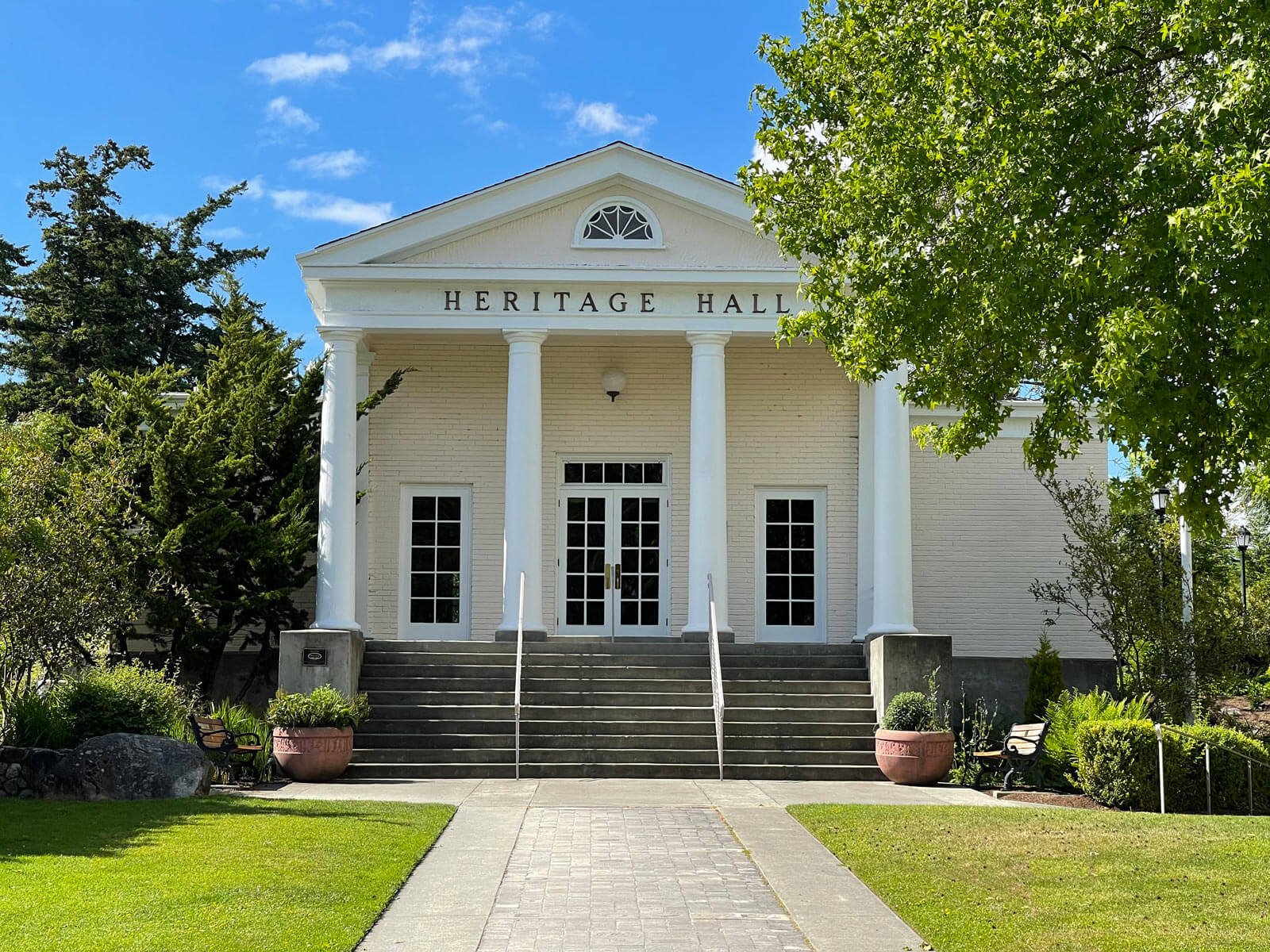
Heritage Park is a grassy hillside park overlooking downtown Kirkland and Lake Washington, located along the waterfront just north of Marina Park. The park includes walking paths, sculptures, a small performance space, and Heritage Hall — a historic 1922 community building used for weddings, performances, and civic events.
Heritage Park’s sloped lawn is one of the best vantage points for the 4th of July fireworks over Marina Park.
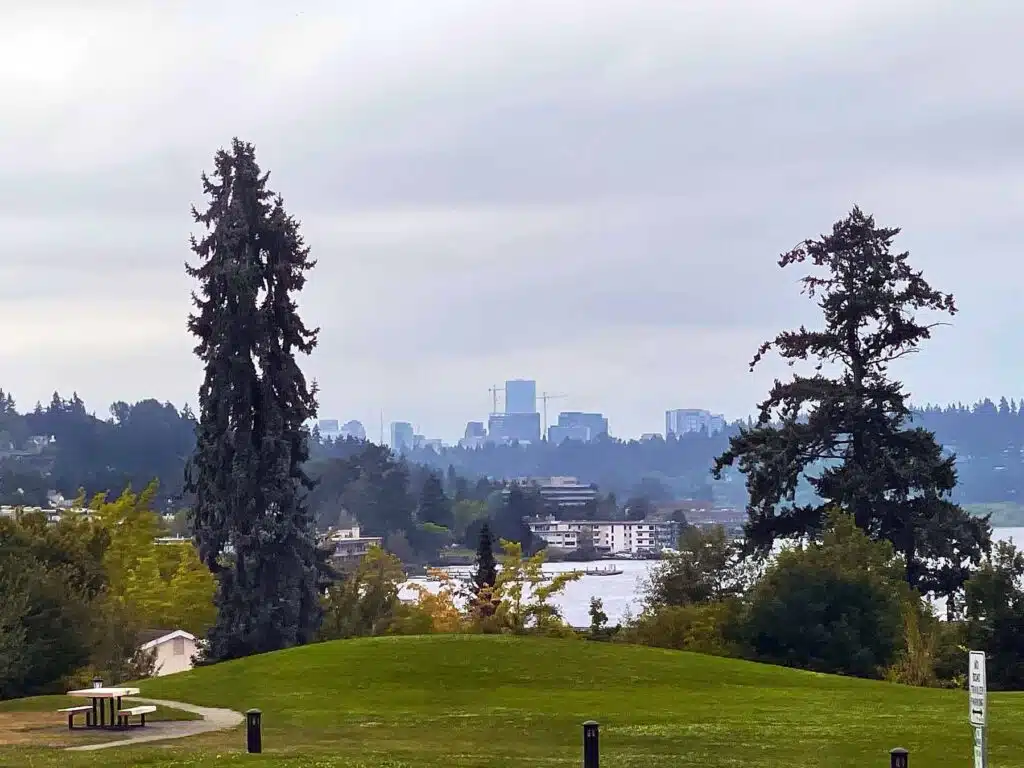
Peter Kirk Park
Located in the center of downtown Kirkland next to QFC and PCC, Peter Kirk Park is the city’s primary downtown recreation hub. It includes the Lee Johnson Field baseball complex (home to most of Kirkland American Little League’s summer games), tennis courts, a skate park, a playground, a covered picnic shelter, and the iconic Kirkland Totem Pole carved by Jerry Adkins in 1976.
Waverly Beach Park
A smaller, quieter waterfront park north of Marina Park, Waverly Beach has a sandy swim area, a long public dock, picnic spots, and walking paths along the lake. Parking is limited — most visitors park on the surrounding residential streets and walk down to the water.
The dock is one of the best lake-jumping spots in the city during summer. It’s tucked away from main streets so it feels more private than other Kirkland beaches.
Houghton Beach Park
In the Houghton neighborhood along Lake Washington Boulevard, Houghton Beach Park offers a sandy beach, a grassy playfield, a swimming area, a playground, and a long public dock that’s popular for paddleboarding and swimming. It’s directly across the street from Ivar’s Seafood Bar and steps from the BeachHouse Bar & Grill — making it one of the most walkable lake-and-lunch combinations in the city. Parking fills quickly on summer weekends.
Crestwoods Park
In the Bridle Trails area, Crestwoods Park offers sports fields, tennis courts, a playground, and a half-mile walking loop through mature trees. Less crowded than the waterfront parks, it’s a popular spot for youth soccer and lacrosse practices.
O.O. Denny Park
Just outside Kirkland proper on the Finn Hill side of Juanita Bay, O.O. Denny Park is a 46-acre King County park with a quiet beach on Lake Washington, picnic shelters, and forested walking trails. The park dates to 1922 — donated by Orion O. Denny, son of one of Seattle’s founding families — and includes some of the largest old-growth Douglas firs left in the area.
Worth Knowing for Buyers
For buyers comparing Kirkland to neighboring cities, the park system is a real differentiator. Three points worth understanding:
Proximity matters more than acreage. Most Kirkland neighborhoods are walking distance to at least one significant park. The exceptions are some pockets in Kingsgate and east Rose Hill, where you’ll drive to reach the lake or a major trail.
Waterfront access is public. Kirkland’s shoreline parks are city-owned and free to use, which means buyers who can’t afford private waterfront still get genuine lake access. That public-private balance is one of the city’s strongest quality-of-life features.
Park-adjacent premiums are real but quantifiable. Homes directly bordering Bridle Trails State Park, the Cross Kirkland Corridor, or one of the major lakefront parks consistently command price premiums over comparable interior lots. The premium isn’t speculative — it shows up in comparable sales.
Your Kirkland Traffic & Commute
Kirkland’s location is one of its quiet advantages. The city sits at the intersection of two major Eastside corridors — I-405 running north-south, and SR-520 crossing west into Seattle — with direct on-ramps and off-ramps inside city limits. That positioning makes Kirkland one of the most commute-flexible addresses on the Eastside: Bellevue, Redmond, Bothell, and Woodinville are all reachable without freeway transfers, and Seattle is a single bridge away via SR-520.
The trade-off is the same one every Eastside city manages: regional traffic has grown alongside the population, and weekday rush hours can extend drive times significantly — particularly on I-405 between Kirkland and Bellevue, on SR-520 westbound into Seattle, and on NE 85th Street through downtown during school pickup hours.
The drive-time widget below shows both off-peak and rush-hour estimates so you can plan around the spread, not just the best-case number. Real-time conditions are available through the Washington State Department of Transportation and the WSDOT mobile app.
For commuters who prefer not to drive, King County Metro Route 255 connects Kirkland to the University of Washington and U District, with transfers to Link light rail for Capitol Hill, downtown Seattle, and Sea-Tac Airport. ST Express and King County Metro routes connect Kirkland to Bellevue, Redmond, and the broader Eastside transit network.
Looking ahead, two Sound Transit Stride bus rapid transit improvements will reshape commute options along I-405. The redesigned NE 85th Street interchange in Kirkland — including a new inline Stride station — is scheduled to open in 2026 to serve existing transit routes, with direct access ramps to the express toll lanes. Full Stride S2 BRT service between Bellevue and Lynnwood is scheduled to begin in 2029, with buses running as often as every 10 minutes and a Bellevue-to-Lynnwood trip time of roughly 35 minutes — about 20 minutes faster than current ST Express service.
Light rail is the one piece Kirkland doesn’t yet have direct access to; the nearest Link stations are in Redmond (2 Line) and Bellevue, both about a 10–15 minute drive or bus transfer away.
Commute guide · Kirkland, WA
Drive Times from Kirkland, WA
Off-peak and rush hour estimates to Eastside and Greater Seattle destinations
Drive times are typical estimates based on WSDOT corridor data and Google Maps averages. Rush hour reflects weekday morning inbound (7–9 AM) or evening outbound (4–6 PM). Actual times vary by origin within Kirkland, traffic incidents, and season. SR-520 (toll) is the fastest Kirkland-to-Seattle route and avoids I-90 congestion near Mercer Island. Sound Transit Express 255 connects Kirkland to the University of Washington / U District, with King County Metro and ST Express service to Bellevue, Redmond, and the broader Eastside. The future Sound Transit Stride S2 bus rapid transit line will add frequent I-405 service when it opens.
As the Eastside grows so does the traffic. Here are some of the problem spots that I find when living in Kirkland.
Kirkland Health Care
Kirkland’s healthcare anchor is EvergreenHealth Medical Center, a 318-bed nonprofit hospital in the Totem Lake neighborhood with a Level III Trauma Center, a regional stroke center, and one of the busiest birth centers on the Eastside. EvergreenHealth is also Kirkland’s largest single employer, and its presence drives meaningful demand for nearby housing — particularly the newer townhomes and apartments around The Village at Totem Lake.
Beyond the main hospital campus, Kirkland is served by Overlake Medical Clinics, Kaiser Permanente, The Polyclinic, and the Seattle Cancer Care Alliance Proton Therapy Center in nearby Bothell. Urgent care, primary care, dental, and specialty practices are distributed across downtown, Houghton, and the Totem Lake corridor — most addresses are within a 10-minute drive of multiple options. Pharmacies are clustered around the major grocery stores (QFC, PCC, Safeway, Whole Foods) and inside the larger medical complexes.
Worth knowing: EvergreenHealth has been ranked among Washington State’s top hospitals by U.S. News & World Report for multiple consecutive years.
Shopping in Kirkland
Kirkland’s retail districts each have a distinct character.
Downtown Kirkland centers on Lake Street and Park Lane, where independent boutiques, galleries, jewelers, and specialty shops sit alongside the waterfront and the Saturday and Wednesday farmers markets. It’s the most walkable retail core in the city.
Kirkland Urban is the modern mixed-use development just east of downtown, anchored by QFC, Shake Shack, and a mix of national and local retailers built around Google’s Kirkland campus.
The Village at Totem Lake opened its current iteration in 2018 after a complete redevelopment of the former Totem Lake Mall. It’s now the city’s largest shopping destination, with Whole Foods, Trader Joe’s, Nordstrom Rack, Lululemon, Ulta, Cinemark, and a long roster of restaurants and fitness studios.
Juanita Village offers a smaller, neighborhood-scale retail pocket with a popular Friday summer farmers market.
Regional shopping is close as well — Bellevue Square and Lincoln Square are roughly 10–15 minutes south, and Redmond Town Center sits about 10 minutes east. Costco’s Kirkland warehouse remains in the Totem Lake area despite the company’s headquarters now being in Issaquah.
Kirkland Schools
Kirkland is served primarily by the Lake Washington School District — consistently one of Washington’s top-ranked public districts and a major driver of buyer demand. The northern edge of Kirkland, including most of Finn Hill and parts of Kingsgate, falls within the Northshore School District, which is also highly regarded. Because the district boundary runs through the city, families with school-age children should always verify the specific assignment for an address before writing an offer.
High schools serving Kirkland addresses include Lake Washington High School (Norkirk/downtown), Juanita High School (north Kirkland), Eastlake High School (parts of Finn Hill), and Inglemoor High School in Kenmore for some Northshore-district Kirkland addresses.
For private options, popular nearby schools include The Bear Creek School in Redmond, Eastside Catholic in Sammamish, The Overlake School in Redmond, and Forest Ridge School of the Sacred Heart in Bellevue.
Worth knowing: Lake Washington School District serves more than 32,000 students across Kirkland, Redmond, and parts of Sammamish — and Washington State’s Office of Superintendent of Public Instruction has repeatedly ranked it among the state’s strongest districts for graduation rates and college readiness.
Outdoor Recreation in Kirkland
Kirkland’s outdoor identity is built around Lake Washington and a connected park network that’s unusually deep for a city this size. The shoreline alone includes more than two miles of public waterfront parks — Marina Park, David E. Brink Park, Marsh Park, Houghton Beach Park, Waverly Beach Park, and Juanita Beach Park — most with swimming areas, docks, and grass for picnics.
The Cross Kirkland Corridor is the city’s signature trail: a 5.75-mile former rail line converted into a walking, running, and cycling route that runs north-south through the heart of the city. It connects to the Eastrail regional trail network, which will eventually link Renton to Woodinville.
For trail running, mountain biking, and equestrian use, Bridle Trails State Park sits on Kirkland’s southern edge with 28 miles of forested trails. Big Finn Hill Park to the north offers another 220 acres of mature forest with hiking and mountain biking. Saint Edward State Park (just over the Kenmore line) adds 326 acres of old-growth and lake access.
On the water, Kirkland is a hub for paddleboarding, kayaking, sailing, and rowing — Moss Bay Rowing, Kayaking, and Sailing Center offers rentals, classes, and a launch point steps from downtown. Fishing on Lake Washington is open year-round, with bass, perch, and cutthroat trout the most common catches.
For gym options, Kirkland has the PRO Sports Club in Bellevue (5 minutes south), Anytime Fitness, Orangetheory, F45, and several independent yoga, pilates, and CrossFit studios.
Youth Sports in Kirkland
Kirkland has a deep youth-sports infrastructure. Peter Kirk Park hosts baseball and softball games most summer evenings, and Lee Johnson Field — adjacent to the park in downtown — is the city’s primary baseball venue. Everest Park, Crestwoods Park, and North Kirkland Community Center round out the field network with soccer, lacrosse, tennis, and pickleball courts.
Organized programs include Kirkland American Little League (one of the largest in the state), Lake Washington Youth Soccer, Eastside FC, and Juanita Bay Youth Lacrosse. Kirkland Parks & Community Services runs camps, swim lessons, and youth basketball year-round.
For winter sports, the Kingsgate Ice Arena in north Kirkland is a regional hub for youth hockey and figure skating.
The Kirkland 4th of July Parade — running since the 1970s — typically features dozens of youth teams marching alongside community groups, and it’s one of the largest Independence Day parades on the Eastside.
Kirkland Real Estate: The Bottom Line
Kirkland offers one of the deepest housing inventories on the Eastside — historic craftsman homes in Market and Norkirk, mid-century ramblers in Houghton and Bridle Trails, modern new construction in Totem Lake and Rose Hill, and luxury waterfront estates along Lake Washington Boulevard. Architectural variety here is unusually wide for a city of 100,000.
The fundamentals that drive Kirkland’s market are durable: strong schools, major employers within the city limits, walkable lifestyle, and a Lake Washington shoreline that can’t be replicated. Prices reflect that — but for buyers who value the combination, Kirkland consistently delivers a different quality of life than its Eastside neighbors.
“Kirkland has always had a strong identity — waterfront, walkable, and genuinely connected. What’s changed over the past few years is how intentionally the city is building on that. For buyers who want Lake Washington access without Bellevue prices, or for sellers thinking about timing in a still-competitive market, this is one of the most interesting places to work on the Eastside.”
— Matthew Konsmo, Coldwell Banker Danforth
If you’re exploring Kirkland — whether you’re touring this weekend or planning a move six months out — let’s talk. Call or text 425-463-8243 or email matthewkonsmo@gmail.com.
Where to Stay in Kirkland: Hotels
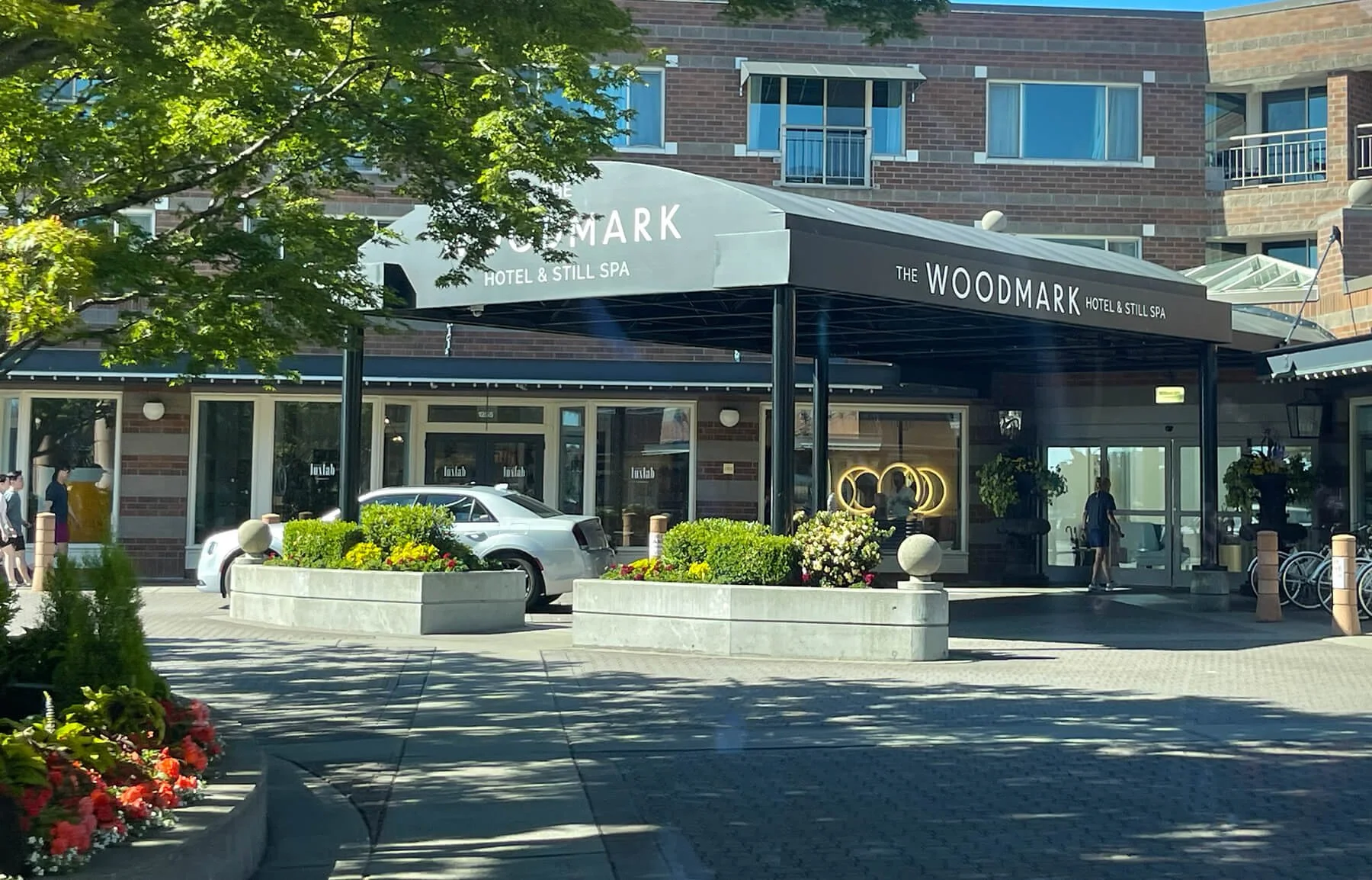
The Heathman in downtown Kirkland and the Woodmark at Carillon Point are two hotels I recommend to customers who are in town to view properties.
- Woodmark Hotel
1200 Carillon Point, Kirkland, WA 98033
Woodmark Hotel Website > - The Heathman Hotel Kirkland
220 Kirkland Ave, Kirkland, WA 98033
The Heathman Hotel Kirkland Website >
How to read this
- Click a season on the left rail to see its averages.
- The large number is the typical daytime high for that season.
- Scroll down for the city comparison and climate notes.
- All figures are long-term averages — individual years vary.
Western Washington · Almanac № 7
Kirkland, by season.
A lakefront city on the east shore of Lake Washington — five miles of waterfront, west-facing sunsets over the water, and the most lake-moderated microclimate on the Eastside.
Winter
Dec — FebMild and damp. The thermal mass of Lake Washington holds overnight lows up — Kirkland averages fewer freeze nights than Bothell or Woodinville just a few miles east.
Spring
Mar — MayPark Lane reopens its patios, sailboats return to the Marina Park moorage, and the cherries along Lake Street bloom mid-March.
Summer
Jun — AugThe signature season. Long west-over-the-water sunsets from Juanita Beach, paddleboards at Houghton, and afternoon lake breeze that trims a degree or two off the inland highs.
Autumn
Sep — NovA long, warm September on the lake gives way to maple color along the Cross Kirkland Corridor by mid-October, then the November frontal storms set in.
Five miles of lakefront on the east shore.
Kirkland runs along about five miles of Lake Washington's eastern shore, from Yarrow Bay in the south to Juanita Bay in the north. Downtown sits essentially at lake level — around 50 feet of elevation — while the city climbs east across a series of ridges and benches that crest above 400 feet in neighborhoods like Bridle Trails, Finn Hill, and Kingsgate. That geography is the climate story in one sentence: the lake is large enough and deep enough to act as a genuine thermal reservoir, moderating temperatures across the city's western half year-round.
The overall climate is classic Köppen warm-summer Mediterranean (Csb): cool wet winters, warm dry summers, with most of the annual 40–44 inches of precipitation falling between October and March. Annual snowfall is light at about 4–5 inches — Kirkland's lake-moderated waterfront sees less accumulation than inland upland cities like Brier or the Snoqualmie Valley towns, and snow that does fall typically melts within a day. The USDA hardiness zone is 8b, comfortably supporting Japanese maples, hydrangeas, fig trees, and the rhododendron-camellia palette that defines the eastside.
How Kirkland differs from its neighbors.
Kirkland's defining contrast with its Eastside neighbors is lake moderation. Summer highs run about a degree cooler than Bothell or Redmond because the afternoon lake breeze trims the peak heat; winter overnight lows are a degree or two warmer than the same inland suburbs because the lake holds its heat. Compared to Seattle directly across the water, Kirkland summers are slightly warmer (Seattle gets stronger marine cooling from Puget Sound, which is colder than the lake), while winter lows are roughly comparable. Annual rainfall is slightly higher than Seattle's because Kirkland sits a few miles further inland from Puget Sound's rain shadow.
| City | Summer High | Winter Low | Annual Rain |
|---|---|---|---|
| Kirkland | 75°F | 37°F | 41″ |
| Seattle | 73°F | 38°F | 37″ |
| Bellevue | 75°F | 37°F | 41″ |
| Redmond | 76°F | 36°F | 43″ |
| Bothell | 76°F | 36°F | 42″ |
| Kenmore | 75°F | 36°F | 40″ |
| Mercer Island | 74°F | 38°F | 40″ |
When the lakefront is at its best.
For paddleboarding off Houghton Beach, sunsets on the Marina Park dock, summer concerts at Juanita Beach Park, and dinner on a Park Lane patio, the climate sweet spot runs mid-June through late September — afternoons reliably in the mid-70s, lake water in the high 60s to low 70s by August, and sunset over the water near 9:10 p.m. through late June. Late April through early June brings the cherry-lined streets through Norkirk and the marina filling back up for sailing season. Mid-October delivers the year's best fall color along the Cross Kirkland Corridor trail before the heavy November rains arrive.
What Kirkland's climate means for the homes here.
Kirkland's geography sets up homeowner concerns in two tiers. Waterfront and near-lake properties contend with higher humidity persistence, dock and bulkhead maintenance, and the long-term importance of slope stability on the lakeward-facing hillsides — the steeper streets dropping toward Lake Washington Boulevard see meaningful drainage attention during winter storm cycles. Ridge and inland neighborhoods (Bridle Trails, Finn Hill, Kingsgate) face standard PNW maintenance: gutter capacity, moss treatment, and the occasional ice-prone driveway. Across the city, summer cool nights mean older homes were largely built without central AC, but heat pumps have become the new-construction standard — handling both winter heating and the rare 90°F+ stretches efficiently.
Explore Communities Near Kirkland
Just north of Kirkland along the Sammamish River corridor, Bothell has evolved into a thriving hub with a revitalized downtown and strong local schools.
Explore Bothell →Northeast of Kirkland, Woodinville is Washington's premier wine country destination — combining rural charm with proximity to Eastside amenities.
Explore Woodinville →Sitting at the northern tip of Lake Washington, Kenmore offers waterfront parks, floatplane access, and a relaxed suburban lifestyle minutes from Kirkland.
Explore Kenmore →Directly east of Kirkland, Redmond is home to Microsoft's global headquarters and a thriving tech ecosystem — with trails, parks, and family-friendly neighborhoods to match.
Explore Redmond →South of Kirkland across the I-405 corridor, Bellevue is the Eastside's urban center — offering world-class dining, luxury shopping, and a booming skyline.
Explore Bellevue →
Kirkland, WA Zip Codes
All postal zones for Kirkland — a Lake Washington Eastside city across the water from Seattle, served by the Lake Washington School District.